All articles

When Should You Use EBITDA?

It is becoming increasingly common for companies to report adjusted earnings but when should you really make adjustments to earnings?

In the lexicon of finance, EBITDA stands for earnings before interest, tax, depreciation and amortisation. It is a commonly reported metric among companies and is sometimes used by management teams to make companies appear more profitable than they actually are.

But making certain adjustments to a company’s earnings can still be useful in certain scenarios

In this article, I explore when should investors, and when should they not, make adjustments to a company’s earnings.

Interest expense

One scenario when it may be good to measure earnings before interest is when you are a bondholder. Bond holders need to see if a company has the capacity to pay its interest and earnings before interest is a good tool to measure profitability in this case. 

Another situation to remove interest is when you are an equity investor (invested in the stock of the company) and want to make year-on-year comparisons. Interest expenses can fluctuate wildly based on interest rates set by central banks. Removing interest expense gives you a better gauge of the company’s profitability without the distorting effects of interest rates.

On the other hand, if you are measuring a company’s valuation, then including interest expense is important. This gives you a closer estimate to the company’s cash flow and the amount of cash that can be returned to shareholders through dividends.

Tax expense

Tax expense is very similar to interest expense. If you are a bondholder, you should look at earnings before tax as this gives you a gauge of whether the company can pay you your bond coupon.

Like interest rates, tax rates can also vary based on laws and tax credits. This can result in tax rates changing from year to year. If you are an equity investor and want to assess how a company has done compared to prior years, it may be best to remove taxes to see the actual growth of the company. 

On the contrary, if you are valuing a company, I prefer to include taxes as it is an actual cash outflow. The company’s value should be based on actual cash flows to an investor and tax has a real impact on valuation.

Depreciation expense

Depreciation is a little trickier. Both bond and equity investors need to be wary of removing depreciation from earnings. 

In many cases, while depreciation may not be a cash expense, it actually results in a cash outflow as the company needs to replace its assets over time in the form of capital expenseditures.

Capital expenditures are a cash outflow that impacts the company’s annual cash flow. This, in turn, impacts the company’s ability to pay both its interest expense to bondholders and dividends to shareholders.

In some cases, depreciated assets do not need to be replaced, or they can be replaced at a lower rate compared to the depreciation expense recorded. This can be due to aggressive accounting methods or the assets having a longer shelf-life than what is accounted for in the income statement. In this scenario, it may be useful to use earnings before depreciation.

In any case, I find it helpful to compare depreciation expenses with capital expenditures to get a better feel for a company’s cash flow situation.

Amortisation expenses

Companies may amortise their goodwill or other intangible assets over time. In many cases, the amortisation of goodwill is a one-off expense and should be removed when making year-on-year comparisons. 

I think that both bond and equity investors should remove amortisation expense, if it is a one-off, when assessing a company.

In many cases, intangible assets and goodwill are actually long-lasting assets that still remain valuable to a company over time. However, due to accounting standards, a company may be obliged to amortise these assets and reduce their value on its balance sheet. In these cases, I prefer to remove amortisation from earnings.

On the other hand, on the cash flow statement, you may come across a line that says “purchase of intangibles”. If this is a recurring annual cash outflow, you may want to include amortisation expenses.

Other adjustments

Companies may make other adjustments and report “adjusted” EBITDA. These adjustments may include things such as stock-based compensation (SBC), foreign currency translation gains or losses, and gains or losses from the sale of assets.

These adjustments may be necessary to make more accurate year-on-year comparisons of a company’s core business. However, one exception may be SBC. This is a real expense for shareholders as it dilutes their ownership stake in a company.

While standard accounting is not a good proxy for the monetary impact of SBC, removing it altogether is also incorrect. It may be better to account for SBC by looking at earnings or cash flow on a per-share basis to account for the dilution.

Final thoughts

EBITDA and other adjustments made to earnings can be useful on many occasions especially when making year-on-year comparisons or if you are a bondholder. Removing non-recurring, non-cash expenses such as amortisation also makes sense when valuing a company.

However, there are also situations when it is better to use GAAP (Generally Accepted Accounting Principles) or IFRS (International Financial Reporting Standards) earnings.

Some companies that are loss-making may conveniently use adjusted earnings simply to mislead investors to get their share price higher. This should be a red flag for investors.


Disclaimer: The Good Investors is the personal investing blog of two simple guys who are passionate about educating Singaporeans about stock market investing. By using this Site, you specifically agree that none of the information provided constitutes financial, investment, or other professional advice. It is only intended to provide education. Speak with a professional before making important decisions about your money, your professional life, or even your personal life. I do not have a vested interest in any companies mentioned. Holdings are subject to change at any time.

What We’re Reading (Week Ending 09 July 2023)

The best articles we’ve read in recent times on a wide range of topics, including investing, business, and the world in general.

We’ve constantly been sharing a list of our recent reads in our weekly emails for The Good Investors.

Do subscribe for our weekly updates through the orange box in the blog (it’s on the side if you’re using a computer, and all the way at the bottom if you’re using mobile) – it’s free!

But since our readership-audience for The Good Investors is wider than our subscriber base, we think sharing the reading list regularly on the blog itself can benefit even more people. The articles we share touch on a wide range of topics, including investing, business, and the world in general.

Here are the articles for the week ending 09 July 2023:

1. Intellectual Laziness – Philo

The collapse of General Electric stands apart. GE was the bluest of the blue-chips: descended from Thomas Edison and J.P. Morgan, it was one of the original twelve components of the Dow in 1896, and grew to become one of the leading technology giants of the early 20th century. After WWII, GE evolved into an industrial behemoth with dominant positions in a dizzying array of electricity-adjacent markets, from jet engines and turbines to light bulbs and home appliances.

In the 1980s, GE ascended to new heights. Jack Welch took the reins as CEO in 1981, and he established GE a major player in media and financial services while expanding GE’s leadership positions in its industrial markets. For most of the 1990s and 2000s, GE was the most valuable company in America, with a valuation topping out at over $1 trillion (as measured in current dollars). While GE had its skeptics and critics at the time, it was widely seen as a corporate paragon, regularly named by Fortune as the most admired company in the world. Welch was regarded as a management guru, and his underlings were routinely poached to become CEOs at other Fortune 500 companies.

And then, a few years ago, it all unraveled in spectacular fashion. Much of the supposed success from the Welch era of the 1980s and 1990s proved to be illusory, the product of temporary tailwinds and aggressive accounting. GE’s fortunes worsened under the reign of Welch’s handpicked successor, Jeff Immelt, who took over in 2001. Immelt struggled to cope with the problems he inherited, which were compounded by the 2008 financial crisis and major management missteps of his own. In 2017, when the extent of GE’s problems became clear, GE’s stock nose-dived, and Immelt was pushed out…

…Jack Welch had most of the traits we typically associate with a great executive. He was incredibly smart (earning his PhD in chemical engineering in only three years), he was demanding of his subordinates, and he worked tirelessly. He had deep operating experience, he was willing to buck convention, and he produced quantifiable results. He was charismatic, ambitious, and a world-class marketer and publicist. And yet, he will forever be remembered as the father of the biggest corporate disaster in American history…

…The story of the fall of GE is worthy of an authoritative book, and we looked at a pair of early entries a couple of years ago – Lights Out, written by the WSJ journalists that covered its fall, and Hot Seat, Jeff Immelt’s memoir.

Power Failure, weighing in at nearly 800 pages, is the most ambitious yet. The author, William Cohan, did an early-career stint as a junior analyst at GE Capital in the 1980s, before becoming an investment banker and then a business writer, putting him in a unique position to tell the GE story.

What sets Cohan’s effort apart is that he got almost everybody to talk to him for his book. He managed to interview both Jack Welch (before he passed away in 2020) and Jeff Immelt, and many former and current senior GE executives as well. Dozens of GE critics, counterparties, and journalists also weigh in throughout…

…Power Failure also doesn’t really offer an overarching theory of why GE failed. Power Failure lists many different things that went wrong at GE — bad management, bad acquisitions, bad incentives, bad accounting, bad luck — but almost all companies suffer from some of these issues without running into a GE-scale disaster. Maybe the failure of GE was the result of an unlucky confluence of individual problems, but it feels like for a group of smart, hard-working people to produce such an exceptionally catastrophic result, there must be a larger lesson to be drawn.

One possible clue comes from the story of David Cote, a star GE finance executive who rose to become the head of the Appliances division in the 1990s, and was one of five early candidates to succeed Jack Welch as the CEO of GE. However, he was eliminated before the three finalists were chosen, and he was asked to leave GE. It is suggested that Cote was doomed by the divisional assignment he drew; the finalists were the ones who had been assigned to oversee GE’s crown jewels, while he was stuck trying to fix a basket case.

Cote eventually landed a position in 2002 as the CEO of Honeywell, a much smaller industrial conglomerate – Cohan at one point refers to it as a “mini-GE”. Honeywell had been run since 1991 by Larry Bossidy, who before then had spent his career as a top executive at GE, a close associate of Jack Welch…

…Cote had an incredibly successful run at Honeywell, leading it until his retirement in 2017. While GE foundered, Honeywell soared. A $1,000 investment in Honeywell in 2003 would be worth over $9,000 today, while the same investment in GE would now be worth only $450. Remarkably, Honeywell managed to surpass GE in overall value as well: Honeywell’s current market capitalization is $140 billion, while GE is now worth less than $90 billion. GE is slated to be broken up, but as it stands today, is nothing more than a mini-Honeywell.

This would seem to be the perfect natural experiment. A GE cast-off takes over a small company run by Jack Welch’s former right-hand man, and turns it around and surpasses GE. What did Cote do so differently from Welch, Immelt, and Bossidy, to get such a spectacular result?…

…What is Cote’s diagnosis of the root problems at Honeywell? Cote opens the book by telling the story of an internal meeting at the beginning of his tenure, a business review of Honeywell’s Aerospace division. The head of Aerospace was steeped in the old culture, and had even been a candidate for the CEO job that Cote won. The meeting does not start well:

We sat down in a conference room so that team members could present their strategic plan to me. A copy of the plan had been placed on the table facing each seat. Flipping through mine, I saw that it was thick–maybe 150 pages long, full of charts and tables. Uh oh, I thought, not good. I had found so far at Honeywell that executives and managers often made presentations far longer than necessary, overwhelming audience members with facts, figures, and commentary to preempt sharp, critical questioning.

Nevertheless, Cote interrupts them with sharp, critical questions. The Aerospace team responds with annoyance — they had planned to put on a show and receive a pat on the back — but Cote interrogates them about the root cause of the $800 million in cost overruns on their biggest project. The team eventually relents and agrees to probe the root causes of their biggest issues, and they turn the ship around. Cote concludes (emphasis mine):

What I learned, to my chagrin, was that Aerospace had become adept at lying to itself, shoehorning costs here and there into a budget without acknowledging them openly. This put enormous strain on the organization, which then had to patch together aggressive bookkeeping and special deals with customers and others, to make its goals. A dysfunctional approach if I’d ever seen one.

Cote says that this approach was pervasive at Honeywell:

Lacking any drive to think deeply about their businesses, and unchallenged by leadership to do so, teams held meetings that were essentially useless, their presentations clogged up with feel-good jargon, meaningless numbers, and analytic frameworks whose chief purpose was to hide faulty logic and make the business look good. When you did a bit of digging, you found that most executives didn’t understand their businesses very well, or even at all.

Cote defines this as intellectual laziness. It is the tendency of organizations to “juke the stats” and lie to themselves instead of diagnosing and solving root problems. This kind of anecdote is everywhere in Power Failure; recall Steve Burke’s appraisal that GE “never had the intellectual curiosity or the drive” to understand and manage NBCU…

…GE Capital was central to GE’s ability to manipulate reported earnings. Accounting rules allow a company to book a profit whenever they sell an asset for more than they paid for it. In the course of their normal business, GE Capital owned hundreds of billions of dollars of assets, like bonds and office buildings and parking lots (which they funded with short-term and long-term borrowings). Over time, real assets tend to appreciate, at least in nominal terms. Whenever GE was having a bad quarter, they would sell some of these appreciated assets–say, an office building that was bought decades ago for $10 million that was now worth $20 million–and report the $10 million accounting profit as a part of regular earnings, to compensate for the earnings shortfall from the core business. As for GE Capital CEO Gary Wendt put it in Power Failure:

I always had a lot of [asset sales] available for the quarter. I had to because I knew [Jack Welch] was going to call up and say, “I need another $1 million or another $2 million or whatever,” and so I’d go over to [GE Capital CFO James] Parke and I’d say, “Okay, let’s do this one and this one.” Making your earnings was just life to us.

This kind of one-time accounting gain from asset sales is fundamentally different in nature from operating profits from selling jet engines and power turbines. The $20 million office building was already worth $20 million before GE sold it, despite being on the books for $10 million; selling it converts it to cash but does not make shareholders any wealthier (in fact, by triggering a tax bill, it can make them worse off), despite the accounting profit that gets booked. Bundling these kinds of accounting gains with normal operating results only serves to obscure the true performance of the business from investors.

Regardless, the most of the senior GE executives who talked to Cohan continued to stand behind the practice of earnings smoothing:

Over lunch at a Connecticut pub, Denis Nayden, who was one of Wendt’s successors at GE Capital, also defended the practice of harvesting GE Capital assets as needed. “What’s the job of a public company?” he asked rhetorically. “Produce earnings for shareholders.”

“The job of a public company is to produce earnings for shareholders” is a hell of a thing for the former chairman of GE Capital to be saying after the collapse of GE. If you ask GE’s investors, they would say the job of a public company is to make money for shareholders. GE was among the best at consistently “producing earnings” for shareholders; they did so for decades. They were just abysmal at making money. 

There is a plethora of ways to produce short-term earnings without making money, and GE somehow seemed to engage in all of them. You can sell appreciated assets to record an accounting profit. You can overpay for assets with high current earnings and poor long-term prospects. You can sell power equipment to Angola on credit, with little hope of ever getting paid in cash. You can book immediate paper profits from the long-tail insurance policies you sell today, and then find out two decades later that your assumptions were too optimistic and you have to come up with $15 billion of cash to plug the gap. There are no magic metrics, and GAAP earnings are as subject to Goodhart’s Law as any other measure.

According to Power Failure, almost every time GE made a major decision that destroyed shareholder value, the obsession with manipulating earnings was front and center in the thought process. GE lost a lot of money in insurance, but why was a manufacturing company in the insurance business in the first place? Well, insurance companies offer a lot of accounting leeway, in terms of the way reserves are taken and assets are sold for profit, and could act as “shock absorbers” that let Jack Welch report smooth earnings when other divisions stumbled.

Why did GE Capital recklessly allow itself to become dependent on funding from short-term commercial paper, a practice that would almost bankrupt it in 2008? Well, short-term borrowing lowers interest expense, which boosts short-term earnings.

Why did GE buy a subprime mortgage broker in 2004? They had just spun off their insurance business, and Immelt felt they needed to replace the earnings that the insurance business had previously generated. 

Why did GE keep expanding GE Capital? Well, it was a good way to increase earnings. Why didn’t GE sell out of noncore businesses like real estate and media when valuations were sky-high in the mid-00s? GE didn’t want to lose the earnings those divisions produced. The catastrophic 2015 acquisition of Alstom? Immelt thought the synergies would definitely increase earnings. The mistimed $40 billion stock buyback in 2015? Jeff Immelt decided on a $2 per share earnings target, and wanted to do anything he could to hit that goal.  Never in Power Failure does it seem like GE management gave any thought to shareholder value when making major decisions: it was always earnings, earnings, earnings.

Even putting aside the obsession with reported earnings, GE’s culture seems to have been generally lacking in intellectual rigor. GE’s strategies were supported by narratives that sounded compelling at a superficial level, but fell apart under any kind of scrutiny.

A classic example: Jack Welch liked to tell everyone that his brilliant insight about expanding into finance was that it had higher revenue per employee than industrial manufacturing, thus it must be a better business to be in. Of course, that is nonsense: there is no reason to expect there to be any relationship between revenue per employee and return on invested capital.

Welch told this story even after GE learned this lesson the hard way in the 1980s, overpaying to acquire Kidder Peabody, a venerable investment banking firm (investment banking being perhaps the highest revenue per employee business that exists), a deal that was an endless source of trouble, and ultimately led to a $2 billion loss when GE finally got rid of it in 1995. (Cohan discovers when talking to a former director that Welch managed to prevent this massive loss from affecting reported earnings by raiding the reserves of the insurance business.)

Return on invested capital is mostly determined by factors like barriers to entry and sustainable competitive advantage, which GE’s industrial businesses had in spades but which GE Capital completely lacked — after all, money is a commodity. After the financial crisis, GE Capital’s return on invested capital collapsed not because revenue per employee declined, but because GE Capital’s lenders and regulators came to understand the true risk inherent in the business, and demanded higher rates, lower leverage, and closer oversight.

As GE placed no value on intellectual rigor, it is no surprise that they ended up promoting executives on the basis of polish and storytelling ability. So it was that when it came time to pick a new CEO, Welch elevated Jeff Immelt, a slick-talking salesman with little understanding of GE’s businesses and little patience for details, and dismissed David Cote, who would go on to have so much success at Honeywell. 

It is not clear that GE’s decision-making process was any worse under Immelt than it was under Welch. Immelt would be skewered by accusations that he encouraged “success theater”, a culture where executives never confronted root problems and pretended everything was going well, but the culture of extreme intellectual laziness certainly dated back to his predecessor. In fact, Welch’s best-selling autobiography was subtitled “Straight from the Gut”.

It would be technically accurate to state that the dramatic collapse of GE resulted from a perfect storm of mistakes — wrong CEO, bad investments, strategic missteps, operational snafus. But underlying all of those seemingly unrelated mistakes was one thing: this culture of intellectual laziness, the willingness to juke the stats and tell comforting stories rather than diagnose and solve root problems. GE failed to create shareholder value because they didn’t really try to create shareholder value; they were content to be able to report some shiny meaningless numbers and a pleasant narrative…

…At this point, we have to ask: how does one identify management teams that demand intellectual rigor, and avoid management teams that are intellectually lazy?

The answer is simple, but not easy. In each example we presented here, the intellectually lazy managers are actually initially exposed when they present their story to a knowledgeable audience. To be sure, they are able to assemble a narrative that sounds convincing to a layman, peppered with vanity metrics and impenetrable business-speak.

However, the narrative is usually all form and no substance, pure business theater. It leans heavily on rhetorical tricks: accounting chicanery employed to meet previously announced financial targets might be rationalized as “exceptional dedication to meeting our public commitments”. (The implication being that if you don’t fudge the numbers, maybe you’re just the type of person that doesn’t take their commitments seriously.)

Nonsense axioms are invented out of thin air – recall the continued insistence of former GE executives that companies must consistently announce growing earnings, in the face of the evidence that most successful companies did no such thing.

Then there is the midwit appeal to complexity: anyone who argues that the narrative is a convoluted, illogical mess is accused of being an ignorant simpleton who is incapable of grasping such sophistication and brilliance.

The intellectually lazy narrative always contains these sorts logical gaps. When confronted about these inconsistencies, managers respond with plausible-sounding non sequiturs, answers that might be accepted by a novice but would never pass muster with anyone with real expertise.

In the case of GE, experienced analysts knew that an inherently cyclical business could not produce perfectly smooth metrics, and they also realized that GE Capital’s reliance on cheap short-term funding was not sustainable — points they raised at the time. At Honeywell, David Cote immediately identified the flaws in the stories that his underlings were telling, and called them out. 

2. Value of BRK Float, Buffett Market View etc. – The Brooklyn Investor

For example, it is true that BRK only owns $328 billion in stocks against $500 billion in equity. This looks bearish, compared to say, back in 1994/1995 as you see. That looks like equity exposure of only 66% or so.

But as we all know, BRK has been buying a lot of operating businesses. For example, Burlington Northern now is a wholly owned subsidiary. Owning 100% of something is no less ‘equity exposure’ than owning just some of the stock. Right? So our equity exposure is much higher than 66% if you include all the other operating businesses. What is that number? Let’s say we include equity method investments (which is clearly equity) of $26 billion, and the book value of the Rails, Utilities and Energy business of $140 billion. That’s $166 billion. Add that to the $328 billion stock portfolio and you get $494 billion. And this doesn’t include some stuff in the “Insurance and other” (where I assume manufacturing, services and retail is), and we are already pretty much at 100% equity exposure. That, to me, is as good as “fully invested”.

How is that bearish? It’s not, actually. Bearish is if you take all those businesses / stocks and actually sell it down so your actual net equity exposure to all business is way below your shareholders equity. If you tell me that the above $494 billion is actually $250 billion, and the rest is cash, then I would agree BRK is waiting for the end of the world.

As it stands now? Not at all…

…This is the sort of thing that Buffett would hate because I am going to tell you what he is thinking, and I will do so without having any idea. So, having said that…

Rates are now back up to over 5% on the short end, and almost 4% on the long end (10 year). What does Buffett think of interest rates? Well, he won’t tell you. He will probably tell you he thinks long rates are too low and that it can’t stay low forever, but that’s all.

But let’s see what he is doing to see what he thinks of interest rates. With the long end approaching 4%, does Buffett think bonds are interesting?

Below, I went back through the recent 10-K’s (when you get old, even going back 25 years is recent, lol…) and jotted down the cash and fixed income investments at BRK. This way, we can actually see when he started to get allergic to long term bonds, and then we can see if he is getting interested again.

First of all, I can tell you that fixed income on BRK’s balance sheet has been steadily in the $20s billions, despite net worth, cash etc. increasing over the years. Spoiler alert: in the 2023 10Q, this is still $23 billion, so he is not expressing any interest in bonds yet…

…So when did Buffett start to get away from long bonds? It is clear from the above table that he really started to dislike them in 2003. There is a clear pivot in that year, when cash rose a lot and fixed income investments went down. He seemed fine with bonds in 2001 and 2002, when they were around 5% or so…

…So it is clear that Buffett started to really dislike bonds when it started to go below 5%. I was going to argue 4% is the level, but you see rates above 4% for a few years after 2003, but Buffett didn’t bite; fixed income levels remained low, which seems to suggest 5% is the level he won’t accept anything below. The slight rise in this during the financial crisis could be from the emergency financing he did for GE, BAC and others, but I didn’t check. I think those were factors other than the general level of interest rates, so we can ignore that rise in bond holdings during that period.

So, reasonably or unreasonably, I am going to assume that 5% is the point Buffett won’t go below for long term rates. 

3. The Full Story of Large Language Models and RLHF – Marco Ramponi

Language Models (LMs) are a class of probabilistic models explicitly tailored to identify and learn statistical patterns in natural language. The primary function of a language model is to calculate the probability that a word succeeds a given input sentence.

How are these models trained to do this? The core process is a general technique known as self-supervised learning, a learning paradigm that leverages the inherent structure of the data itself to generate labels for training.

In the context of natural language processing, self-supervised learning enables models to learn from unannotated text, rather than relying on manually labeled data, which is relatively scarce and often expensive.

During the training process, an LM is fed with a large corpus (dataset) of text and tasked with predicting the next word in a sentence. In practice, this is often achieved by randomly truncating the last part of an input sentence and training the model to fill in the missing word(s). As the model iterates through numerous examples, it learns to recognize and internalize various linguistic patterns, rules, and relationships between words and concepts. One can say that via this process the model creates an internal representation of language.

The outcome of this training process is a pre-trained language model. By exposure to diverse linguistic patterns, the model is equipped with a foundation for understanding natural language and for generating contextually appropriate and coherent text. Some people refer to such pre-trained models as foundation models…

…How good can a language model become?

As it turns out, the effectiveness of LMs in performing various tasks is largely influenced by the size of their architectures. These architectures are based on artificial neural networks, which are computational models loosely inspired by the structure and functioning of biological neural networks, such as those in the human brain. Artificial neural networks consist of interconnected layers of nodes, or “neurons” which work together to process and learn from data.

Neurons in the network are associated with a set of numbers, commonly referred to as the neural network’s parameters. The numerical value of these parameters is supposed to represent the strength of connections between different neurons. The parameters within a neural network are adjustable, and they get iteratively updated during the training process to minimize the difference between the model’s predictions and the actual target values.

In the context of LMs in particular, larger networks with more parameters have been shown to achieve better performance. Intuitively, the more parameters, the greater their “storage capacity”, even though it should be noted that language models do not store information in a way comparable to the standard way storage memory works in computers (hard drives).

Essentially, a higher number of parameters allows the model to “internalize” a greater variety of statistical patterns (via the numerical relationships of its parameters) within the language data they are exposed to. Larger models, however, also require more computational resources and training data to reach their full potential.

A language model is more than just a neural net.

Modern language models comprise various components or blocks, often formed by different neural networks, each designed to perform specific tasks and featuring specialized architectures. Virtually all current LMs are based on a particularly successful choice of architecture: the so-called Transformer model, invented in 2017.

Starting from the field of Natural Language Processing (NLP), Transformers have been revolutionizing nearly all areas of applied AI, due to their efficiency at processing large chunks of data at once (parallelization) rather than sequentially, a feature that allowed for training on bigger datasets than previous existing architectures. On text data, Transformers have proved exceptionally good at carrying out a form of natural language contextual understanding, which made them the de facto standard choice for most NLP tasks nowadays. Two components are key for this success: the attention mechanism and word embeddings.

  • Word Embeddings are high-dimensional vector representations of words that capture their semantic and syntactic properties. These representations enable the model to numerically manipulate words in a mathematical space, a sort of semantic space, where physically nearby words share some form of relationship of meaning or other kinds of similarities. Instead of treating words as isolated entities, word embeddings allow the model to learn and understand the complex interplay of words within a given context.
  • Attention Mechanisms allow the model to weigh the importance of different words or phrases in the text. This helps the model to selectively focus on specific parts of the input, assigning different attention scores to the words based on their relevance to the task at hand. Attention can be thought of as a numerical operation that is supposed to mimic the “focusing ability” of a model to the local, specific context as it reads through or generates text…

…Previous prevailing heuristics have long been claiming that increasing the size of a model was the most effective way to improve its performance, while scaling the training datasets was less important. However, more recent research has radically reshaped this perspective, revealing that many of the current LLMs are, in fact, significantly undertrained with respect to the amount of data seen during pre-training.

This fundamental shift has led to the formation of a new set of guiding heuristics, emphasizing the importance of training large models with more extensive datasets. In practice, in order to fully train the next massive LLM following these new principles one would need an immense amount of data, corresponding to a significant fraction, if not all of the text data available on the entire internet today.

The implications of this new perspective are profound. On the one hand, the total amount of training data actually available might turn out to be the true fundamental bottleneck for these AI systems…

…Scaling language models yields more than expected.

With scaling, the performance of LLMs has (predictably) shown consistent improvements across a number of quantitative metrics that are supposed to measure to which extent an LM is able to do what it was primarily designed for: calculate probability distributions over words. An example of such metrics is perplexity, a measure of fluency of generated text.

We have seen, however, how the process of scaling language models requires training them on enormous quantities of data, often sourced from the extensive troves of text available online. LLMs thus get to be “fed” with substantial portions of the web, spanning a vast array of information. Being exposed to such a diverse range of linguistic patterns and structures during training, LLMs progressively learn to emulate and reproduce these patterns with high fidelity.

As a byproduct, this process has appeared to give rise to fascinating qualitative behaviors. Empirical studies have found that, as LLMs are scaled, they are able to suddenly “unlock” new capabilities that seem to emerge in a discontinuous manner, in contrast to the more predictable linear improvement of quantitative metrics.

These emergent abilities encompass a wide range of tasks, such as translation between different languages, the ability to write programming code, and many others. Remarkably, LLMs acquire these skills through the mere observation of recurring patterns in natural language during the training process, that is, without explicit task-specific supervision…

…The phenomenon of emergent abilities in LLMs, although quite recent and still not fully understood by researchers, is also not a completely obscure one.

Even though there is no prediction on exactly which new cognitive capabilities further scaled LLM may acquire in the future, the general pattern that allows this to happen is fairly clear. Let’s consider the example of Question-Answering.

Within this massive language dataset, the internet of text, there exist numerous instances of questions followed by answers. These question-answer pairs occur in diverse contexts, such as forums, articles, or educational resources, and cover a multitude of topics, from everyday trivia to specialized technical knowledge.

Ultimately, a statistically significant number of these answers is in fact correct, and this is reflected in the ability of an LLM to carry out a form of information retrieval from web knowledge, by giving reasonably correct answers to common sense questions on disparate topics when requested to do so.

Unfortunately, the internet is also filled with (a statistically significant amount of) false facts and wrong answers to common sense questions. Due to the sheer volume of this data, it is virtually impossible for the researchers to regulate the content LLMs are exposed to during training.

As a matter of fact, LLMs may occasionally exhibit various types of undesirable behavior, such as reproducing harmful or biased content, or generating so-called hallucinations by fabricating nonexistent or false facts.

When such models are proposed as general purpose conversational chatbots (like ChatGPT), it becomes a lot more difficult to identify all the possible threats that arise from a mass use of these systems, since it is almost impossible to predict a priori all the possible scenarios…

…Can a machine learn human values?

Fundamentally, RLHF is based on a straightforward premise. Imagine having two language models: a baseline (unaligned) model and a secondary preference model. The preference model’s role is to determine which action a human would prefer within a given list of possibilities (e.g., two different responses from the baseline model to a user’s request). This model could assign a numerical score to each action, effectively ranking them according to human preferences. In technical terms, this is known as a reward model.

Utilizing the reward model, the baseline model can be refined iteratively, altering its internal text distribution to prioritize sequences favored by humans (as indicated by the reward model). In some sense, the reward model serves as a means to introduce a “human preference bias” into the baseline model…

…OpenAI has applied the general methodology of RLHF to fine-tune ChatGPT through a three-step process.

The initial step involves collecting human demonstrations using a group of about 40 human annotators for a pre-selected set of prompts. The prompts are sourced from two different origins: some are created by annotators or developers, while others are sampled from OpenAI’s API requests.

These demonstrations can be thought of as the “ideal answers”, or responses to these prompts, and together constitute a training dataset. This dataset is then used to fine-tune a pre-trained model in a supervised manner, yielding the Supervised Fine-Tuned (SFT) model.

As mentioned earlier, this approach has scalability limitations, resulting in a relatively small dataset (approximately 15k examples).

The second step revolves around preference orderings. Labelers (or annotators) are tasked with voting on a number of SFT model outputs, thereby creating a new dataset composed of comparison data. The reward model is trained on this dataset.

In practice, a list of prompts is chosen, and the SFT model generates multiple outputs (between 4 and 9) for each prompt. Annotators rank these outputs from best to worst, forming a new labeled dataset with rankings serving as labels.

Although the exact details remain undisclosed by OpenAI, the dataset’s size may be roughly ten times larger than the curated dataset used for the SFT model.

Finally, the third step involves applying Reinforcement Learning to teach the SFT model the human preference policy through the reward model, essentially as described in the previous section. The SFT model is fine-tuned via the reward model. The outcome is the so-called policy model…

…As we have previously discussed, by treating the language model as a reinforcement learning policy during the fine-tuning phase, RLHF introduces biases into the distribution.

Operationally, we can interpret this effect as the introduction of a mode-seeking behavior which guides the model through the distribution and leads to outputs with higher rewards (as modeled by learned human preferences), effectively narrowing the potential range of generated content…

…While RLHF improves the consistency of the model’s answers, it inevitably does so at the cost of diversity in its generation abilities. This trade-off could be viewed as both a benefit and a limitation, depending on the intended use case.

For instance, in LLM applications such as search engines, where accurate and reliable responses are paramount, RLHF is an ideal solution. On the other hand, when using language models for creative purposes, such as generating novel ideas or assisting in writing, the reduction in output diversity may hinder the exploration of new and intriguing concepts.

4. Why transformative AI is really, really hard to achieve – Arjun Ramani and Zhengdong Wang

Humans have a good track record of innovation. The mechanization of agriculture, steam engines, electricity, modern medicine, computers, and the internet—these technologies radically changed the world. Still, the trend growth rate of GDP per capita in the world’s frontier economy has never exceeded three percent per year.

It is of course possible for growth to accelerate. There was time before growth began, or at least when it was far closer to zero. But the fact that past game-changing technologies have yet to break the three percent threshold gives us a baseline. Only strong evidence should cause us to expect something hugely different.

Yet many people are optimistic that artificial intelligence is up to the job. AI is different from prior technologies, they say, because it is generally capable—able to perform a much wider range of tasks than previous technologies, including the process of innovation itself. Some think it could lead to a “Moore’s Law for everything,” or even risks on on par with those of pandemics and nuclear war. Sam Altman shocked investors when he said that OpenAI would become profitable by first inventing general AI, and then asking it how to make money. Demis Hassabis described DeepMind’s mission at Britain’s Royal Academy four years ago in two steps: “1. Solve Intelligence. 2. Use it to solve everything else.”…

…Neither this essay nor the economic growth literature rules out this possibility. Instead, our aim is to simply temper your expectations. We think AI can be “transformative” in the same way the internet was, raising productivity and changing habits. But many daunting hurdles lie on the way to the accelerating growth rates predicted by some…

…Productivity growth almost definitionally captures when a new technology efficiently performs useful work. A powerful AI could one day perform all productive cognitive and physical labor. If it could automate the process of innovation itself, some economic growth models predict that GDP growth would not just break three percent per capita per year—it would accelerate.

Such a world is hard to achieve. As the economist William Baumol first noted in the 1960s, productivity growth that is unbalanced may be constrained by the weakest sector. To illustrate this, consider a simple economy with two sectors, writing think-pieces and constructing buildings. Imagine that AI speeds up writing but not construction. Productivity increases and the economy grows. However, a think-piece is not a good substitute for a new building. So if the economy still demands what AI does not improve, like construction, those sectors become relatively more valuable and eat into the gains from writing. A 100x boost to writing speed may only lead to a 2x boost to the size of the economy.

This toy example is not all that different from the broad pattern of productivity growth over the past several decades. Eric Helland and Alex Tabarrok wield Baumol in their book Why Are the Prices So Damn High? to explain how technology has boosted the productivity of sectors like manufacturing and agriculture, driving down the relative price of their outputs, like TVs and food, and raising average wages. Yet TVs and food are not good substitutes for labor-intensive services like healthcare and education. Such services have remained important, just like constructing buildings, but have proven hard to make more efficient. So their relative prices have grown, taking up a larger share of our income and weighing on growth…

…Progress in fine motor control has hugely lagged progress in neural language models. Robotics workshops ponder what to do when “just a few cubicles away, progress in generative modeling feels qualitatively even more impressive.” Moravec’s paradox and Steven Pinker’s 1994 observation remain relevant: “The main lesson of thirty-five years of AI research is that the hard problems are easy and the easy problems are hard.” The hardest “easy” problems, like tying one’s shoelaces, remain. Do breakthroughs in robotics easily follow those in generative modeling? That OpenAI disbanded its robotics team is not a strong signal.

It seems highly unlikely to us that growth could greatly accelerate without progress in manipulating the physical world. Many current economic bottlenecks, from housing and healthcare to manufacturing and transportation all have a sizable physical-world component…

…Current methods may also not be enough. Their limits may soon be upon us. Scaling compute another order of magnitude would require hundreds of billions of dollars more spending on hardware. According to SemiAnalysis: “This is not practical, and it is also likely that models cannot scale to this scale, given current error rates and quantization estimates.” The continued falling cost of computation could help. But we may have exhausted the low-hanging fruit in hardware optimization and are now entering an era of deceleration. Moore’s Law has persisted under various guises, but the critical factor for transformative AI may be whether we will reach it before Moore’s Law stops.

Next look at data. Villalobos et al. warns that high quality language data may run out by 2026. The team suggests data efficiency and synthetic data as ways out, but so far these are far from complete solutions as Shumailov et al. shows.

In algorithms, our understanding of what current architectures can and cannot do is improving. Delétang et al. and Dziri et al. identify particularly hard problems for the Transformer architecture. Some say that so-called emergent abilities of large language models could still surprise us. Not necessarily. Schaeffer et al. argues that emergence appears “due the researcher’s choice of metric rather than due to fundamental changes in model behavior with scale.” …

…Humans remain a limiting factor in development. Human feedback makes AI outputs more helpful. Insofar as AI development requires human input, humans will constrain productivity. Millions of humans currently annotate data to train models. Their humanity, especially their expert knowledge and creative spark, becomes more valuable by the day. The Verge reports: “One engineer told me about buying examples of Socratic dialogues for up to $300 a pop.”…

…A big share of human knowledge is tacit, unrecorded, and diffuse… We are constantly surprised in our day jobs as a journalist and AI researcher by how many questions do not have good answers on the internet or in books, but where some expert has a solid answer that they had not bothered to record. And in some cases, as with a master chef or LeBron James, they may not even be capable of making legible how they do what they do.

The idea that diffuse tacit knowledge is pervasive supports the hypothesis that there are diminishing returns to pure, centralized, cerebral intelligence. Some problems, like escaping game-theoretic quagmires or predicting the future, might be just too hard for brains alone, whether biological or artificial…

…The history of economic transformation is one of contingency. Many factors must come together all at once, rather than one factor outweighing all else. Individual technologies only matter to the extent that institutions permit their adoption, incentivize their widespread deployment, and allow for broad-scale social reorganization around the new technology…

…All agree that history is not inevitable. We think this applies to AI as well. Just as we should be skeptical of a Great Man theory of history, we should not be so quick to jump to a Great Technology theory of growth with AI.

And important factors may not be on AI’s side. Major drivers of growth, including demographics and globalization, are going backwards. AI progress may even be accelerating the decoupling of the US and China, reducing the flow of people and ideas.

AI may not be able to automate precisely the sectors most in need of automation. We already “know” how to overcome many major constraints to growth, and have the technology to do so. Yet social and political barriers slow down technology adoption, and sometimes halt it entirely. The same could happen with AI.

Comin and Mestieri observe that cross-country variation in the intensity of use for new technologies explains a large portion of the variation in incomes in the twentieth century. Despite the dream in 1954 that nuclear power would cause electricity to be “too cheap to meter,” nuclear’s share of global primary energy consumption has been stagnant since the 90s. Commercial supersonic flight is outright banned in US airspace…

…Automation alone is not enough for transformative economic growth. History is littered with so-so technologies that have had little transformative impact, as Daron Acemoglu and Simon Johnson note in their new book Power and Progress. Fast-food kiosks are hardly a game-changer compared to human employees. Nobel laureate Robert Fogel documented that in the same way, railroads had little impact on growth because they were only a bit better than their substitutes, canals and roads. Many immediate applications of large language models, from customer service to writing marketing copy, appear similar.7

OpenAI’s own economists estimate that about “19% of jobs have at least 50% of their tasks exposed” to GPT-4 and the various applications that may be built upon it. Some view this as game-changing. We would reframe it. That means over 80% of workers would have less than 50% of their tasks affected, hardly close to full automation. And their methodology suggests that areas where reliability is essential will remain unaffected for some time…

…There is a deeper point here. GDP is a made-up measure of how much some humans value what others produce, a big chunk of which involves doing social things amongst each other. As one of us recently wrote, we may value human-produced outputs precisely because they are scarce. As long as AI-produced outputs cannot substitute for that which is social, and therefore scarce, such outputs will command a growing “human premium,” and produce Baumol-style effects that weigh on growth.

5. Compounding Optimism – Morgan Housel

The question is: Did George Wheelwright know that he would influence Edwin Land, who would then influence Steve Jobs, who would then design a phone that 2.5 billion people would use?

Did Michael Faraday, who died in 1867, know that his ideas would directly influence the light bulb, which effectively led to the creation of everything from the modern power grid to nightlife?

Did Ben Graham know that his 1950s finance class would lead to 45,000 trekking to Omaha every year to hear his student speak?

Of course not. It’s so hard to know what an idea, or an invention, or a philosophy, will influence, and what a person who’s influenced by it will go on to create.

Visa Founder Dee Hock says, “A book is far more than what the author wrote; it is everything you can imagine and read into it as well.” An author might write something that’s dull or obvious, but it could inspire a reader to go do something incredible…

…Most new ideas and inventions are pretty bland on their own. But when you mix several of them together, you can get magic. Plastic is great. Electronics are neat. Metal is special. But mix them together in the right way and you get an iPhone, which is pure magic…

…I think part of the reason pessimism is so much easier and more common than optimism is that compound growth is not intuitive.

It’s hard to imagine, say, our incomes doubling over the next few generations. That seems like such a massive leap, like we’d have to boil the ocean to get it done. But doubling the average income over 30 years works out to about 2.3% growth per year. It’s not crazy at all. It’s actually quite achievable. What made it seem so ambitious to begin with is that compound growth is easy to underestimate.

If you look at the end result of a long period of compounding, it’s astounding. But all it took to get it done was little bits of incremental growth strung together for a long time.

All progress is like that.

Technological progress is easy to underestimate because it’s so counterintuitive to see how, for example, the philosophies of a guy who invented Polaroid film would go on to inspire the iPhone. Or how an 18th-century physicist would write a notebook that would set the foundations for a modern electrical system.


Disclaimer: The Good Investors is the personal investing blog of two simple guys who are passionate about educating Singaporeans about stock market investing. By using this Site, you specifically agree that none of the information provided constitutes financial, investment, or other professional advice. It is only intended to provide education. Speak with a professional before making important decisions about your money, your professional life, or even your personal life. We currently have a vested interest in Alphabet (parent of DeepMind), Apple (parent of the iPhone), and Visa. Holdings are subject to change at any time.

A Possible Scientific Explanation For Why Top-Down Control of Economies Is A Bad Idea

Economies are complex systems that exhibit unpredictable emergent behaviours.

Mitch Waldrop’s Complexity: The Emerging Science at the Edge of Order and Chaos, published in 1992, is one of the best books I’ve read in recent times. It describes the science behind complex adaptive systems and the work academics from numerous disciplines have done on the concept of emergence. I also think it contains a kernel of insight – and a possible scientific explanation – on why top-down control of economies is a bad idea.

Complexity and emergence

But first, what are complex adaptive systems? The following passages from Waldrop’s book is a neat summary of what they are:

“For example, every one of these questions refers to a system that is complex, in the sense that a great many independent agents are interacting with each other in a great many ways. Think of the quadrillions of chemically reacting proteins, lipids, and nucleic acids that make up a living cell, or the billions of interconnected neurons that make up the brain, or the millions of mutually interdependent individuals who make up a human society.

In every case, moreover, the very richness of these interactions allows the system as a whole to undergo spontaneous self-organization. Thus, people trying to satisfy their material needs unconsciously organize themselves into an economy through myriad individual acts of buying and selling; it happens without anyone being in charge or consciously planning it. The genes in a developing embryo organize themselves in one way to make a liver cell and in another way to make a muscle cell… In every case’ groups of agents seeking mutual accommodation and self-consistency somehow manage to transcend themselves, acquiring collective properties such as life, thought, and purpose that they might never have possessed individually.

Furthermore, these complex, self-organizing systems are adaptive, in that they don’t just passively respond to events the way a rock might roll around in an earthquake. They actively try to turn whatever happens to their advantage. Thus, the human brain constantly organizes and reroganizes its billions of neural connections so as to learn from experience (sometimes, anyway)… the marketplace responds to changing tastes and lifestyles, immigration, technological developments, shifts in the price of raw materials, and a host of other factors. 

Finally, every one of these complex, self-organizing, adaptive systems possesses a kind of dynamism that makes them qualitatively different from static objects such as computer chips or snowflakes, which are merely complicated. Complex systems are more spontaneous, more disorderly, more alive than that. At the same time, however, their peculiar dynamism is also a far cry from the weirdly unpredictable gyrations known as chaos. In the past two decades, chaos theory has shaken science to its foundations with the realization that very simple dynamical rules can give rise to extraordinarily intricate behavior; witness the endlessly detailed beauty of fractals, or the foaming turbulence of a river. And yet chaos by itself doesn’t explain the structure, the coherence, the self-organizing cohesiveness of complex systems.

Instead, all these complex systems have somehow acquired the ability to bring order and chaos into a special kind of balance. This balance point – often called the edge of chaos – is where the components of a system never quite lock into place, and yet never quite dissolve into turbulence, either. The edge of chaos is where life has enough stability to sustain itself and enough creativity to deserve the name of life. The edge of chaos is where new ideas and innovative genotypes are forever nibbling away at the edges of the status quo, and where even the most entrenched old guard will eventually be overthrown.”

Put simply, a complex adaptive system comprises many agents, each of which may be following only simple rules. But through the interactions between the agents, sophisticated outcomes spontaneously “emerge”, even when the agents were not instructed to produce these outcomes. This phenomenon is known as emergence. Waldrop’s book has passages that help shed more light on emergence, and also has an illuminating example of how an emergent behaviour takes shape:

“These agents might be molecules or neurons or species or consumers or even corporations. But whatever their nature, the agents were constantly organizing and reorganizing themselves into larger structures through the clash of mutual accommodation and mutual rivalry. Thus, molecules would form cells, neurons would form brains, species would form ecosystems, consumers and corporations would form economies, and so on. At each level, new emergent structures would form and engage in new emergent behaviors. Complexity, in other words, was really a science of emergence… 

…Cells make tissues, tissues make organs, organs make organisms, organisms make ecosystems – on and on. Indeed, thought Holland, that’s what this business of “emergence” was all about: building blocks at one level combining into new building blocks at a higher level. It seemed to be one of the fundamental organizing principles of the world. It certainly seemed to appear in every complex, adaptive system that you looked at…

…Arthur was fascinated by the thing. Reynolds had billed the program as an attempt to capture the essence of flocking behavior in birds, or herding behavior in sheep, or schooling behavior in fish. And as far as Arthur could tell, he had succeeded beautifully. Reynolds’ basic idea was to place a large collection of autonomous, birdlike agents—“boids”—into an onscreen environment full of walls and obstacles. Each boid followed three simple rules of behavior: 

1. It tried to maintain a minimum distance from other objects in the environment, including other boids.

2. It tried to match velocities with boids in its neighborhood.

3. It tried to move toward the perceived center of mass of boids in its neighborhood.

What was striking about these rules was that none of them said, “Form a flock.” Quite the opposite: the rules were entirely local, referring only to what an individual boid could see and do in its own vicinity. If a flock was going to form at all, it would have to do so from the bottom up, as an emergent phenomenon. And yet flocks did form, every time. Reynolds could start his simulation with boids scattered around the computer screen completely at random, and they would spontaneously collect themselves into a flock that could fly around obstacles in a very fluid and natural manner. Sometimes the flock would even break into subflocks that flowed around both sides of an obstacle, rejoining on the other side as if the boids had planned it all along. In one of the runs, in fact, a boid accidentally hit a pole, fluttered around for a moment as though stunned and lost—then darted forward to rejoin the flock as it moved on.”

Emergence in the economy

In the first series of excerpts I shared from Waldrop’s book, it was hinted that an economy is a complex adaptive system. But this is not always true. Emergence is unlikely to happen in an economy with a very simple make-up. On the other hand, emergence is likely to occur in an economy whose depth and variety of economic activity within has increased over time. Here’s a relevant passage from Waldrop’s book:

“In fact, he argued, once you get beyond a certain threshold of complexity you can expect a kind of phase transition analogous to the ones he had found in his autocatalytic sets. Below that level of complexity you would find countries dependent upon just a few major industries, and their economies would tend to be fragile and stagnant. In that case, it wouldn’t matter how much investment got poured into the country. “If all you do is produce bananas, nothing will happen except that you produce more bananas.” But if a country ever managed to diversify and increase its complexity above the critical point, then you would expect it to undergo an explosive increase in growth and innovation-what some economists have called an “economic takeoff.””

This brings me to the topic behind the title and introduction of this article: Why top-down control of economies is a bad idea. An important aspect of emergence is that specific emergent phenomena in any particular complex adaptive system are inherently unpredictable. This applies to economies too. Given everything above, I think it stands to reason that any government that aims to exert top-down control over an economy that has grown in complexity would likely do a poor job. How can you control something well if you’re unable to predict its behaviour? 


Disclaimer: The Good Investors is the personal investing blog of two simple guys who are passionate about educating Singaporeans about stock market investing. By using this Site, you specifically agree that none of the information provided constitutes financial, investment, or other professional advice. It is only intended to provide education. Speak with a professional before making important decisions about your money, your professional life, or even your personal life. I do not have a vested interest in any companies mentioned. Holdings are subject to change at any time.

What We’re Reading (Week Ending 02 July 2023)

The best articles we’ve read in recent times on a wide range of topics, including investing, business, and the world in general.

We’ve constantly been sharing a list of our recent reads in our weekly emails for The Good Investors.

Do subscribe for our weekly updates through the orange box in the blog (it’s on the side if you’re using a computer, and all the way at the bottom if you’re using mobile) – it’s free!

But since our readership-audience for The Good Investors is wider than our subscriber base, we think sharing the reading list regularly on the blog itself can benefit even more people. The articles we share touch on a wide range of topics, including investing, business, and the world in general.

Here are the articles for the week ending 02 July 2023:

1. Creating a Monster – Marc Rubenstein

Dennis Weatherstone needed a number. He’d just been appointed chairman and chief executive officer of JPMorgan and was in the process of reorienting the bank away from traditional lending towards trading…

…A currency trader by background, Weatherstone understood the risks inherent in such businesses. According to colleagues, he maintained “a steely insistence on evaluating the downside risk” of any trading decision. It was an insistence he imposed on the overall firm. Every afternoon, at 4.15pm New York time, JPMorgan held a treasury meeting to go through its various risk exposures. As risks proliferated, Weatherstone thought it would be useful for the risk management team to present a single number at the meeting, representing the amount of money the bank might lose over the next twenty-four hours. “At the end of the day, I want one number,” he instructed staff. 

In 1990, JPMorgan introduced a new model, Value-at-Risk (VaR), to satisfy Weatherstone’s request. Volatility had long been used to measure fluctuations in a security’s price; Value-at-Risk took this further, using volatility as an input to estimate the minimum loss that might be expected on a day where the firm suffers large losses.

To illustrate, let’s say you own a portfolio of stocks worth $10,000. If the portfolio’s 99% daily Value-at-Risk is $200, it means that one day out of a hundred, you would expect to lose $200 or more; the other ninety-nine days, you would expect either to make money or suffer losses lower than $200.

The measure was a useful way for JPMorgan to keep track of firmwide risk and became the basis for risk budgets. Years later, JPMorgan would use it to measure risk on 2.1 million positions and 240,000 pricing series. But rather than keep it private, JPMorgan opened this valuable intellectual property to the world. In October 1994, it published full details of the model under the name Riskmetrics. Other banks and trading firms swiftly adopted it.

A currency trader by background, Weatherstone understood the risks inherent in such businesses. According to colleagues, he maintained “a steely insistence on evaluating the downside risk” of any trading decision. It was an insistence he imposed on the overall firm. Every afternoon, at 4.15pm New York time, JPMorgan held a treasury meeting to go through its various risk exposures. As risks proliferated, Weatherstone thought it would be useful for the risk management team to present a single number at the meeting, representing the amount of money the bank might lose over the next twenty-four hours. “At the end of the day, I want one number,” he instructed staff.

In 1990, JPMorgan introduced a new model, Value-at-Risk (VaR), to satisfy Weatherstone’s request. Volatility had long been used to measure fluctuations in a security’s price; Value-at-Risk took this further, using volatility as an input to estimate the minimum loss that might be expected on a day where the firm suffers large losses.

To illustrate, let’s say you own a portfolio of stocks worth $10,000. If the portfolio’s 99% daily Value-at-Risk is $200, it means that one day out of a hundred, you would expect to lose $200 or more; the other ninety-nine days, you would expect either to make money or suffer losses lower than $200.

The measure was a useful way for JPMorgan to keep track of firmwide risk and became the basis for risk budgets. Years later, JPMorgan would use it to measure risk on 2.1 million positions and 240,000 pricing series. But rather than keep it private, JPMorgan opened this valuable intellectual property to the world. In October 1994, it published full details of the model under the name Riskmetrics. Other banks and trading firms swiftly adopted it…

… But VaR is no panacea. While good at quantifying the potential loss within its level of confidence, it gives no indication of the size of losses in the tail of the probability distribution outside the confidence interval. The one-in-a-hundred day event may be a lot more debilitating than the $200 loss in the example above. In addition, correlations between asset classes can be difficult to ascertain, particularly when banks begin to act in unison. The diversification benefits that VaR supposedly captures in a portfolio of different asset classes falls away when crisis hits and correlations surge.

In 2008, the year Weatherstone died, the complex balance sheets his number facilitated unravelled spectacularly. Citigroup took $32 billion of mark-to-market losses on assets that year, an order of magnitude greater than the $163 million of VaR it reported at the end of 2007. Value-at-Risk didn’t cause the crisis, but it certainly cultivated a false sense of security leading up to it.

“Dennis, you created a monster by asking for that one number,” says Jacques Longerstaey.

2. Shanghai 2023 – Graham Rhodes

I visited Shanghai this month, my first overnight trip to mainland China since January 2020. So much has happened in that time, and I can’t tell you how much I’ve yearned to be back. Separated by just a river, Hong Kong is a world away. It’s been hard to be apart from friends, and harder still as an investor to understand the nuance of events in China without being there in person…

…The purpose of my visit was to present to a group of fellow investors who meet monthly to discuss a business and share what they see at work…

…My most important observation first: Mainland China’s dynamic-zero COVID policy is history, and everyday life has returned to normal. I had to make a health self-declaration upon entry, but that was it. Only a tiny minority of people wore masks, even on public transport. Restaurants and bars were open and bustling. The Bund, Shanghai’s riverfront promenade, was heaving with visitors from out of town. I raised the topic of Shanghai’s almost three-month lockdown with my friends, more as a way to enquire about their emotional well-being than to probe for details. And, for the most part, it is a thing of the past. They survived and have moved on. Perhaps their most lasting trace of zero COVID will be an unseen one: the children they didn’t have because they chose to wait until better times.

Twenty years ago, when I first visited Shanghai, there were a lot of rough edges. Now, you have to look hard to find them. I enjoyed the tasteful elegance of Swire’s HKRI Taikoo Hui Mall on West Nanjing Road and was awed by the opulence of Hang Lung’s Grand Gateway 66 Mall in Xujiahui. Even the malls in the outer inner suburbs, whose names I forget, were pleasant enough. Service in restaurants and elsewhere has improved dramatically, too, I suspect because of the transparency and intense competition created by rating apps like Meituan’s Dazhong Dianping. And I did everything through WeChat; if apps killed the open web in China, have mini-programs killed apps?…

…You can tell an EV in China by its green licence plate, and there were many of them on the streets of Shanghai. I have never seen cars showcased in shopping malls before. But Tesla and its Chinese EV competitors are doing just that. Does it reflect intense competition? Or cutting out the dealers to sell direct? Or both, perhaps? The Chinese EVs look good: they have stylish interiors and many clever features.

My friends wanted to know if I have less invested in China today than four years ago. The answer is yes. It’s been hard to keep confidence without regularly spending time on the ground. And given how far certain events were out of my expectations, I have had to ask myself if what I once took as understanding and insight were simply overconfidence and luck. It was reassuring to hear, then, that some things puzzled them too. For example, what impact will the sudden dismissal and arrest of the CEO of China’s best bank have on its development?…

…We’re not out of the woods, though; one friend opined that business sentiment today is worse than it was in October last year. The real estate market has not healed, and local governments have no money. Businessmen lack the confidence to invest. The consensus is that China has already entered a period of low growth. We discussed the implications of this for long-term stock-picking: can organisations built and tuned for the days of high growth adapt and re-invent themselves? Will first-generation founders be able to slow down? Will second-generation managers have the vision and chutzpah? And will either be willing to return capital to minority shareholders rather than chase at windmills?

It was amusing to hear that the group’s ‘deep value’ investors now own erstwhile growth stocks, while the more ‘quality-minded’ investors have become “flexible” enough to buy coal and utilities. China is, after all, a complex economy with the breadth and depth of listed companies to match. All companies have their cycles, too.

3. Scott Goodwin – Know the Names – Patrick O’Shaughnessy and Scott Goodwin

Patrick: [00:03:28] I think there’s different personality types that thrive in equity versus credit. I know early on in your career, you figured out that equities weren’t for you. Maybe describe, in your mind, the prototypical skill set differences between those two types and who would thrive the most.

Scott: [00:03:42] Well, Morgan Stanley didn’t want me back after my junior year of summer. So everybody’s work going to be for me because I said, “No. Give me a job.” I think for me, I’m naturally skeptical, and in credit, you’re always thinking about how much can I lose, how am I going to get my principal back, am I going to get my interest payments.

And when I think about the smart equity investors I know who have, the last 10 years, made a lot more money than I have because they’ve been thinking about the upside. How can earnings or revenue for this business double, triple, quadruple? So that difference of thinking about downside versus thinking about upside is very fundamental.

And then when you think about credit investing, you have the asset side of the balance sheet, which the equity guys are focused on, okay? So how many widgets does this company make? How many PCs does this company make? But then there’s the liability side of the balance sheet, that the equity universe, frankly, misses a lot. I think they’re learning about it again now a little bit.

Thinking about what Carvana or companies like that have gone through, you’re seeing the liability side start to matter more. But what’s the debt structure? When are the maturities? What are the covenants? What assets can the company sell? What can they not sell? Can they move assets around? So that liability structure and the sort of the unholy acts that can be done, by creditors or to creditors, is something that we like to meld into our process from a credit perspective…

Patrick: [00:06:02] Can you talk about the concept of a credit cycle, which listeners will be roughly familiar with, but I think it drives a lot of where the opportunity is? And I want to talk about, in the credit cycles that you’ve seen and/or studied, but really seen and participated in, how they felt different, maybe going back to, like, say, 2000? So that we can talk about this one specifically and how it’s different. But first, what is a credit cycle from your perspective?

Scott: [00:06:23] So when we think about credit cycles, we think of booms in Boston business, booms in Boston economy associated with companies that are either cyclical, that have a problem due to an economic change. So in COVID, that meant rental car companies and cruises and airlines that literally couldn’t perform their business. Their balance sheets were fine one day and not fine the next day. And then you have another type of credit cycle which is more driven by secular change, so Amazon killing all the retailers over the past 10 years.

So for us, credit cycles aren’t just ’02, ’07 and ’08, and COVID. There are series of micro-cycles going on all the time in different sectors. Maybe the energy thing in 2016 is the best example of that. If I unpack that and go back — I started at Salomon City in 2002 working for Jim Zelter, and what kind of the learnings were from him early on, it was there are a lot of companies that need money right now for project finance in telecom and power. That’s what’s been built up, and there was a series of asbestos bankruptcies as well.

That was a bubble built up largely in the high-yield market. Tradable bonds, investment-grade market, power, telecom, and fraud were the main parts of that credit cycle. There was a huge amount of money to be made in distressed because you had mutual funds that would — bonds would default or they get downgraded and they sell them to distressed guys. And there wasn’t as much competition for those people in distressed.

And the liability side of the balance sheet we talked about, those people had real edge, go to the courthouse. They would have lawyers. They would know exactly what’s going on. That liability side edge, because of the advent of real research and everybody having a dock person on staff, has largely been competed away within the credit universe. That’s the first cycle I was a part of.

Then we get to the LBO boom and bust. So if you think about LBOs and — probably 40% of high-yield issuance was driven for LBOs in 2007. I don’t think we’ve seen that number since then. And there was a ton of leverage built up in the system very quickly, chasing a private equity boom, you had a housing bust that took the economy down that took those deals down as well. So those companies weren’t actually the problem. It was the housing bust that took the economy down caused them to have a problem. That was another very fast V for a lot of those companies.

I was at Citi and then left in 2010 to go to Anchorage. But I’m at Citi, my mentors, Jim, John Eckerson, Ronnie Mateo, had all left. They’re gone. I’m kind of there by myself with a few people who are left, moving the deck chairs around, watching the stock be at $1, and frankly, learning from my clients.

One of the reason I went to Anchorage was I had a lot of the same shorts as the Anchorage guys in ’08, and we worked to turn them into longs in ’09. A lot of my career has been about finding shorts then getting long in the other side and following these credits through the cycle. And I liked how Kevin and Tony and the Anchorage team did that. So they asked me to join in 2010, and I joined them coming out of the GFC cycle.

But then soon after that, we had a cycle in Europe. I got there, I think, in May of 2010, and there — all of a sudden, Greece is exploding. Frankly, the learnings from the European sovereign cycle were very relevant to what happened during COVID because it was the first time in my career that you’d seen real intervention by sovereign corporate debt markets, buying a lot of debt and supporting the market.

So you had, in ‘20 and Draghi, whatever it takes, they’re going to buy Italian bonds, buy Spanish bonds. Eventually, they ran out of those bonds to buy. They bought corporate bonds with the CSPP program, and then distorted the corporate bond market in Europe for a long time which allowed REITs to issue at 1% that’s going to now create a good distressed opportunity. But what we saw then was whatever-it-takes intervention works in investment-grade and corporate bonds.

2015, ’16, ’17 is the energy and commodity bust. That’s a real credit cycle, sector-driven like I was talking about. So there’s a ton of new issuance in energy. The shale boom is being built up over many years.

I remember meeting with Aubrey McClendon from Chesapeake in 2003 or 2004 at Citi in a road show. And he showed us a chart — I think they issued the Chesapeake 9s 1032 that year, the 9s of like ’08 or ‘09. And he showed us a chart of where natural gas was going to go. And I don’t think it saw that target for a long time, but that was the beginnings of it, like in the early 2000s.

At Anchorage, in 2010, ’11, and ’12, we were financing companies in the Bakken, the Marcellus, the Mississippi Lime, the Permian. We knew all these basins. So when energy started to trade poorly in the middle of 2014 and started to trade down a lot, and you’d start to have these high correlation sell-offs, that’s one characteristic of credit cycles is. Whether it’s a sector-based cycle or it’s a macro-cycle, the beginning sell-off in credit is 0 dispersion, high correlation.

People are selling what they can sell. That creates tremendous opportunities because in that first wave, things will go down that probably shouldn’t have gone down at all. And you can buy those and short the bad stuff.

So we looked at that, that first sell-off, in 2014, and you had the Permian credits, many of which have now been rolled up. The Parsleys, the CrownRocks, the Diamondbacks had gone from par to $0.70 on the dollar.

The Mississippi Lime, which is a worse basin, the SandRidges, and the offshore credits had gone from, say, par to $50. The distressed funds are all looking at the south of $50. They’re heuristically saying, “I have to buy the lowest dollar price. That’s what I’ve been trained to do.”

And they’re generalists, generally. They don’t have sector specialists, although that’s changing because of some of the mistakes made in the teens. But they’re drawn to that low dollar price. We’re sitting there saying, “Wow, this stuff in the Permian is covered at par even if oil is at $30 or $40.”

Whereas the Mississippi Lime stuff, we didn’t like anyways. “Let’s buy the Permian stuff at $70 and short this at $50.” And that trade ended up making maybe 30 points on the long and 50 on the short. I wish we’d held at that whole time. In extremis, that’s what it would have made, but you had multiple bites at the apple and fits and starts in that credit cycle, and you usually do.

Rarely do you go, like COVID, from A to Z in 1 month. Credit cycles are — and one we’re about to talk about, the post-COVID cycle that we’re about to enter now is it’s a slow-moving cycle, much more like the ’02, ’03, ’04, ‘05, what I went through at the beginning of my career, which was a buildup of excess in certain sectors driven by some economic shifts and changes in the interest rate environment that led to a cycle.

The things in 2011 and ’12, systemic. GFC, systemic. Energy, not systemic, but commodity price. If you have a bond that’s at par, that works at $70 oil, that was – and oil is at $20, it doesn’t work — it’s not that the bonds were at $50. It might be worth 0.

Now, what happened in the energy thing was you had all these bonds that went to trading at $0 to $0.20 on the dollar. But some of them had a couple of years of cash around and could fund their interest payments. So — I could buy for $0.05 to $0.10. When I think about the best trades I saw in ’08 and ’09, it was people coming in and buying the LBO unsecured debt — I was a — the broker-dealer of Citi — because there was a lot of option value at those spots.

Now, we’re sitting here at Anchorage and we’ve got – “Wow, there’s some really interesting opportunities.” These bonds are at $0.05, $0.10, $0.15. So we tried to figure out which ones had enough runway and the – and same thing happening again in COVID. And you ended up buying what were IOs that recovered par because oil didn’t stay at $20 or $30 forever. It went back up eventually because supply and demand balances.

And I think in commodities, you had the same thing in Freeport and some of the copper companies as well. When you have a commodity, a first-quartile or second-quartile commodity company, that trades down a lot in credit, it’s a really unique opportunity because the commodities have such a high volatility factor associated with them. If they have enough runway that they can last 12 to 24 months, you’re supposed to take a shot on that debt…

Patrick: [00:17:44] Could you give a story, hypothetical or real, that helps us understand like one of these decision moments where it is seconds or minutes that you’re making, I’ll call it, a substantial decision, whether that’s with dollars or percent of the portfolio or however you want to interpret it? I just want to like get in the room a bit on why this all comes together as an advantage for you and your investors.

Scott: [00:18:03] Sure. Sure. I’ll give you an example from COVID. That’s maybe the most interesting example. The levered loan market is a market that is very opaque. 70% of the market is private issuers, which means there’s no public stock you can file. You have to go on the interlink 1819 site to get the financials.

And levered loans don’t settle like stocks or bonds. It’s mind-boggling, but levered loan settlement process could take anywhere from a week to months. Hopefully, someday blockchain will fix that, but it hasn’t yet.

So we’re sitting there in the second week of March, and we share with the banks names we’re focused on. So I’m sharing with the banks each morning, “Here are the names we’re focused on.” So they know if they get a sell-off of anything on that list, they should call me. We want to be transparent and open with them. Again, we’re trying to make them smarter, warehousing that risk they’re looking to move in.

Patrick: [00:18:52] Are you e-mailing them, calling them?

Scott: [00:18:54] I’m sending them an IB and then I’m also talking to them. For each bank, sort of nuance the list a little bit, as are the traders on our team. And the head of loan trading at — BofA calls me. He says, “Hey, at 7:00 a.m., I’ve got a mutual fund that’s got a $1 billion outflow in loans.” They’re calling us because we are the fastest settlement process for loans.

“Well, okay. They own these names on your list. Can you buy $500 million by 8 a.m. because I want to make some progress?” I call Jon. We’re like, “Let’s not buy cyclical stuff. We don’t know what’s going to happen here.” We’re starting to buy a little bit of IG because we think the government is going to start buying IG, but this is junk-rated loans.

And we had had our analysts in software learn all the software loans in 2019 because we said, “Well, if there’s a recession and there is a cyclical environment, the whole loan market is going to trade down because that’s where a lot of the excesses are building up, but software will be the most defensive place. It’s stickier.”

So we bid that firm for $500 million of loans, of which $350 million was software loans. Let’s say the average price on them the prior day was in the high 80s 1954. We bid around 80s, so down, say, 10% or 8 points, and they sold it to us.

And I think there are probably 2 firms in the world that could have responded to that call within 15 minutes. And we responded, I think, within 5 minutes. But they called us because, a, we had shared the list with them, and, b, they knew we had a track record of providing liquidity into these dislocations and responding fast.

So that speed of capital in that situation provided a lot of alpha. Two of the loans were Sprint, which is getting bought by T-Mobile, and Infor Lawson, which was getting bought by the code 2025 family. So they were getting bought by investment-grade companies, we were buying them in the lower mid-80s. Sprint was a little higher.

But that opportunity, I think, exemplifies being ready, learning things proactively, not necessarily because there’s investment to do today, but because you know when there’s an inflection point, there are certain kind of things you want to buy. And that does create some level of busy work, but it’s all that process and being prepared so that you can make fast decisions.

Patrick: [00:20:50] Can you talk about how you think of the evolution of where alpha comes from in credit over — maybe just across your whole career? You said a liquidity provision there, which to me is a really important thing to think about and talk about as a source of alpha. But like what have been the sources of alpha across your career? And what are still here, what are gone?

Scott: [00:21:10] Early on, it was the liability side of the distressed market, and that was the firms that were early in that, that were excellent 20, 25 years ago, that were early and — in there, and they knew the docs and other people didn’t. That was a real source of alpha.

I think that alpha in terms of just understanding the docs better than other people or having the information is gone. If you fast-forward to the GFC, I think a lot of the alpha there was liability structure. Who could hold the trade?

We were — at Citi, we sold most of our levered loan book to a bunch of private equity guys and gave them back leverage. They had to re-up that leverage, but they were able to hold that trade from those loans going from 80% to 40% to par.

And if I look at funds that were successful during that time period, it was those that could hold the trade or had liquid enough investments that they could change their mind. When we think about liquidity, we — and investing, we’re not just focused on what is the best risk-adjusted return, we’re also, for our hedge fund and dislocation fund, thinking about what’s the best liquidity-adjusted return because most of the time, you’re not getting paid enough to go into illiquids if you have capital that’s supposed to be doing liquid things.

And we don’t – I was a lot about holding the trade because if you were levered, Selwood was one of our biggest counterparties. 2007, the market goes down for like 3 days, and they were — I mean these numbers are pretty incredible, but they were something like 90:1 levered on levered loans on LCD, yes, which is a product that doesn’t exist anymore as a secured-, unsecured-basis trade. They were gone in 3 days, basically.

And that was a real lesson for me about gross and leverage and watching how quickly that unwound. And at Citi watching some of the mistakes that were made, there were real lessons to be learned in my career of, frankly, watching other people make mistakes and learning from them versus having to make them myself.

But that source of alpha of liability structure is still around in credit today. I think it’s much more appropriately distributed. Now, you have private credit funds have funding that matches the — not only LP capital, but the leverage matches the duration of the assets.

There are a lot of the CLO equity, which is a more volatile product from market-to-market perspective. Great products through a number of cycles, but maybe not for somebody who has quarterly liquidity. That now sits in different hands, more insurance, more pension, more long-term liability type of money.

There’s still a lot of money in daily-liquidity ETF, mutual fund. That creates a lot of the intraday and intra-month volatility in credit because the underlying assets don’t necessarily match the daily liability structure.

I would say speed is something that — when credit markets were much more liquid and the banks were taking a lot of risk, when I was on the sell side, call it, 2002 to 2010 and maybe a little bit after that ’11,’12, ’13, there was more liquidity in the market. The banks were committing a lot of capital. Speed wasn’t as relevant because the bank traders were always the fastest.

They were seeing everything going on. They knew what everyone was doing. As they became less focused on risk and knowing the names, frankly, and more focused on just moving widgets around from one account to another, the combination of understanding the underlying credits and being fast – because I think a lot of people understand the credits, most of them are slow and reactionary – having a process that allows for speed of decision-making is alpha. There’s no doubt about it. The example I gave you about the levered loan things is an extreme one in COVID, but happens every day…

Patrick: [00:41:54] We talked earlier about equity versus credit. And the idea of imagination is really important in equity investing, like imagining what the TAM might be, what might become, what a team could accomplish. What role, if any, does imagination play in credit investing?

Scott: [00:42:08] A lot on the structuring side. So if you think about what’s happening right now with a lot of the companies that are in need of money in both, let’s call it, generally the private credit and levered loan space where the bubbles have been built up, they are moving assets away from creditors to raise capital, and they’re doing it in very clever ways. One has just done it by creating a double dip, which is essentially an extra claim through an intercompany without actually moving any assets. There’s a lot of imagination and structure around that.

And then I think about when you’re in a distressed situation, when we’re sitting there looking at Hertz in the middle of 2020, and we’re saying, “Well, what’s this business going to be?”, you have to think about the narrative of a company as it goes through the process.

In equities, you have one stock. In credit, in the case of Hertz, let’s say you have the common equity, then you had the senior unsecured debt. Then you have the second-lien debt, the first-lien debt. Then you got the ABS on the cars. So you have all these layers you can invest in the capital structure.

And you have to think about — Hertz is doing no business right now. But I’m looking at the data from China. And China has reopened already in May, June of 2020. And it seems like nobody is taking a public transportation. Well, what does that mean? They’re going to drive. Well, there are no cars that are being produced. What does that mean then? They’re going to buy used cars.

Okay. Why did Hertz go bankrupt? Well, a, no one is traveling, but, b, most of the Hertz debt is just a margin loan on the ABS and the used car securitizations. So used car prices crash. If used car prices are going to go up a lot, that’s going to benefit Hertz.

So we were an investor in the first lien. And we’re sitting here looking at this, and we bought the first lien at like $0.75 or $0.80. We ended up being — us and Apollo, we’re the two largest investors in the first lien.

If this is what’s happening in China and that happens in the U.S., used car prices are going to skyrocket. And maybe the narrative is going to change in this bankruptcy that the first lien isn’t the fulcrum or the controller of the equity through the bankruptcy. It can be the junior debt, which is trading at $0.15. So we bought the junior debt on that option. You have this convex option that used car prices are going to skyrocket.

That’s a simplistic example, but thinking about how companies evolve through a bankruptcy process, and through their life cycle and how the capital structure interacts with changes in the macro and changes in the micro is a lot of how you have to think creatively about credit. It’s less about, “There’s this huge TAM and delivery. How can I address it?”

What we’re trying to solve for is knowing names and then touching them at different points in their life cycles, be it long, short, different parts of the capital structure, that we think management and the micro and macro economy are going to favor or disfavor…

Patrick: [00:51:16] As you look at the landscape of investing firms kind of – at large, what do you think most will or needs to change over the next decade?

Scott: [00:51:25] We talked about the shift from equity to yield. I do think that liability structures have tricked people into believing that being illiquid was better than being liquid necessarily. So the vol-washing Kieran talked about with you a couple of weeks ago needs to be exposed.

And the asset classes that have vol-washed to have either sharps that are artificial or low dispersion within an asset class, that will be exposed from an asset management perspective. And then fees can be calibrated not based off what the product is, but based on how good the manager is.

Because right now, if you talk about private credit, which is a business we’re about to get into, you spend a lot of time with Kieran, you’ve had almost no vol in the returns, no dispersion. And the biggest winners have been the guys who had the most second lien or the most equity co-invest who use the most leverage. Those are probably going to be the biggest losers in the next few years.

And the de novo private credit opportunity right now is pretty incredible. You’re talking about first-lien debt, 50% loan-to-value, 11%, 12%. The structure we’re going to use to raise the capital around it — that Apollo is seeding will have a higher return based on the seed economics…

Patrick: [01:05:30] What else is going on in the world, if anything, that you think matters that change the dynamics of capital markets right now?

Scott: [01:05:37] I mean the banks. So they are being disrupted from a capital perspective in terms of the private credit lenders, direct lenders. And we’re seeing now that the regulators are more focused on them. Obviously, the yield curve doesn’t help. We consider them great partners, but now they’re needing to, through credit risk transfer transactions, do essentially derivative hedging trades to create more capital.

And I think whether it’s Basel III or Basel IV, future regulatory things that are coming, that’s only going to become more acute. And for us to be a counterparty on the other side of those credit risk transfer transactions, I don’t want to get too in the weeds on them because they’re complicated, is a great thing for us.

The banks are transferring us very high-quality risk. We’re taking a junior slice alongside them, and we’re getting paid teens to 20% returns for what we think is a high-quality portfolio of underlying assets. The regulation of banks and the opportunities it creates has been an ongoing opportunity.

4. China will not be able to De-Dollarize under Xi Jinping – Mark Dittli and George Magnus

In early 2023, investors had high hopes of a recovery boom in China. It has turned out to be a disappointment. What happened?

The government has been quite vocal that they wanted to see a consumption led recovery. Many economists thought it was almost inevitable that there would be a consumption rebound as people had become very restrained in their spending in 2022 because of the lockdowns under the zero Covid policy. What’s happened is that although we’ve seen a bit of a rebound in low-ticket items such as eating out and travel, we haven’t seen a robust recovery in home sales, automobile sales and more expensive things. There was much greater caution by households than we thought was likely based on what we’d seen in other countries that had left Covid behind.

Is there a crisis of confidence among consumers?

We may still see a delayed rebound in consumer confidence and sales in bigger ticket items. We shouldn’t rule it out just yet. But the clock is ticking, and there is a possibility that it won’t happen.

Why would that be?

Part of it is a psychological thing, and part of it is a structural problem. The psychological issue is caused by what’s been going on in real estate during the past two plus years, about homes that have been promised that haven’t been delivered. China has a pre-sale model of home sales, which means you start paying your mortgage even before the property is built or finished. A lot of households have been affected by this. Given the fact that so much household wealth is tied up in housing, people have become very cautious. They have built up their savings deposits in banks, and so far they haven’t wanted to liquidate them.

And the structural problem?

This predates Covid. It’s the familiar story that in China, because of the unbalanced nature of its economy, household incomes are a low part of the economy, and consumer spending is only about 40% of GDP. They don’t account for nearly as high a proportion as in other emerging market peers, let alone in the US, Europe and East Asia. That’s the structural issue which the government has not wanted to deal with for years. So we’re looking at a double whammy, a structural constraint and a psychological problem which both affect consumers’ willingness to spend…

The property market, which is around 20 to even 25% of GDP, seems to be unable to gain traction. What’s the problem there?

In a nutshell, it’s the result of a long term housing boom. The property market in China has seen minor cyclical downturns before, but it has never really had a shakeout. It was continuously propped up and expanded to the point where it’s become laden with debt and excess capacity. It’s possible that the property market is just going to mark time for the next five to seven years, because there is such a vast amount of overconstruction. This is not necessarily a problem in Tier 1 cities like Shanghai or Shenzhen, but it is a huge problem in smaller Tier 3 or 4 cities. This is where about 60 to 75% of the housing stock and most of the excess inventory is located. No markets go up forever. Eventually, overly high prices and high inventories combine to bring about a problem. There is also a huge demographic challenge, given that the cohort of first-time buyers, who are typically aged between 25 and 40, is going to fall by about a quarter over the next 15 to 25 years…

The Party leadership has talked about a rebalancing of the economy and strengthening the consumer sector for years. Why is that so hard?

A large part of the answer arises from the economic philosophy of the CCP. It does not believe in the welfare state as we know it in Western Europe. It’s very much focused on what it calls supply side structural reform, which is really about the community benefiting from the uplift in economic growth which arises from allowing companies to produce more. The Party has a strong focus on production, but not a big focus on consumption. Xi Jinping’s China has this view that if they can fine-tune the production side, that this will lift employment and incomes throughout the economy…

So the property market will not be a driver of growth, investment neither, consumption is not coming along, and exports are in a slump. This looks rather bleak, doesn’t it?

Yes. We’ve all developed our careers in the last twenty or so years being accustomed to either double digit economic growth in China or something close to that. But in fact growth in China has been halving each decade recently. We had growth of roughly 10% to 12% per annum during the 2000s, then about 5 to 6% in the 2010s, and I think in the 2020s China’s sustainable rate of growth is probably no more than 2 or 3%. That stepwise halving in each decade is a reality, you can’t argue that it’s some freak factor. There is obviously something going on in terms of sources of sustainable growth. So I think China’s policy makers will have to choose between either good 2 to 3% growth or bad growth. The good growth would come from a rebalancing of the economy, if they were finally to do something about household income and consumption. Bad growth would be if they tried to fuel it just by building more infrastructure and real estate…

Can they achieve a de-dollarization?

My answer is No. This is not like changing a pair of shoes. I don’t think many of the people that advocate de-dollarization – which includes some emerging countries or the crypto crowd, which has a vested interest in undermining the dollar-based system – really have thought this through. It’s very easy to talk about de-dollarization, but to really achieve it, you’d have to turn the entire global financial and economic system on its head. I don’t think that’s going to happen. This does not mean that the dollar will forever be the dominant currency, but for the foreseeable future I don’t think it’s under a great threat.

Saudi Arabia selling crude to China for yuan, or Brazil selling soy to China and getting paid in yuan: That’s not de-dollarization to you?

If you sell products for yuan instead of dollars, you are technically de-dollarizing. But what really matters for the global monetary system is not the currency in which you settle your trade, but the currency in which you accumulate your balances. If you are Saudi Arabia and you peg your currency to the dollar, you have no use for accumulating balances in yuan. You need dollar reserves. If you are Brazil and you are exporting commodities that are globally priced in dollars, you have to accumulate liquid dollar reserves. The dollar system allows large imbalances in the global economy to accumulate because the United States is unique in allowing unfettered foreign access to all of its assets, be it bonds, equities, or real estate. If the people who are advocating de-dollarization really wanted to achieve it, it would mean that China, Germany, Japan, Brazil, Saudi Arabia, etc. would no longer be able to run current account surpluses if the US no longer accommodated their surplus savings. It would mean imposing symmetry between surplus and deficit nations. Do you really think the surplus countries would want that?…

What about talks about a BRICS currency?

If I twisted my own arms, I could possibly see them setting up something they might call a BRIC, which is an accounting unit for settlement of transactions, in much the same way the Special Drawing Right is an accounting unit for the IMF. But I don’t see a BRICS currency. How would it be valued? What would it be linked to? China has a convertible currency only for current account transactions, not for capital transactions. A BRICS currency is really just a fancy way of talking about a pumped up internationalization of the yuan in a way that makes the other members of the BRICS club feel better about it.

So, it’s rather simple: As long as China’s capital account remains mainly closed, there won’t be any de-dollarization?

There are certainly officials in the PBoC and government as well as a number of economists in China who think that not only is it unlikely that full internationalization can happen as long as capital controls are in situ, but also that it would be a bad idea. If they did abandon capital controls, it’s highly likely that there would be a huge outflow of capital from China. The yuan would depreciate. That would compromise the stability of the financial system in China. There is an argument that the CCP doesn’t trust its own citizens to keep their capital at home. That’s why I don’t think this is something that the CCP would ultimately endorse. Renminbi literally translates as the people’s currency. The CCP must have control over the people’s currency. Control is what drives Xi Jinping’s interest. I’m not saying it would never happen, but I am confident that it won’t happen under the leadership of Xi.

5. Eastern philosophy says there is no “self.” Science agrees – Chris Niebauer

The great success story of neuroscience has been in mapping the brain. We can point to the language center, the face processing center, and the center for understanding the emotions of others. Practically every function of the mind has been mapped to the brain with one important exception: the self. Perhaps this is because these other functions are stable and consistent, whereas the story of the self is hopelessly inventive with far less stability than is assumed.

While various neuroscientists have made the claim that the self resides in this or that neural location, there is no real agreement among the scientific community about where to find it — not even whether it might be in the left or the right side of the brain. Perhaps the reason we can’t find the self in the brain is because it isn’t there.

This may be a difficult point to grasp, chiefly because we have mistaken the process of thinking as a genuine thing for so long. It will take some time to see the idea of a “me” as simply an idea rather than a fact. Your illusionary self — the voice in your head — is very convincing. It narrates the world, determines your beliefs, replays your memories, identifies with your physical body, manufactures your projections of what might happen in the future, and creates your judgments about the past. It is this sense of self that we feel from the moment we open our eyes in the morning to the moment we close them at night. It seems all-important, so it often comes as a shock when I tell people that based on my work as a neuropsychologist, this “I” is simply not there—at least not in the way we think it is…

…As a matter of background, it is important to remember that the brain has two mirror halves connected by a large set of fibers called the corpus callosum. In research undertaken to try to mitigate severe epilepsy, Roger Sperry and Michael Gazzaniga believed that by cutting this bridge between the two sides of the brain, seizures would be easier to control. They were correct, and Sperry would win the Nobel Prize in 1981 for this work.

While each side of the brain is specialized to do certain types of tasks, both sides are usually in continuous communication. When this connection was disrupted, however, it became possible to study the job of each side of the brain in isolation. With the sides disconnected in these epileptic patients, scientists could test each on its own and gain insight into the functional differences between the left and right sides of the brain. These patients were referred to as “split-brain” patients.

To understand this research, it is also important to know that the body is cross-wired — that is, all the input and output from the right half of the body crosses over and is processed by the left brain, and vice versa. This crossover is also true for vision, so that the left half of what we see goes to the right side of the brain, and vice versa. Again, this only became obvious in the split-brain patients. And research with these subjects led to one of the most important discoveries about the left side of the brain — one that has yet to be fully appreciated by modern psychology or the general public.

In one of Gazzaniga’s experiments, researchers presented the word “walk” to a patient’s right brain only. The patient immediately responded to the request and stood up and started to leave the van in which the testing was taking place. When the patient’s left brain, which is responsible for language, was asked why he got up to walk, the interpreter came up with a plausible but completely incorrect explanation: “I’m going into the house to get a Coke.”

In another exercise, the word “laugh” was presented to the right brain and the patient complied. When asked why she was laughing, her left brain responded by cracking a joke: “You guys come up and test us each month. What a way to make a living!” Remember, the correct answer here would have been, “I got up because you asked me to,” and “I laughed because you asked me to,” but since the left brain didn’t have access to these requests, it made up an answer and believed it rather than saying, “I don’t know why I just did that.”

Gazzaniga determined that the left side of the brain creates explanations and reasons to help make sense of what is going on around us. The left brain acts as an “interpreter” for reality. Furthermore, Gazzaniga found that this interpreter, as in the examples mentioned, is often completely and totally wrong. This finding should have rocked the world, but most people haven’t even heard of it.

Think about the significance of this for a moment. The left brain was simply making up interpretations, or stories, for events that were happening in a way that made sense to that side of the brain, or as if it had directed the action. Neither of these explanations was true, but that was unimportant to the interpretive mind, which was convinced that its explanations were the correct ones…

…I am distinguishing mental suffering from physical pain. Pain occurs in the body and is a physical reaction—like when you stub your toe or break an arm. The suffering I speak of occurs in the mind only and describes things such as worry, anger, anxiety, regret, jealousy, shame, and a host of other negative mental states. I know it’s a big claim to say that all these kinds of suffering are the result of a fictitious sense of self. For now, the essence of this idea is captured brilliantly by Taoist philosopher and author Wei Wu Wei when he writes, “Why are you unhappy? Because 99.9 percent of everything you think, and of everything you do, is for yourself — and there isn’t one.”


Disclaimer: The Good Investors is the personal investing blog of two simple guys who are passionate about educating Singaporeans about stock market investing. By using this Site, you specifically agree that none of the information provided constitutes financial, investment, or other professional advice. It is only intended to provide education. Speak with a professional before making important decisions about your money, your professional life, or even your personal life. We currently have a vested interest in Meituan, Tencent (parent of WeChat) and Tesla. Holdings are subject to change at any time.

What Is The Monetary Cost of Stock-Based Compensation?

Confused by stock-based compensation? Here is how investors can account for SBC when calculating intrinsiic value.

It is common today for companies to exclude stock-based compensation (SBC) when reporting “adjusted” earnings. 

In management’s eyes, SBC expense is not a cash outflow and is excluded when reporting adjusted earnings. But don’t let that fool you. SBC is a real expense for shareholders. It increases a company’s outstanding share count and reduces future dividends per share.

I’ve thought about SBC quite a bit in the last few months. One thing I noticed is that investors often do not properly account for it. There are a couple of different scenarios that I believe should lead to investors using different methods to account for SBC.

Scenario 1: Offsetting dilution with buybacks

The first scenario is when a company is both buying back shares and issuing shares to employees as SBC. The easiest and most appropriate way to account for SBC in this situation is by calculating how much the company spent to buy back the stock that vested in the year.

Take the credit card company Visa (NYSE: V) for example. In its FY2022 (fiscal year ended 30 September 2022), 2.2 million restricted stock units (RSUs) were vested and given to Visa employees. At the same time, Visa bought back 56 million shares at an average price of US$206 per share.  In other words, Visa managed to buy back all the shares that were vested, and more.

We can calculate the cash outlay that Visa spent to offset the dilution from the grants of RSUs by multiplying the number of grants by the average price it paid to buy back its shares. In Visa’s case, the true cost of the SBC was around US$453 million (2.2 million RSUs multiplied by average price of US$206).

We can then calculate how much free cash flow (FCF) was left over that could be returned to shareholders by deducting US$453 million from Visa’s FCF. In FY2022, this FCF was US$17.4 billion.

Scenario 2: No buybacks!

On the other hand, when a company is not offsetting dilution with buybacks, it becomes trickier to account for SBC.

Under GAAP accounting, SBC is reported based on the company’s stock price at the time of the grant. But in my view, this is a severely flawed form of accounting. Firstly, unless the company is buying back shares, the stock price does not translate into the true cost of SBC. Second, even if the stock price was a true reflection of intrinsic value, the grants may have been made years ago and the underlying value of each share could have changed significantly since then. 

In my view, I think the best way to account for SBC is by calculating how SBC is going to impact future dividend payouts to shareholders. This is the true cost of SBC.

Let’s use Okta Inc (NASDAQ: OKTA) as an example. In Okta’s FY2023 (fiscal year ended 31 January 2023), 2.6 million RSUs were vested and the company had 161 million shares outstanding at the end of the year (after dilution). This means that the RSUs vested led to a 1.7% rate of dilution. Put another way, all future dividends per share for Okta will be reduced by around 1.7%. Although the company is not paying a dividend yet, RSUs vested should lead to a reduction in the intrinsic value per share by 1.7%.

More granularly, I did a simple dividend discount model. I made certain assumptions around free cash flow growth and future dividend payout ratios. Using those assumptions and a 12% discount rate, I found that Okta’s intrinsic value was around US$12.5 billion.

With an outstanding share count of 161 million, Okta’s stock was worth US$77.63 each. Before dilution, Okta had 158.4 million shares and each share was worth US$78.91. The cost of dilution was around US$1.28 per share or US$201 million dollars.

Scenario 3: How about options?

In the two scenarios above, I only accounted for the RSU portion of the SBC. Both Okta and Visa also offer employees another form of SBC: Options.

Options give employees the ability to buy stock in a company in the future at a predetermined price. Unlike RSUs, the company receives cash when an option is exercised.

In this scenario, there is a cash inflow but an increase in share count. The best way to account for this is by calculating the drop in intrinsic value due to the dilution but offsetting it by the amount of cash the company receives.

For instance, Okta employees exercised 1.4 million options in FY2023 at a weighted average share price of US$11.92. Recall that we calculated our intrinsic value of shares after dilution to be US$78.91. Given the same assumptions, the cost of these options was US$66.99 per option, for a total cost of US$93.7 million.

Key takeaways

SBC can be tricky for investors to account for. Different scenarios demand different analysis methods. 

When a company is buying back shares, the amount spent on offsetting dilution is the amount that can not be used as dividends. This is the cost to shareholders. On the other hand, when no buybacks are done, a company’s future dividends per share is reduced as the number of shares grows. 

Ultimately, the key thing to take note of is how SBC impacts a company’s future dividends per share. By sticking to this simple principle, we can deduce the best way to account for SBC.


Disclaimer: The Good Investors is the personal investing blog of two simple guys who are passionate about educating Singaporeans about stock market investing. By using this Site, you specifically agree that none of the information provided constitutes financial, investment, or other professional advice. It is only intended to provide education. Speak with a professional before making important decisions about your money, your professional life, or even your personal life. I have a vested interest in Okta and Visa. Holdings are subject to change at any time.

What We’re Reading (Week Ending 25 June 2023)

The best articles we’ve read in recent times on a wide range of topics, including investing, business, and the world in general.

We’ve constantly been sharing a list of our recent reads in our weekly emails for The Good Investors.

Do subscribe for our weekly updates through the orange box in the blog (it’s on the side if you’re using a computer, and all the way at the bottom if you’re using mobile) – it’s free!

But since our readership-audience for The Good Investors is wider than our subscriber base, we think sharing the reading list regularly on the blog itself can benefit even more people. The articles we share touch on a wide range of topics, including investing, business, and the world in general.

Here are the articles for the week ending 25 June 2023:

1. Vision Pro – Benedict Evans

There’s a strong echo here of mobile 20 years ago. From the late 1990s to 2007, we had mobile internet devices that were OK but not great, and slowly improving, we knew they would eventually be much better, and we thought ‘mobile internet’ would be big – but we didn’t know that smartphones would replace PCs as the centre of tech, and connect five billion people. Then the iPhone came, and the timeline broke.

Apple’s Vision Pro isn’t an iPhone moment, or at least, not exactly. At $3,500, it’s very expensive in the context of today’s consumer electrics market, where the iPhone launched for $600 (without subsidy, and then rapidly switched to $200 at retail with an operator subsidy). And where the iPhone was a more-or-less drop-in replacement for the phone you already had, nine years after Meta bought Oculus, VR is still a new device and a new category for almost everyone. Indeed, the Vision Pro actually looks a bit more like the original Macintosh, which was over $7,000 (adjusted for inflation) when it launched in 1984, and most people didn’t know why they needed one.

I think the price and the challenge of category creation are tightly connected. Apple has decided that the capabilities of the Vision Pro are the minimum viable product – that it just isn’t worth making or selling a device without a screen so good you can’t see the pixels, pass-through where you can’t see any lag, perfect eye-tracking and perfect hand-tracking. Of course the rest of the industry would like to do that, and will in due course, but Apple has decided you must do that. 

This is the opposite decision to Meta: indeed Apple seems to have taken the opposite decision to Meta in most of the important trade-offs in making this. Meta, today, has roughly the right price and is working forward to the right device: Apple has started with the right device and will work back to the right price. Meta is trying to catalyse an ecosystem while we wait for the right hardware – Apple is trying to catalyse an ecosystem while we wait for the right price. So the Vision is a device pulled forward from years into the future, at a price that reflects that. It’s as though Apple had decided to sell the 2007 iPhone in 2002 – what would the price have been?…

…Apple didn’t say AR or VR, and it certainly didn’t say ‘metaverse.’ Metaverse (as I wrote here last year) has become an entirely meaningless word – you cannot know what someone else means when they say it. But when Mark Zuckerberg talks about it, it sounds like a place – a new environment somehow different from ‘the internet.’ Meta talks about what it will be ‘like’ in the ‘metaverse.’ But Apple makes computers, and Apple thinks this is a computer, that runs software, that could be all sorts of things. For Meta, the device places you in ‘the metaverse’ and there could be many experiences within that. For Apple, this device itself doesn’t take you anywhere – it’s a screen and there could be five different ‘metaverse’ apps. The iPhone was a piece of glass that could be anything – this is trying to be a piece of glass that can show anything.

This reminds me a little of when Meta tried to make a phone, and then a Home Screen for a phone, and Mark Zuckerberg said “your phone should be about people.” I thought “no, this is a computer, and there are many apps, some of which are about people and some of which are not.” Indeed there’s also an echo of telco thinking: on a feature phone, ‘internet stuff’ was one or two icons on your portable telephone, but on the iPhone the entire telephone was just one icon on your computer. On a Vision Pro, the ‘Meta Metaverse’ is one app amongst many. You have many apps and panels, which could be 2D or 3D, or could be spaces. Developers can make whatever they want…

…That makes it unlikely that media companies and games companies will invest much in creating custom experiences any time soon. Apple has been spending a lot of money shooting 3D content itself and Disney’s Bob Iger took the stage briefly to show an obviously hasty ‘sizzle reel’ of ideas, while lots of developers are interested in experimenting, but this isn’t going to have millions of apps in 2024. On the other hand, that may not matter for the people who do buy it – part of the benefit of the AR thesis, and Apple’s broader ecosystem leverage, is that almost all your iPad and iPhone apps will already work. There just won’t be much VR.

Where does that leave Meta?

Mark Zuckerberg, speaking to a Meta all-hands after Apple’s event, made the perfectly reasonable point that Apple hasn’t shown much that no-one had thought of before – there’s no ‘magic’ invention. Everyone already knows we need better screens, eye-tracking and hand-tracking, in a thin and light device. Meta is still selling millions of Quests, and it’s not clear how many people will switch or postpone a purchase give the price and timing of the Vision Pro. There will be voices saying that Meta should push even harder to build up its commanding position ahead of Apple’s proposition becoming more mass-market in, say, 2025 or 2026. It could also pursue the Android strategy of licensing a platform to the rest of the industry, leading the ‘open’ side of the market against Apple’s closed side (except that the Android team had a whole industry of phone OEMs hungry for a way to make the jump to smartphones, and who are the hungry VR OEMs today?). It’s worth remembering that Meta isn’t in this to make a games device, nor really to sell devices at all per se – rather, the thesis is that if VR is the next platform, Meta has to make sure it isn’t controlled by a platform owner who can screw them, as Apple did with IDFA in 2021. (This is also one reason Android was created, yet Google seems to have dropped out of VR entirely, though the Quest runs Android.)

On the other hand, the Vision Pro is an argument that current devices just aren’t good enough to break out of the enthusiast and gaming market, incremental improvement isn’t good enough either, and you need a step change in capability. That was also the idea behind the much less ambitious (and flopped) Quest Pro. Who won that argument? Meta just announced the Quest 3 for later in the year (just such an incremental improvement), but should it pause after that and work on a jump forward of its own? Can it? Should it be trying to compete with Apple at frontier hardware tech?

2. The AI feedback loop: Researchers warn of ‘model collapse’ as AI trains on AI-generated content – Carl Franzen

The age of generative AI is here: only six months after OpenAI‘s ChatGPT burst onto the scene, as many as half the employees of some leading global companies are already using this type of technology in their workflows, and many other companies are rushing to offer new products with generative AI built in.

But, as those following the burgeoning industry and its underlying research know, the data used to train the large language models (LLMs) and other transformer models underpinning products such as ChatGPT, Stable Diffusion and Midjourney comes initially from human sources — books, articles, photographs and so on — that were created without the help of artificial intelligence.

Now, as more people use AI to produce and publish content, an obvious question arises: What happens as AI-generated content proliferates around the internet, and AI models begin to train on it, instead of on primarily human-generated content?

A group of researchers from the UK and Canada have looked into this very problem and recently published a paper on their work in the open access journal arXiv. What they found is worrisome for current generative AI technology and its future: “We find that use of model-generated content in training causes irreversible defects in the resulting models.”…

…As another of the paper’s authors, Ross Anderson, professor of security engineering at Cambridge University and the University of Edinburgh, wrote in a blog post discussing the paper: “Just as we’ve strewn the oceans with plastic trash and filled the atmosphere with carbon dioxide, so we’re about to fill the Internet with blah. This will make it harder to train newer models by scraping the web, giving an advantage to firms which already did that, or which control access to human interfaces at scale. Indeed, we already see AI startups hammering the Internet Archive for training data.”…

…In essence, model collapse occurs when the data AI models generate ends up contaminating the training set for subsequent models.

“Original data generated by humans represents the world more fairly, i.e. it contains improbable data too,” Shumailov explained. “Generative models, on the other hand, tend to overfit for popular data and often misunderstand/misrepresent less popular data.”

Shumailov illustrated this problem for VentureBeat with a hypothetical scenario, wherein a machine learning model is trained on a dataset with pictures of 100 cats — 10 of them with blue fur, and 90 with yellow. The model learns that yellow cats are more prevalent, but also represents blue cats as more yellowish than they really are, returning some green-cat results when asked to produce new data. Over time, the original trait of blue fur erodes through successive training cycles, turning from blue to greenish, and ultimately yellow. This progressive distortion and eventual loss of minority data characteristics is model collapse. To prevent this, it’s important to ensure fair representation of minority groups in datasets, in terms of both quantity and accurate portrayal of distinctive features. The task is challenging due to models’ difficulty learning from rare events.

This “pollution” with AI-generated data results in models gaining a distorted perception of reality. Even when researchers trained the models not to produce too many repeating responses, they found model collapse still occurred, as the models would start to make up erroneous responses to avoid repeating data too frequently.

“There are many other aspects that will lead to more serious implications, such as discrimination based on gender, ethnicity or other sensitive attributes,” Shumailov said, especially if generative AI learns over time to produce, say, one race in its responses, while “forgetting” others exist…

…Fortunately, there are ways to avoid model collapse, even with existing transformers and LLMs.

The researchers highlight two specific ways. The first is by retaining a prestige copy of the original exclusively or nominally human-produced dataset, and avoiding contaminating with with AI-generated data. Then, the model could be periodically retrained on this data, or refreshed entirely with it, starting from scratch. 

The second way to avoid degradation in response quality and reduce unwanted errors or repetitions from AI models is to introduce new, clean, human-generated datasets back into their training.

However, as the researchers point out, this would require some sort of mass labeling mechanism or effort by content producers or AI companies to differentiate between AI-generated and human-generated content. At present, no such reliable or large-scale effort exists online…

…While all this news is worrisome for current generative AI technology and the companies seeking to monetize with it, especially in the medium-to-long term, there is a silver lining for human content creators: The researchers conclude that in a future filled with gen AI tools and their content, human-created content will be even more valuable than it is today — if only as a source of pristine training data for AI.

3. Bill Nygren, Alex Fitch – First Citizens Bank: The Bank Buyers – Matt Reustle, Bill Nygren, and Alex Fitch

Bill: [00:02:30] Obviously, everybody knows what a bank is, but I don’t think there’s a lot of thought as to how you actually operate a bank. And certainly, in the wake of all the problems recently with SVB and the First Republic, we’ve learned that a lot of people in both the government and the media don’t really understand how banking works.

So I’m going to just start with an example. Let’s say I wanted to open a bank, and I put $100,000 in cash. So I’ve got $100,000 of equity, no debt. And then you come along and say, you’ve got $900,000 that you’d like to invest in a savings account. So now I’ve got $1 million in cash, $900,000 in deposits, and $100,000 in equity.

My deal with you is I’ll give you something like 150 basis points less than I can earn on T-bills, and that’s enough to cover my expenses for recordkeeping, processing your transactions, and running a branch banking network. So if I collect 5% on the T-bills I invest in, that’s $50,000. I pay you $32,000 of interest, that’s 3.5% on your money, and a net interest income of about $18,000 before my expenses.

And then I have about 100 basis points of expenses, leaving me with $8,000 before tax, $6,000 after. So I’m earning a 6% ROE on my investment. Now clearly, that’s a very low-risk bank, but it doesn’t return enough to be worth my $100,000 investment. So nobody would run a bank on those terms.

So I get smarter, and I say Alex wants to buy a house. So instead of $1 million in T-bills, I decided to write a mortgage to Alex. I collect 150 basis points over treasuries. So now that same math works out to me earning a 17% return on equity. And you can start to see the attraction of banking. But there are three huge risks that I’ve created: credit risk, liquidity risk, and duration risk. So start with credit. What happens if Alex stops paying on his mortgage.

Well, then I don’t have the money to pay you back on your deposits. So credit risk is always the most important risk that banks have to focus on. The other risk of liquidity is I’m giving you daily withdrawal rights on your money, but Alex doesn’t have to give me his mortgage back until 30 years go by. So I’ve got a huge asset-liability mismatch and managing that is a very important aspect of running a good bank. Lastly, what happens if rates go up?

I can’t change the rate Alex is paying on his mortgage because that’s contractual, but you expect higher rates on your safe bank’s account because rates are now higher. So I’ve also got a big duration risk in the bank and that too has to be managed to have a long-term successful bank. So to us, it’s kind of disingenuous when you hear people saying today as they look at what happened to Silicon Valley, that banks shouldn’t be run in a risky way. Banking is all about risk.

You’re taking short-term deposits. You’re making long-term loans. You’re expecting people to pay back that money. You’re making an estimate of how long the deposits will stay with you. And all of the banking is to get enough diversification in your depositors and your borrowers so that instead of me dealing with a 1% or 2% chance that Alex defaults on his mortgage, I’ve got enough mortgages out there that I can make a pretty good guess that 1% or 2% of the people will default.

And as analysts looking at the banking industry, we look at it and say, it’s generally a commodity business, it’s hard to run a bank so well that it’s a better-than-average business, but the people become even more important in banking than they are in most industries because the leverage is so high.

In most industries, if a management team risks 10% of their assets, they’re also risking about 10% of their equity. In banking, if you risk 10% of your assets, you’re putting the entire equity at risk. So to us, the people become exceptionally important in banking as well as the quantitative analysis of how good a job they’re doing, managing the risks that they’re underwriting…

Matt: [00:14:36] This business sounds very interesting. It was a very detailed answer there with a lot that I want to tap into. But just from the early description, as you mentioned, it’s the perhaps most important bank that no one has heard of, not hosting conference calls, this deep history of M&A. Share a bit more about that management team and who the leadership is today, how long they’ve been around, and how much they’ve changed the business model. Is the M&A and all of those deals and acquisitions, is that something that’s specifically happened within their tenure?

Alex: [00:15: 06] The bank has been run by the same family for three generations. R.P. Holding took over as CEO in 1935. And again, what’s been a more than 80-year run of consistent management by the holding family. R.P.’s son, Lewis, took over in the 1950s. He was the CEO of the bank until 2008 when Frank Holding took over. Frank Holding is still the CEO today. Really, the Holding family is deeply intertwined with this bank.

Frank and his four sisters own something like 24% of the shares outstanding. They control around 40% of the vote. Frank started in the business at 22, working his way up through junior roles in the bank. His sister, Hope, started at the bank in 1986. Today, she owns almost 5% of the company and is the Vice Chairman. His brother-in-law, Peter Bristow, is the bank president. The business is very intertwined with the family in for more than 80 years, they’ve been running it.

The strategy has evolved over time. For a long time, I think they were organically focused on opening branches in adjacent geographies. The acquisitions started before Frank. They’ve started branching out into various markets through takeovers of banks in other states, but it really accelerated under Frank. He took over in 2008 and you had the financial crisis. And so from 2009 to 2011, there was a lot of opportunity in failed banks through FDIC auctions.

So from 2009 to ’11, they completed something like a half-dozen FDIC-assisted takeovers with meaningful gains associated with taking over those businesses. And in the subsequent 12 years, continued down that path. Doesn’t feel like there are FDIC auctions and bank failures every year given how newsworthy the recent ones have been, but there are. And they’ve relatively consistently found opportunities to buy failed banks through these FDIC auctions at what have been very attractive prices.

That’s become really a core competency, and it’s not the type of advantage you typically think about a bank having. But at this point, they seem to have a real muscle memory around integrating FDIC transactions. They know the processes. They know how they’re going to bid. They know on the next day, how they’re going to begin the integrations, how they’re going to structure employee retention packages, how they’re going to communicate depositors.

Every step of that process, they’ve mapped out and executed on the north of 15x now. It gives them a real skill set here that the vast majority of large banks have never even considered building. And when you have something like the Silicon Valley failure come up, that can turn into a real asset.

Matt: [00:17:54] Do they have much competition in these auctions? You mentioned, it just seems like a specialty or something that other banks don’t even consider doing. But when they are participating in these, are there others that they’re often participating against or others who have operated a somewhat similar strategy?

Bill: [00:18:11] There are certainly others that compete in FDIC auctions. But I think the FDIC’s own summary of what happened after SVB got sold to Citizens is pretty interesting because they criticize themselves for not offering the opportunity to a large enough set of bidders to perhaps extract the highest price, they could have from SVB.

They haven’t publicly said exactly who they restricted, but it’s been written in various places that they told hedge funds, they couldn’t bid on the portfolio. They told the top 10 banks not to bother bidding. They told banks that were smaller than SVB that they were too small that they needed a larger bank than SVB to assure that the public would be comfortable that the rescue would have staying power. They ruled out banks that would meet a capital raise to be able to buy SVB.

And then I’ve also read that they ruled out banks that previously hadn’t purchased from the FDIC. So if you consider that First Citizens was barely larger than SVB, at least before the deposit run started at SVB, you are probably talking about only 20 or so banks that were large enough to compete. And of those, the overwhelming majority were not experienced at FDIC takeovers or needed capital. I think it’s fair to guess that it was a very, very small number of banks that would have put a bid in on SVB.

Alex: [00:19:48] It reminds me of that quote that for a lot of management teams, it’s better to succeed conventionally than fail unconventionally. This is an area that requires specific knowledge and specific experience. And for the vast majority of management teams that were allowed to bid, you can imagine the dynamic internally that they’re taking on a lot of risk for something they don’t fully understand.

They don’t even know what questions to ask, being asked to build out this competency in a couple of days and potentially risk their career on this major decision, the likes of which they’ve never made before. You contrast that with Frank’s family and their business, they don’t have to worry about losing their jobs due to some perceived short-term issue. There’s a certain decisiveness that comes with being the ultimate owner and acting like an ultimate owner.

Now they care quite a bit about ensuring First Citizens succeed that they maintain this legacy, their family’s worth, their position in the community. But there’s an ability to act more decisively than when you’re a hired CEO who has to be more concerned about others questioning his decisions in the short term…

Matt: [00:32:39] This is a more thematic question. Bill, you might be the right person to answer this. I think with SVB and the rate at which that run on the bank happened, especially compared to quarterly results, which showed there was a racing mismatch and an interest rate exposure, but it seemed to happen very quickly. And you would not refer to those as sticky assets. Once it started, it happened very quickly.

Do you think that that was signal or indicative of anything having changed with the overall markets and the ability to move funds faster, technology, and the way that information can spread? Do you think there’s anything that happened with that event, which should be a broader concern for the overall system?

Bill: [00:33:22] It has certainly made all bankers attuned to how easy it is to shift funds. It doesn’t mean getting in your car, driving to a branch, waiting in line; instead, you’re pulling out your iPhone and you move funds in seconds. But while there’s been a lot of focus on how technology has made it easier for depositors to transfer funds out of a bank, I think the real thing here was, at SVB, how much of the money was tied to the same industry and some non-financially sophisticated people who look to the same leaders to help them with their financial decisions.

So you have one of those leaders tweet that he thinks people should move money out of SVB. And most of the depositors at SVB were probably followers of that person. I think where Alex has talked about First Citizens having generational relationships, SVB couldn’t possibly have been in a more different position. They couldn’t make a reasonable estimate of how sticky their deposits were because they haven’t had them for long enough. When I was talking in the introduction about the three risks, credit risk wasn’t a problem at SVB.

Liquidity risk was a big problem because they had very liquid deposits and not-so-liquid assets and then duration mismatch was a problem because the deposit side of the balance sheet floated completely with interest rates and the asset side did not. So one of the issues is not only the investment community, but also the regulators were so backward looking and thinking about banking risk that credit risk is what got all the banks in trouble in the GFC.

So the focus in the regulatory environment has been on minimizing credit risk. And ironically, we’ve had some of the large bank managements that we’ve talked to post-SVB say that regulators were actually pushing them to extend duration by buying mortgage backs just like SVB had done. So it’s funny. You think about you want to protect your capital base and you also want to protect your income stream, but sometimes those are at odds with each other.

And the regulators were more worried about what would happen to the earnings of the banking system if low rates or negative rates persisted or came into being than they were about what happens if rates go from nothing to 5% to 6% in a very short period of time. So I think there are some pretty unique factors at work here in addition to this technology change that’s attracted all the focus of how easy it is now for people to change where they bank.

Matt: [00:36:16] Absolutely. Very interesting and a lot to learn from that experience. With all that in mind, as investors, when you are generally approaching banks, I think you’ve referenced some of the metrics here in terms of ROE, book value. How do you think about this as value investors yourselves? How do you think about the industry? And with all of those qualitative factors in mind and thinking about those when approaching any investment, how do you think about the actual valuation of banks?

Bill: [00:36:45] I think if you look at the past generation or two, where banks trade versus the S&P 500, they’ve typically sold at about two-thirds of the S&P 500 multiple. We think that kind of makes sense. I think it’s hard to argue that this is a better-than-average industry and difficult to say why banks should sell at 18x earnings when the S&P 500 sells there.

But at Oakmark, we’re always looking for opportunities of where prices get out of line with both their history and what we think fundamental value is. And today, the average bank sells at probably less than half of the S&P 500 multiple. So a larger discount than it has historically. And also, we would argue the industry itself is in much better shape than it was at the time of the GFC, especially regarding credit risk. We think there’s an unusual opportunity in banking.

I mentioned earlier to us getting an opinion about the people in charge of various banks is one of the most important things because of the leverage and the opaqueness of the financial accounting, capital allocation is hugely important. One of the reasons that we think the industry is more attractive today than it was pre-GFC is almost all of the leadership teams of the large banks agree that when they cannot grow at the rate they want to making loans to creditworthy customers, they’re all willing to grow by shrinking the denominator today.

When there are organic growth opportunities, returning capital to the shareholders, both through dividends and share repurchase is central to our philosophy at Oakmark that we want managements that are comfortable giving capital back to the owners when they don’t have good growth opportunities. I think book value is a good starting point. A well-run bank ought to be worth book value.

It’s probably hard to get much more than twice that in terms of what the underlying value could be. And it’s funny. I started in this business a little over 40 years ago, and one of the rules of thumb back then was that if you’re looking at a bank, the PE should roughly equate to its return on equity. So if it earns 8% on equity, it should sell at 8x earnings. If it earns 15% on equity, it could sell at 15x earnings.

And through all of the changes in the past 40 years and whether interest rates have been near zero or up over 10%, the math behind that very simple PE should about equal return on equity still approximately holds today. So for us, that’s one of the other metrics that we would look at is how big a discount PE is available in the market relative to the return on equity the company is achieving…

…Bill: [00:40:47] One last thing I’d throw in there, Matt. First Citizens has two classes of stock. There’s the regular Class A stock that has normal voting rights and then when Alex mentioned earlier that the family has about 40% voting control despite not owning nearly that much of the underlying share base, it’s because their Class B shares have super voting rights.

And a strange anomaly in the market today is investors are so concerned about illiquidity that these super voting shares that don’t trade nearly as frequently as the regular vote shares, actually trade at about a 10% discount to the normal voting shares.

So especially for individual investors who don’t need to accumulate a large position to be meaningful to their assets and who can be in complete control of when they decide to liquidate a position in First Citizens, to us to get paid 10% to get extra voting rights seems like it makes a really good deal an even better deal.

Matt: [00:41:57] That’s very interesting. Same dividend rights and everything else. It’s just a matter of liquidity that explains that discount?

Bill: [00:42:05] Yes.

Matt: [00:42:06] When you look at the business model moving forward, there used to be these general rules of thumb with where interest rates were and whether that would be positive or negative for the banks. Just thinking about First Citizens specifically, they have the acquisition and integration of the acquisition, which will, I assume, take some time to fully integrate and to smooth out.

But anything else that you think about as a key driver of the business model and not that I’m asking you to make a rate call, but how important are interest rates in terms of impacting their earnings outlook and anything else that’s a key variable in driving the outlook for the business?

Alex: [00:42:47] It’s an interesting and kind of ironic dynamic the industry has found itself in for a really long period of time through the 2010s. We were sitting here thinking we need to get off this 0% interest rate floor because the high-quality deposit franchise and the low-quality deposit franchise, they can both pay roughly the same amount when rates are zero and the high-quality deposit franchises as a result, under-earn.

So there was this idea that higher rates would be extremely helpful because you’d be able to flex that high-quality deposit franchise value and actually realize some of it by paying less than lower-quality peers on your liabilities. That happened, and you’ve seen meaningful net interest margin expansion for those banks, but now the industry has found itself in a different predicament, which is that the unrealized losses have increased so much from higher interest rates that at this point, it’s not clear if the banks are still beneficiaries of rates being this high.

And in a lot of circles, for some banks, there’s fear around what if rates go higher, those unrealized losses could expand…

…Bill: [00:54:23] When I started in this industry, I think there were 14,000 some banks a little more than 40 years ago, and we have maybe 25% of that number today, just over 3,000. I think both in politics and in the communities at large, people have a misperception that the small number of banks relative to what we used to have means banking has become more inconvenient. We actually have more than twice as many branches today as we had 40 years ago.

So the distance somebody has to drive to their local bank has actually gone down. My hope is that from a regulatory perspective and even just a political perspective that this drumbeat that we need to keep all the small banks independent that, that might die down. There are such strong economies of scale in banking that to earn the same rate of return, a small bank has to take incrementally much more risk, and it’s not good for the system.

And when the small banks get acquired, they inherit better technology, more economies of scale, better regulatory compliance. I think it’s actually good for the system to see more mergers and acquisitions in banking. And people say like, oh, wouldn’t it be awful if we get down to a world where we only had 20 banks in the United States? I’m not so sure why that would be a bad thing. 

4. When The Stock Market Plunges… Will You Be Brave Or Will You Cave? – Jason Zweig

In fact, if I could give you only one piece of financial advice, it would be this: Spend less time studying your investments and more time studying yourself. That’s because how much money you make in an investment often depends far more on how you behave than on how it does. “It’s people that lose money,” says Patrick Chitwood, an investment adviser in Birmingham with a Ph.D. in psychology. “It’s not investments.”

To see what I mean, look at PBHG Growth Fund. In the second half of 1990, when the U.S. stock market slipped 6%, this small-stock fund skidded 21%. Over the next two years, investors yanked out nearly all their money, shriveling PBHG’s assets from $12.5 million to $3.5 million. Bad move: From the end of 1990 through 1995, PBHG Growth’s 35.1% annual return transformed a $5,000 investment into $22,503. Someone who fled PBHG and earned the overall market average of 16.6% annually would have turned $5,000 into just $10,776 — less than half what PBHG produced.

That huge $11,727 difference is the price of poor self-knowledge. Chances are, most of the people who bailed out of PBHG had honestly believed they were long-term investors who could stomach the fund’s high risks. They were wrong…

…In 1975, Steven Spielberg’s movie about a killer shark hit the theaters, and suddenly Americans were terrified of going into the ocean — even though there had been a grand total of only 66 shark attacks in U.S. waters over the preceding 10 years.

“We tend to judge the probability of an event by the ease with which we can call it to mind,” explains Kahneman. But that’s a bad way to assess risk; an event does not become more likely to recur just because it is recent or memorable. In 1975, for instance, the odds of being attacked by a shark in U.S. waters were about one in 300,000,000 — and, since sharks don’t go to the movies, the odds certainly didn’t worsen after the film was released. But because Jaws was so vivid and fresh in people’s minds, it drowned out all the statistical proof that beaches were safe.

Similarly, after the October 1987 stock market crash, panicked investors virtually stopped buying stock mutual funds for the next year and a half. Instead, investors snapped up bonds and cash — despite the overwhelming historical evidence that stocks had outperformed them both over the long run…

…Then there’s the “near miss.” Say the winning number in a lottery was 865304. John picked 361204; Mary picked 965304; Peter picked 865305. Which of them is the most upset? Most people agree that Peter feels the worst, because he came “closest” (even though all losing numbers are equally incorrect). As Kahneman explains, “People become more frustrated in a situation where a more desirable alternative is easy to imagine.”…

…A group of people was asked which is longer, the Panama Canal or the Suez Canal, and then asked how certain they were that their answer was correct. Among those who were 60% certain, 50% of them got the answer right — meaning that this group was 10% too sure. But among those who were 90% certain, only 65% got the answer right, meaning that this group was 25% too sure.

The more convinced we are of our knowledge, the bigger the gap is likely to be between what we actually know and what we think we do. Such overconfidence leads us to inflate the value of our own skill, leading to what psychologists call the illusion of control. Years ago, when a Spanish national lottery winner was asked how he selected the ticket number, he answered that he was positive his lucky number ended with 48 — because, he said, “I dreamed of the number seven for seven straight nights. And seven times seven is 48.”

No wonder Kahneman says that “When people take risks, it’s often because they don’t understand the odds. One of the hardest challenges is to know just how little you really know.” If you overestimate your skills and knowledge, you may be unrealistically optimistic about your investment prospects. That will worsen your shock when the market tumbles, increasing the odds that you will panic and bail out at the bottom.

One group of people is asked to assess the probability that the population of Turkey is more than 5 million; another is asked the likelihood that Turkey’s population is less than 65 million. Then both groups are asked for their best guess of Turkey’s population. The first group guesses 17 million; the second, 35 million. (The correct answer: roughly 63 million.)…

…According to a recent study by the American Stock Exchange, 38% of young middle-class investors check their investment returns at least once a week, 17% check them monthly, 10% check yearly — and the rest “never” check. While never is not often enough, once a week is way too often. The more frequently you check on your investments, the more volatile they will look to you. My advice: Force yourself to check the value of your investments no more than once a month…

…If you make a habit of dollar-cost averaging into a particular mutual fund — investing a fixed amount at regular intervals — you’ll stand a better chance of sticking with it than if you’d thrown in a big chunk of money all at once. Think of Ulysses in Homer’s Odyssey, who resisted the deadly lure of the Sirens’ songs by having his crew “tie me hard…to hold me fast in position upright against the mast.”…

…Let me leave you with these thoughts. Successful investors control the controllable. You can’t prevent the market from crashing someday, but you can control what you do about it. The more honestly you understand your own attitudes toward risk, the more likely you are to thrive no matter what the market throws at you.

5. Charlie Silk’s 150-Bagger – Peter Lynch

My candidate for the world’s greatest amateur investor is Charles Silk. I met this fellow Bostonian halfway around the world, at a reception at the Bible Lands Museum in Jerusalem in 1992. We were part of a trade mission to Israel sponsored by the state of Massachusetts. It turned out we had a few friends and many stocks in common. On a bus ride to historic sites, we had our first extended chat. Not about historic sites, but about Blockbuster Entertainment, Charlie’s most successful pick.

Charlie bought Blockbuster many splits ago, in 1984, for $3 a share. It wasn’t called Blockbuster yet. It was called Cook Data Services, which fit into Charlie’s area of expertise. He had had his own data-processing company, which had fallen on hard times, and he was forced to shut it down. He was sitting home, doing telemarketing for a software outfit and wishing he could find another way to make a living.

Cook Data Services solved his problem. The shares he bought for $3 apiece a worth $450 today, so his $10,000 investment became a living in itself. Thanks to this one exciting stock, he was able to abandon telemarketing and devote himself to his favorite hobby – looking for more exciting stocks…

…Call Charlie a lucky man for stumbling onto Cook Data Services, but luck didn’t make him a millionaire. The hard part was holding on to the stock long enough to get the full benefit. After the price had doubled and then tripled, he didn’t say to himself, I’ll take my profits and run, like many investors who invent arbitrary rules for when to sell. He wasn’t scared out when the price dropped, as it did several times, and he ignored the highly publicized negative comments made by forecasters and “experts” who knew less about Blockbuster than he did. He had the discipline to hold on as long as the fundamentals of the company were favorable. It was not a guess on his part. He was doing his homework all along.

In my investing career, the best gains usually have come in the third or fourth year, not in the third or fourth week or the third or fourth month. It took eight years for Charlie to get his 150-bagger, but in a way, he’d been preparing for the opportunity since college…

…He searches for good stocks among small companies that are relatively debt free and have been beaten down in the market, to the point that they’re selling for less than cash in their bank accounts. “I’m paying nothing for the company itself,” Charlie says in his rich Boston accent. “The only thing I’m risking is my patience.”…

…Now we move forward to 1984. Another hot IPO market was followed by a collapse at the end of that year. Small high-tech stocks suffered the most. For Charlie, it was 1974 all over again, except this time he didn’t have to bother with pink sheets. NASDAQ had launched its computerized trading system.

He surveyed this latest wreckage. Cook Data Services caught his eye. It sold software programs to oil and gas companies – right up Charlie’s alley. It came public in 1983 at $16 a share and quickly rose to $21.50, but the price had fallen to $8 when Charlie began tracking it. He was still tracking when year-end selling dropped the price to $3.

This was the kind of risk Charlie liked to take: a company with no debt and $4 a share in cash, selling for $3. But cash in itself is no guarantee of success. If a company is sick to begin with, it has to spend its cash to stay alive. Cook Data was quite healthy. Its revenues had increased four years in a row. “To produce a record like that,” Charlie says, “they had to have something on the ball.” His $10,000 investment was as much as he could scrape up. It made him one of the largest shareholders. 

A few months after Charlie bought his shares, Cook Data announced it was moving away from data services and into the “consumer area.” The company’s president, David Cook, had an ex-wife who was a movie buff apparently; she still had some influence and convinced him to open a video superstore in Dallas…

…One of the most interesting things the company sent Charlie was an independent study on the future of the video-rental industry. “When I read that thing,” Charlie says, “I found out that 30 percent of American households owned VCRs, and that eventually 60-70 percent would own these machines. [This estimate turned out to be conservative.] All these millions of people with VCRs were going to need an endless supply of tapes.”

It got more interesting when he went to the library and looked up company filings in the SEC’s Official Summary of Security Transactions and Holdings. He saw that two different groups, the Sanchezes from Texas and Scott and Lawrence Beck from Illinois, had become major shareholders. Scott Beck was coauthor of the video study and obviously impressed by this own research. Charlie also learned that revenues from the Dallas superstore had more than doubled in the first three months of operation. His sources at the company confirmed these numbers and told him how crowded the store was. It was amazing, they said. People were driving from as far as 30 miles away…

…In six months from 1984 to early 1985, he’d already made five times his money. Some of his friends were urging him to be sensible and to take his wonderful profit. This is where many investors would have tripped up, but having missed some spectacular gains in the 1970s, Charlie kept focus where it belonged – not on the stock price but on the company itself…

…A week or so before the offering, Charlie was reading Alan Abelson’s column in Barron’s, when he came to a pan of Blockbuster. Abelson’s argument: Who needs another video store?

Abelson’s comment produced a spate of selling that caused the stock price to drop 15 percent. Charlie was a fan of Abelson’s, but he was confident that he knew more about Blockbuster. The sales figures from Blockbuster showed that people were flocking to the new superstores…

…Toward the middle of 1987, Charlie started worrying about the stock market in general and the fact that he had too much money riding on one issue. So he sold a portion of his shares in the high 30s, just before the big correction in October of that year. Short term, this proved to be a smart move, because Blockbuster stock promptly fell by half, to $16. But longer term, he would have been better off to hold on to every share to get all of Blockbuster’s tenfold gain over the next four years.


Disclaimer: The Good Investors is the personal investing blog of two simple guys who are passionate about educating Singaporeans about stock market investing. By using this Site, you specifically agree that none of the information provided constitutes financial, investment, or other professional advice. It is only intended to provide education. Speak with a professional before making important decisions about your money, your professional life, or even your personal life. We currently have a vested interest in Apple and Meta Platforms. Holdings are subject to change at any time.
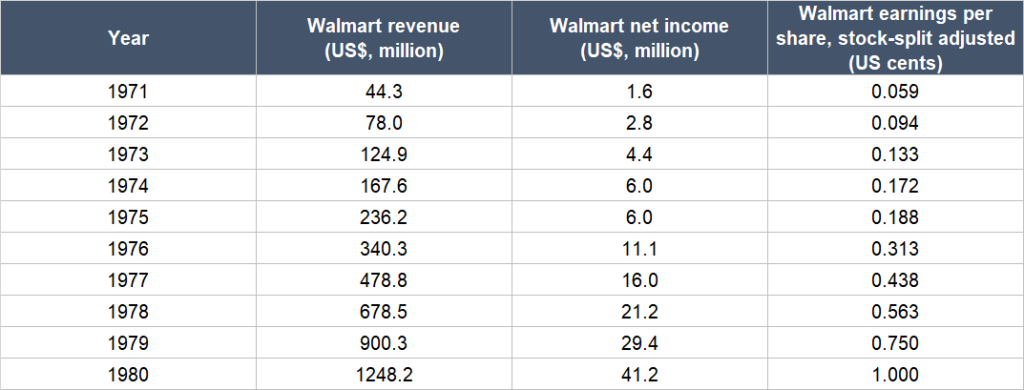
More Thoughts From American Technology Companies On AI

A vast collection of notable quotes on artificial intelligence, or AI, from the management teams of US-listed technology companies.

Nearly a month ago, I published What American Technology Companies Are Thinking About AI. In it, I shared commentary in earnings conference calls, from the leaders of technology companies that I follow or have a vested interest in, on the topic of AI and how the technology could impact their industry and the business world writ large. 

A few more technology companies I’m watching hosted earnings conference calls after the article was published. The leaders of these companies also had insights on AI that I think would be useful to share. Here they are, in no particular order:

Adobe (NASDAQ: ADBE)

Adobe’s management will be building foundational models as well as using generative AI as co-pilots for users

Our generative AI strategy focuses on data, models and interfaces. Our rich datasets across creativity, documents and customer experiences enable us to train models on the highest quality assets. We will build foundation models in the categories where we have deep domain expertise, including imaging, vector, video, documents and marketing. We are bringing generative AI to life as a co-pilot across our incredible array of interfaces to deliver magic and productivity gains for a broader set of customers. 

Adobe’s management thinks its generative AI feature, Firefly, has multiple monetisation opportunities, but will only introduce specific pricing later this year with a focus on monetisation right now

Our generative AI offerings represent additional customer value as well as multiple new monetization opportunities. First, Firefly will be available both as a stand-alone freemium offering for consumers as well as an enterprise offering announced last week. Second, copilot generative AI functionality within our flagship applications will drive higher ARPUs and retention. Third, subscription credit packs will be made available for customers who need to generate greater amounts of content. Fourth, we will offer developer communities access to Firefly APIs and allow enterprises the ability to create exclusive custom models with their proprietary content. And finally, the industry partnerships as well as Firefly represent exciting new top-of-funnel acquisition opportunities for Express, Creative Cloud and Document Cloud. Our priority for now is to get Firefly broadly adopted, and we will introduce specific pricing later this year.

Adobe is seeing outstanding customer demand for generative AI features

We’re really excited, if you can’t tell on the call, about Firefly and what this represents. The early customer and community response has been absolutely exhilarating for all of us. You heard us talk about over 0.5 billion assets that have already been generated. Generations from Photoshop were 80x higher than we had originally projected going into the beta and obviously, feel really good about both the quality of the content being created and also the ability to scale the product to support that

Adobe has built Firefly to be both commercially as well as socially safe for use

Third is that, and perhaps most importantly, we’ve also been able to — because of the way we share and are transparent about where we get our content, we can tell customers that their content generated with Firefly is commercially safe for use. Copyrights are not being violated. Diversity and inclusion is front and center. Harmful imagery is not being generated.

Adobe’s management believes that (1) marketing will become increasingly personalised, (2) the personalisation has to be done at scale, and (3) Adobe can help customers achieve the personalisation with the data that it has

I think if you look at Express and Firefly and also the Sensei GenAI services that we announced for Digital Experience, comes at a time when marketing is going through a big shift from sort of mass marketing to personalized marketing at scale. And for the personalization at scale, everything has to be personalized, whether it’s content or audiences, customer journeys. And that’s the unique advantage we have. We have the data within the audience — the Adobe Experience Platform with the real-time customer profiles. We then have the models that we’re working with like Firefly. And then we have the interfaces through the apps like Adobe Campaign, Adobe Experience Manager and so on.So we can put all of that together in a manner that’s really consistent with the data governance that people — that customers expect so that their data is used only in their context and use that to do personalized marketing at scale. So it really fits very well together.

Adobe’s management believes that content production will increase significantly in the next few years because of AI and this will lead to higher demand for more software-seats

And we’re sitting at a moment where companies are telling us that there’s a 5x increase in content production coming out in the next few — next couple of years. And you see a host of new media types coming out. And we see the opportunity here for both seat expansion as a result of this and also because of the value we’re adding into our products themselves, increase in ARPU as well.

DocuSign (NASDAQ: DOCU)

DocuSign’s management believes that generative AI can transform all aspects of the agreement workflow

In brief, we believe AI unlocks the true potential of the intelligent agreement category. We already have a strong track record, leveraging sophisticated AI models, having built and shipped solutions based on earlier generations of AI. Generative AI can transform all aspects of agreement workflow, and we are uniquely positioned to capitalize on this opportunity. As an early example, we recently introduced a new limited availability feature agreement summarization. This new feature, which is enabled by our integration with Microsoft’s Azure Open AI service and tuned with our own proprietary agreement model uses AI to summarize and documents critical components giving signers a clear grasp of the most relevant information within their agreement, while respecting data security and privacy. 

Some possible future launches of generative AI features by DocuSign include search capabilities across agreement libraries and edits of documents based on industry best practices

Future launches will include search across customer agreement libraries, extractions from agreements and proposed language and edits based on customer, industry and universal best practices.

DocuSign has been working with AI for several years, but management sees the introduction of generative AI as a great opportunity to drive significant improvements to the company’s software products

I’d add to that, that I think the biggest change in our road map beyond that clear focus and articulation on agreement workflow is really the advent of generative AI. We’ve been working on AI for several years. As you know, we have products like Insights that leverage earlier generations of AI models. But given the enormous change there, that’s a fantastic opportunity to really unlock the category. And so, we’re investing very heavily there. We released some new products, and we’ll release more next week at Momentum, but I’m sure we’ll talk more about AI during the call. 

DocuSign’s management sees AI technology as the biggest long-term driver of the company’s growth

So, I think we — overall, I would say, product innovation is going to be the biggest driver and unlocker of our medium- to long-term growth. We do believe that we have very credible low-hanging fruit from better execution on our self-serve and product-backed growth motion. And so, that’s a top priority to drive greater efficiency in the near to medium term. I think the AI impact is perhaps the biggest in the long term. And we are starting to ship products, as I alluded to, and we’ll announce more next week. But in terms of its overall impact on the business, I think it’s still behind the other two in the — in the near to medium term. But in terms of the long-term potential of our category of agreement workflow, I think it’s a massive unlock and a fantastic opportunity for DocuSign.

DocuSign’s management is currently monetising AI by bundling AI features with existing features in some cases, and charging for AI features as add-ons in others; management needs to learn more about how customers are using AI features when it comes to monetization

In terms of monetization, I expect AI features to be both bundled as part of our baseline products, strengthening their functionality and value, as I suggested earlier. And in some cases, packaged as a separately charged add-on. We do both today. So, if you take our Insights product, which is really our AI-driven analytics product for CLM, we both have a stand-alone SKU. It’s sold separately as well as a premium bundle. I think, we’re going to need to learn a little bit more about how customers want to use this and what the key value drivers are before we finalize how we price the different features, but certainly mindful of wanting to capture the — deliver the most value and capture the most value for DocuSign, as we price it.

MongoDB (NASDAQ: MDB)

MongoDB’s management believes that AI will increase software development velocity and will enable more companies to launch more apps, leading to the speed of software development being even more important for companies

We believe AI will be the next frontier of development productivity — developer productivity and will likely lead to a step function increase in software development velocity. We know that most organizations have a huge backlog of projects they would like to take on but they just don’t have the development capacity to pursue. As developer productivity meaningfully improves, companies can dramatically increase their software ambitions and rapidly launch many more applications to transform their business. Consequently, the importance of development velocity to remain competitive will be even more pronounced. Said another way, if you are slow, then you are obsolete.

Companies are increasingly choosing MongoDB’s Atlas database service as the platform to build and run new AI apps

We are observing an emerging trend where customers are increasingly choosing Atlas as the platform to build and run new AI applications. For example, in Q1, more than 200 of the new Atlas customers were AI or ML companies. Well-financed start-ups like Hugging Face, [ Tekion ], One AI and [ Neura ] are examples of companies using MongoDB to help deliver the next wave of AI-powered applications to their customers.

MongoDB’s management believes that apps on legacy platforms will be replatformed to be AI-enabled, and those apps will need to migrate to MongoDB

We also believe that many existing applications will be replatformed to be AI enabled. This will be a compelling reason for customers to migrate from legacy technologies to MongoDB.

MongoDB’s management believes that in an increasingly AI-driven world, (1) AI will lead to more apps and more data storage demand for MongoDB; (2) developers will want to use modern databases like MongoDB to build; and (3) MongoDB can support wide use-cases, so it’s attractive to use MongoDB

First, we expect MongoDB to be a net beneficiary of AI, the reason being is that, as developer productivity increases, the volume of new applications will increase, which by definition will create new apps, which means more data stores, so driving more demand for MongoDB. Second, developers will be attracted to modern platforms like MongoDB because that’s the place where they can build these modern next-generation applications. And third, because of the breadth of our platform and the wide variety of use cases we support, that becomes even more of an impetus to use MongoDB. 

MongoDB’s management knows that AI requires vector databases, but thinks that AI still needs an operational datastore, which is where MongoDB excels in

The results that come from training and LLM against content are known as vector embeddings. And so content is assigned vectors and the vectors are stored in a database. These databases then facilitate searches when users query large language model with the appropriate vector embeddings, and it’s essentially how a user search is matched to content from an LLM. The key point, though, is that you still need an operational data store to store the actual data. And there are some adjunct solutions out there that have come out that are bespoke solutions but are not tied to actually where the data resides, so it’s not the best developer experience. And I believe that, over time, people will gravitate to a more seamless and integrated platform that offers a compelling user experience…

..Again, for generating content that’s accurate in a performant way, you do need to use vector embeddings which are stored in a database. And you — but you also need to store the data and you want to be able to offer a very compelling and seamless developer experience and be able to offer that as part of a broader platform. I think what you’ve seen, Brent, is that there’s been other trends, things like graph and time series, where a lot of people are very excited about these kind of bespoke single-function technologies, but over time, they got subsumed into a broader platform because it didn’t make sense for customers to have all these bespoke solutions which added so much complexity to their data architecture. 

Okta (NASDAQ: OKTA)

Okta has been working with AI for a number of years and some of its products contain AI features

So when we look at our own business, one of our huge — we have AI in our products, and we have for a few years, whether it’s ThreatInsight on the workforce side or Security Center on the customer identity side, which look at our billions of authentications and use AI to make sure we defend other customers from like similar types of threats that have been prosecuted against various customers on the platform. 

Okta’s management thinks AI could be really useful for helping users to auto-configure the set of Okta

One of the ideas that we’re working on that might be a typical use case of how someone like us could use AI is configuring Okta, setting the policy up for Okta across hundreds of applications on the workforce side or 10 or 20 applications on the customer identity side with various access policies and rules about who can access them and how they access them. It’d be pretty complicated to set up, but we’ve actually been prototyping using AI to auto-generate that configuration.

Okta’s management believes that AI will lead to higher demand for identity-use cases for the company

And then the other one we’re excited about is if you zoom out and you think this is a huge platform shift, it’s the next generation of technology. So that means that there’s going to be tons of new applications built with AI. It means that there’s going to be tons of new industries created and industries changed. And there’s going to be a login for all these things. You’re going to need to log on to these experiences. Sometimes it’s going to be machines. Sometimes it’s going to be users. That’s an identity problem, and we can help with that. So in a sense, we’re really going to be selling picks and shovels to the gold miners. 

Salesforce (NYSE: CRM)

Salesforce recently launched EinsteinGPT, a form of generative AI for customer relationship management

Last quarter, I told you of how our AI team is getting ready to launch EinsteinGPT, the world’s first generative AI for CRM. At Trailhead DX in March in front of thousands of trailblazers here in San Francisco, that’s exactly what we did. 

Salesforce announced SlackGPT, an AI assistant for users of the communication software Slack; management also believes that unleashing large language models within Slack can make the software incredibly valuable for users

We saw more of the incredible work of our AI team at our New York City World Tour this month when we demonstrated Slack GPT. Slack is a secure treasure trove of company data that generative AI can use to give every company and every employee their own powerful AI assistant, helping every employee be more productive in transforming the future of work. SlackGPT can leverage the power of generative AI, deliver instant conversation summaries, research tools and writing assistance directly in Slack. And you may never need to leave Slack to get a question answered. Slack is the perfect conversational interface for working with LLMs, which is why so many AI companies are Slack first and why OpenAI, ChatGPT and AnthropicSquad can now use Slack as a native interface…

…I think folks know, I have — my neighbor Sam Altman is the CEO of OpenAI, and I went over to his house for dinner, and it was a great conversation as it always is with him. And he had — he said, “Oh, just hold on one second, Marc, I want to get my laptop.” And he brought his laptop out and gave me some demonstrations of advanced technologies that are not appropriate for the call. But I did notice that there was only one application that he was using on his laptop and that was Slack. And the powerful part about that was I realized that everything from day 1 at OpenAI have been in Slack. And as we kind of brainstorm and talked about — of course, he was paying a Slack user fee and on and on, and he’s a great Slack customer. We’ve done a video about them, it’s on YouTube. But I realize that taking an LLM and embedding it inside Slack, well, maybe Slack will wake up. I mean there is so much data in Slack, I wonder if it could tell him what are the opportunities in OpenAI. What are the conflicts, what are the conversations, what should be his prioritization. What is the big product that got repressed that he never knew about.

And I realized in my own version of Slack at Salesforce, I have over 95 million Slack messages, and these are all open messages. I’m not talking about closed messaging or direct messaging or secure messaging between employees. I’m talking about the open framework that’s going on inside Salesforce and with so many of our customers. And then I realized, wow, I think Slack could wake up, and it could become a tremendous asset with an LLM consuming all that data and driving it. And then, of course, the idea is that is a new version of Slack. Not only do you have the free version of Slack, not only do you have the per user version of Slack, but then you have the additional LLM version of Slack. 

Salesforce is working with luxury brand Gucci to augment its client advisers by building AI chat technology

A great example already deploying this technology is Gucci. We’re working with them to augment their client advisers by building AI chat technology that creates a Gucci-fied tone of service, while incredible new voice, amplifying brand, storytelling and incremental sales as well. It’s an incredibly exciting vision for generative AI to transform which was customer service into now customer service, marketing and sales, all through augmenting Gucci employee capabilities using this amazing generative AI.

Salesforce’s management believes that Salesforce’s AI features can (1) help financial services companies improve the capabilities of their employees and (2) provide data-security for highly regulated companies when their data is used in AI models

But yesterday, there were many questions from my friend who I’m not going to give you his name because he’s one of the – the CEO of one of the largest and most important banks in the world. And I’ll just say that, of course, his primary focus is on productivity. He knows that he wants to make his bankers a lot more successful. He wants every banker to be able to rewrite a mortgage, but not every banker can, because writing the mortgage takes a lot of technical expertise. But as we showed him in the meeting through a combination of Tableau, which we demonstrated and Slack, which we demonstrated, and Salesforce’s Financial Services Cloud, which he has tens of thousands of users on, that banker understood that this would be incredible. But I also emphasize to him that LLMs, or large language models, they have a voracious appetite for data. They want every piece of data that they can consume. But through his regulatory standards, he cannot deliver all that data into the LLM because it becomes amalgamated. Today, he runs on Salesforce, and his data is secured down to the row and cell level.

Salesforce’s management believes that the technology sector experienced a “COVID super cycle” in 2020/2021 that made 2022 difficult for companies in the sector but that the tech could see an acceleration in growth in the future from an “AI supercycle”

I just really think you have to look at 2020, 2021 was just this massive super cycle called the pandemic. I don’t know if you remember, but we had a pandemic a couple of years ago. And during that, we saw tech buying like we never saw. It was incredible and everybody surged on tech buying. So you’re really looking at comparisons against that huge mega cycle… 

…That’s also what gives me tremendous confidence going forward and that what we’re really seeing is that customers are absorbing the huge amounts of technology that they bought. And that is about to come, I believe, to a close. I can’t give you the exact date, and it’s going to be accelerated by this AI super cycle.

Salesforce is doing a lot of work on data security when it comes to developing its AI features

For example, so we are doing a lot of things as the basic security level, like we are really doing tenant level isolation coupled with 0 retention architecture, the LLM level. So the LLM doesn’t remember any of the data. Along with that, they — for them to use these use cases, they want to have — they have a lot of these compliances like GDPR, ISO, SOC, Quadrant, they want to ensure that those compliances are still valid, and we’re going to solve it for that. In addition, the big worry everybody has is people have heard about hallucinations, toxicity, bias, this is what we call model trust. We have a lot of innovation around how to ground the data on 360 data, which is a huge advantage we have. And we are able to do a lot of things at that level. And then the thing, which I think Marc hinted at, which is LLMs are not like a database. These intra-enterprise trust, even once you have an LLM, you can’t open the data to everybody in the company. So you need ability to do this — who can access this data, how is it doing both before the query and after the query, we have to build that. 

Salesforce is importing 7 trillion reports into its Data Cloud to build AI features, and management believes this is a value trove of data

And by the way, the Data Cloud, just in a month, we are importing more than 7 trillion reports into the data layer, so which is a very powerful asset we have. So coupled with all of this is what they are looking for guidance and how we think we can deliver significant value to our customers.

Salesforce’s management sees generative AI as a useful tool to help non-technical users write software

But you can also imagine, for example, even with Salesforce, the ability as we’re going to see in June, that many of our trailblazers are amazing low-code, no-code trailblazers, but soon they’ll have the ability to tap into our LLMs like ProGen and Cogen that have the ability to code for them automatically. hey aren’t coders. They didn’t graduate computer science degrees.

The arc of progress that Salesforce’s management sees with AI: Predictive, then generative, then autonomous

So I think the way I see it is this AI technologies are a continuum that is predictive then they generate, and the real long-term goal is autonomous. The initial version of the generative AI will be more in terms of assistance…

… And then I think the fully autonomous cases, for example, in our own internal use cases with our models, we are able to detect 60% of instance and auto remediate. That requires a little bit more fine-tuning and we’ll have to work with specific customers to get to that level of model performance. So I see this is just the start of this cut. The assistant model is the initial thing to build trust and a human in the loop and validate it. And then as the models get better and better, we’ll keep taking use cases where we can fully automate it.

AI has already improved the productivity of Salesforce’s software developers by at least 20% and management thinks the same productivity-boost can happen for Salesforce’s customers

But the other use cases, which we are going to see, and in fact, I have rolled out our own code elements in our engineering org and we are already seeing minimum 20% productivity…

…In some cases, up to 30%. Now a lot of our customers are asking the same. We are going to roll Einstein GPT for our developers in the ecosystem, which will not only help not only the local developers bridge the gap, where there’s a talent gap but also reduce the cost of implementations for a lot of people. So there’s a lot of value.

Veeva Systems (NYSE: VEEV)

Veeva Systems recently announced an AI chatbot for field sales reps and management is not thinking about the chatbot’s monetisation at the moment

CRM Bot is an AI application for Vault CRM. You can think of it as ChatGPT for field teams…

…Yes, it’s really early right now. We’re focused on ensuring that we have the right product working with our customers. So that’s our focus right now. Let’s get the product right, and then we’ll get into more of the details on kind of the sizing and the opportunity there. But we’re excited overall about the opportunity we have in front of us …CRM bot will — that’s not an included product so that will have a license that will most likely be licensed by the user. So that will be net new. But as Brent mentioned, we’re focused on getting the product right and we don’t have pricing for that or sizing for that yet.

Veeva Systems’ management thinks that AI will not disrupt the company and will instead be a positive

Given the breadth and the nature of our industry cloud software, data, and services, AI will not be a major disruptor for our markets, rather it will be complementary and somewhat positive for Veeva in a few ways. We will develop focused AI applications where the technology is a good fit, such as CRM Bot for Vault CRM. The broadening use of AI will make our proprietary data assets, such as Link and Compass, more valuable over time because the data can be used in new ways. We will also make it easy for customers to connect their own AI applications with their Veeva applications, creating even more value from the Veeva ecosystem…

Veeva Systems’ management thinks that core systems of records will be needed even in the world of AI

I like our position as it relates to AI because we’re a core system of record. So that’s something you’re always going to need. I think that’s 1 thing that people should always understand. Core system of records will be needed even in the world of AI. If I ask Brent, hey, Brent, do you think 10 years from now, you’ll need a financial system to manage your financials. He’s going to tell me, yes, I really need one, you can’t take it away. ChatGPT won’t do it for me, right? I’m making a joke there, but our customers have the same critical operational systems around drug safety, around clinical trials, around regulatory, around their quality processes. So those are always going to be needed.

Veeva Systems is focused on leveraging its proprietary data assets with AI to make them more valuable 

Now we are also building our data assets, and these are proprietary data assets, Link, Compass and we’re building more data assets. Those will also be not affected by AI, but AI will be able to leverage those assets and make those assets more valuable. So I think we’ll develop more — we’ll do basically 3 things. We’ll develop more applications over time. CRM bot the first. We got to get that right. We also will — our proprietary data will get more valuable.

Veeva Systems’ management wants to make it easy for customers to connect their own AI applications with the company’s software products

And the third thing we’ll do is make our applications fit very well when customers have their own proprietary AI applications. So especially the Vault platform, we’ll do a lot of work in there to make it fit really well with the other AI applications they have from other vendors or that they develop themselves, because it’s an open ecosystem, and that’s how that’s part of being Veeva. 


Disclaimer: The Good Investors is the personal investing blog of two simple guys who are passionate about educating Singaporeans about stock market investing. By using this Site, you specifically agree that none of the information provided constitutes financial, investment, or other professional advice. It is only intended to provide education. Speak with a professional before making important decisions about your money, your professional life, or even your personal life. I have a vested interest in Adobe, DocuSign, MongoDB, Okta, Salesforce, and Veeva Systems. Holdings are subject to change at any time.
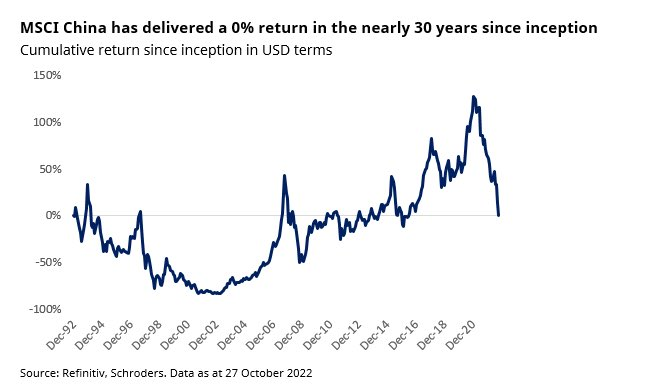
What We’re Reading (Week Ending 18 June 2023)

The best articles we’ve read in recent times on a wide range of topics, including investing, business, and the world in general.

We’ve constantly been sharing a list of our recent reads in our weekly emails for The Good Investors.

Do subscribe for our weekly updates through the orange box in the blog (it’s on the side if you’re using a computer, and all the way at the bottom if you’re using mobile) – it’s free!

But since our readership-audience for The Good Investors is wider than our subscriber base, we think sharing the reading list regularly on the blog itself can benefit even more people. The articles we share touch on a wide range of topics, including investing, business, and the world in general.

Here are the articles for the week ending 18 June 2023:

1. Sharing Memories of Ben Graham with Warren Buffett in Omaha, 2023 – Beyond Ben Graham blog

“When I worked with him,” Mr. Buffett continued, “Ben told me: ‘Don’t worry too much about making money. It will change how your wife lives but not how you live.’” Mr. Buffett laughed gleefully. With a jovial smile, he remembered Grandpa Ben’s advice to him: “‘You and I will still wear the same clothes and eat at the same cafeteria, so relax.‘”…

…I suspect that ours was an unusual encounter for Warren, with no talk of investments, stocks, earnings, companies, banks, and the economy. Instead, I asked him, “How did Ben treat you, when you went to work for him at Graham-Newman?” In 1954, Warren had been twenty-four years old.

“Kindly. Ben treated me kindly. Same as he treated everyone else in the office,” Warren asserted.

I pictured my grandfather, his ready smile, his benevolent presence, the way he had welcomed me to his Aix-en-Provence cottage when I arrived for an unannounced visit, scruffy from weeks of camping, my long hair in dire need of a wash, at the age of twenty-one.

On our second visit with Warren, I asked him: “Would you say that you and Ben became friends?” When he didn’t answer right away, I continued: “In some of Ben’s letters and postcards in your files, he expressed a wish for you and Susie to visit him in California. That sounds like friendship to me.”

“Well, I think I wanted the friendship more than he did.” Warren paused, and when he spoke again, his voice cracked. “Ben was my hero and my friend.” His light blue eyes widened and his face took on a youthful, eager, and fierce expression. “It helps to have heroes who are better than you.”

I felt honored to be in the room. A deep, essential part of me perceived, from the tenor of Warren’s voice, his fervent gaze, that Warren loves my grandfather. Not just back in the ’50s when he venerated Ben as his most admired Columbia Business School professor and his dream boss. Not just in the late ’50s when he and his wife Susie stayed at the Beverly Hills Hotel and joined Ben and Estey for dinner, or in 1968 when Warren organized a tribute to his mentor by convening twelve of Ben’s former Columbia students (including himself, Charlie Munger and Walter Schloss) on Coronado Island in San Diego to listen to Graham, the Great Man. Ben died in 1976, and Warren still finds meaning in his relationship with Ben. We humans have the capacity to feel love for a person who has passed—love that nourishes the soul and informs how we live. Warren’s heartfelt connection with Ben continues to sustain him…

…In his gracious treatment of me and my husband, Warren embodied the kindness and generosity he saw in Ben Graham. He treats the twenty-four staffers who work with him at the Omaha office considerately too. Investment manager Ted Weschler appeared relaxed and glad to be there. Each person we chatted with in the lunch room seemed at ease and content, in marked contrast to the stressed employees I have encountered in Bay Area tech firms.

Warren Buffett follows in Ben Graham’s footsteps by manifesting kindness in his treatment of shareholders, and compassion in his way of conducting business. For example, back in the ’70s, Warren Buffett stood up for Berkshire Hathaway textile workers the way Ben Graham advocated for ordinary investors when Ben compelled Standard Oil to distribute surplus cash to shareholders in the 1928 Northern Pipeline contest. From a business standpoint, Buffett knew he should close the failing Berkshire Hathaway textile mill and invest its assets in a profitable enterprise, but he chose to keep it open in order to give the workers a livelihood.

Inspired by his hero Ben Graham’s generosity, Warren Buffett has far surpassed Ben in giving to charity. In 2022, according to Forbes, Warren’s 17th annual summer gift brought his total lifetime giving to charitable foundations to a record $48 billion, “[solidifying] his place as the likely biggest philanthropist of all time.”…

…A smiling executive assistant boxed up the papers. “It’s been so nice to meet you in person,” she enthused. “You know, Warren talks about your grandfather all the time.”

“You mean, because he was expecting my visit?” I asked.

“No,” she answered. “I’ve been here twenty-five years. He talks about Ben Graham all the time.”

2. Can We Have a New Bull Market With 3% Unemployment? – Ben Carlson

Many historical market relationships have been turned on their head since the pandemic but there has been a clear correlation between stock market returns and the unemployment rate over the past 75 years or so…

…There is a clear pattern in these results.

Average annual returns have been higher from higher unemployment rates and lower from lower unemployment rates…

…It can also be instructive to look at the range of returns around these historical averages. Here those are for 10 year performance:

You can have exceptional long-term returns from low unemployment rates. It’s just that you get a much higher floor investing when the economy is falling apart than when everything is humming along from a labor market perspective.

Markets are often counterintuitive. Historical relationships are helpful for setting expectations but they’re not written in stone.

So we could get a rip-roaring bull market from an unemployment rate of 3% or so but it’s probably not the base case.

3. Microsoft’s Satya Nadella Is Betting Everything on AI – Steven Levy and Satya Nadella 

STEVEN LEVY: When did you realize that this stage of AI was going to be so transformative?

SATYA NADELLA: When we went from GPT 2.5 to 3, we all started seeing these emergent capabilities. It began showing scaling effects. We didn’t train it on just coding, but it got really good at coding. That’s when I became a believer. I thought, “Wow, this is really on.”

Was there a single eureka moment that led you to go all in?

It was that ability to code, which led to our creating Copilot. But the first time I saw what is now called GPT-4, in the summer of 2022, was a mind-blowing experience. There is one query I always sort of use as a reference. Machine translation has been with us for a long time, and it’s achieved a lot of great benchmarks, but it doesn’t have the subtlety of capturing deep meaning in poetry. Growing up in Hyderabad, India, I’d dreamt about being able to read Persian poetry—in particular the work of Rumi, which has been translated into Urdu and then into English. GPT-4 did it, in one shot. It was not just a machine translation, but something that preserved the sovereignty of poetry across two language boundaries. And that’s pretty cool.

Microsoft has been investing in AI for decades—didn’t you have your own large language model? Why did you need OpenAI?

We had our own set of efforts, including a model called Turing that was inside of Bing and offered in Azure and what have you. But I felt OpenAI was going after the same thing as us. So instead of trying to train five different foundational models, I wanted one foundation, making it a basis for a platform effect. So we partnered. They bet on us, we bet on them. They do the foundation models, and we do a lot of work around them, including the tooling around responsible AI and AI safety. At the end of the day we are two independent companies deeply partnered to go after one goal, with discipline, instead of multiple teams just doing random things. We said, “Let’s go after this and build one thing that really captures the imagination of the world.”…

OpenAI CEO Sam Altman believes that this will indeed happen. Do you agree with him that we’re going to hit that AGI superintelligence benchmark?

I’m much more focused on the benefits to all of us. I am haunted by the fact that the industrial revolution didn’t touch the parts of the world where I grew up until much later. So I am looking for the thing that may be even bigger than the industrial revolution, and really doing what the industrial revolution did for the West, for everyone in the world. So I’m not at all worried about AGI showing up, or showing up fast. Great, right? That means 8 billion people have abundance. That’s a fantastic world to live in.

What’s your road map to make that vision real? Right now you’re building AI into your search engine, your databases, your developer tools. That’s not what those underserved people are using.

Great point. Let’s start by looking at what the frontiers for developers are. One of the things that I am really excited about is bringing back the joy of development. Microsoft started as a tools company, notably developer tools. But over the years, because of the complexity of software development, the attention and flow that developers once enjoyed have been disrupted. What we have done for the craft with this AI programmer Copilot [which writes the mundane code and frees programmers to tackle more challenging problems] is beautiful to see. Now, 100 million developers who are on GitHub can enjoy themselves. As AI transforms the process of programming, though, it can grow 10 times—100 million can be a billion. When you are prompting an LLM, you’re programming it.

Anyone with a smartphone who knows how to talk can be a developer?

Absolutely. You don’t have to write a formula or learn the syntax or algebra. If you say prompting is just development, the learning curves are going to get better. You can now even ask, “What is development?” It’s going to be democratized.

As for getting this to all 8 billion people, I was in India in January and saw an amazing demo. The government has a program called Digital Public Goods, and one is a text-to-speech system. In the demo, a rural farmer was using the system to ask about a subsidy program he saw on the news. It told him about the program and the forms he could fill out to apply. Normally, it would tell him where to get the forms. But one developer in India had trained GPT on all the Indian government documents, so the system filled it out for him automatically, in a different language. Something created a few months earlier on the West Coast, United States, had made its way to a developer in India, who then wrote a mod that allows a rural Indian farmer to get the benefits of that technology on a WhatsApp bot on a mobile phone. My dream is that every one of Earth’s 8 billion people can have an AI tutor, an AI doctor, a programmer, maybe a consultant!…

… It’s all about saying, “Hey, can there be a more natural interface that empowers us as humans to augment our cognitive capability to do more things?” So yes, this is one of those examples. Copilot is a metaphor because that is a design choice that puts the human at the center of it. So don’t make this development about autopilot—it’s about copilot. A lot of people are saying, “Oh my God, AI is here!” Guess what? AI is already all around us. In fact, all behavioral targeting uses a lot of generative AI. It’s a black box where you and I are just targets.

It seems to me that the future will be a tug-of-war between copilot and autopilot.

The question is, how do humans control these powerful capabilities? One approach is to get the model itself aligned with core human values that we care about. These are not technical problems, they’re more social-cultural considerations. The other side is design choices and product-making with context. That means really making sure that the context in which these models are being deployed is aligned with safety…

You still haven’t said whether you think there’s any chance at all that AI is going to destroy humanity.

If there is going to be something that is just completely out of control, that’s a problem, and we shouldn’t allow it. It’s an abdication of our own responsibility to say this is going to just go out of control. We can deal with powerful technology. By the way, electricity had unintended consequences. We made sure the electric grid was safe, we set up standards, we have safety. Obviously with nuclear energy, we dealt with proliferation. Somewhere in these two are good examples on how to deal with powerful technologies…

AI is more than just a topic of discussion. Now, you’ve centered Microsoft around this transformational technology. How do you manage that?

One of the analogies I love to use internally is, when we went from steam engines to electric power, you had to rewire the factory. You couldn’t just put the electric motor where the steam engine was and leave everything else the same. That was the difference between Stanley Motor Carriage Company and Ford Motor Company, where Ford was able to rewire the entire workflow. So inside Microsoft, the means of production of software is changing. It’s a radical shift in the core workflow inside Microsoft and how we evangelize our output—and how it changes every school, every organization, every household.

How has that tool changed your job?

A lot of knowledge work is drudgery, like email triage. Now, I don’t know how I would ever live without an AI copilot in my Outlook. Responding to an email is not just an English language composition, it can also be a customer support ticket. It interrogates my customer support system and brings back the relevant information. This moment is like when PCs first showed up at work. This feels like that to me, across the length and breadth of our products.

4. Picking a Stock for the Year 2048 – Jason Zweig

Tiffany Gray, 22 years old, is a senior majoring in finance and wealth management at Delaware State, a historically Black university in Dover, Del. Jonathan Rivers, 20, is a junior double-majoring in environmental sciences and religious studies at the University of Virginia. 

Ms. Gray and Mr. Rivers, along with their peers, will assemble a portfolio of perhaps 15-20 stocks and lock it in place for the next 25 years. 

That sounds crazy, and maybe it is, but investors of all ages can learn from these young people.

They are part of an extremely long-term experiment created by Thomas Gayner, chief executive of Markel Corp,  a Glen Allen, Va.-based insurance company. Mr. Gayner has run Markel’s investment portfolio since 1990, building it up to $22 billion with a patient, conservative approach.

He has established a student investment fund at each of the two universities. By the year 2047, Mr. Gayner’s family will contribute, in 25 annual installments, a total of $750,000 to the two clubs. 

The students—29 of them this year at Virginia, nine at Delaware State—will use that money to pick investments that will be frozen for the next 25 years. Each year, the members will buy another round of picks for the next quarter-century. No one, no matter what, will ever be able to sell anything.

Starting in year 26, the members who picked the stocks 25 years earlier will disburse half the accumulated money for scholarships; the other half will be reinvested for the future by that year’s members…

…One lesson from these new clubs is old: the astonishing power of letting your winners run for as long as possible. You can’t lose more than 100% on even your biggest losers (unless you bought them with borrowed money), but the potential gains on your biggest winners are boundless…

…The key is not selling. In a 1984 article called “The Coffee Can Portfolio,” veteran investor Robert Kirby described a client’s husband, who had exactly copied all the buy recommendations Mr. Kirby’s firm had made to his wife, putting about $5,000 in each.

Unlike her, however, the husband had ignored all the sell recommendations. He’d never sold a share. Several of his holdings grew to more than $100,000 apiece. One, which became Xerox Corp., surpassed $800,000, greater than the value of his wife’s entire portfolio.

The long-term tailwind from letting your winners run is easy to underestimate; the human mind isn’t built to extrapolate giant growth rates over multidecade periods…

…Another leader of the Virginia club, Jacob Slagle, 21, says, “It really forces you to think of businesses in a different way: Can it survive 25 years?”

Omar Parker, Jr., a 20-year-old member of the Delaware State club, is already thinking beyond the year 2048: “When we’re long gone,” he says, “our fund will be a legacy to the future generations.”

5. The Exercise Problem – Paul Skallas

The exercise problem is this. We did not evolve to want to exercise, it was just a necessary part of life for survival.

We have created a society where we do not have to physically move our bodies very much in order to survive. We’ve built an incredibly convenient world. Physical stressors have disappeared. We do not need to hunt for our food, we drive to work and most office work and entertainment is sedentary. We can go through life working and living just sitting down day after day. We can even get really rich doing that. The incentives for moving around aren’t really there anymore.

But that isn’t the world we evolved from, nor have our bodies evolved to live in a sedentary world. We need to move around or else there will be consequences. But we haven’t figured out how to fit moving around in our modern world yet.

For nearly every day of their lives, hunter-gatherers, farmers and villagers engage in hours of physical work because they lack cars, machines and other labor saving devices. Their daily existence requires walking many miles and carrying things.

We have become so efficient and automated that farmers today have worse cardiovascular health than non-farmers. City people are healthier today. Which is probably the first time that’s ever occurred in history…

…Researchers put trackers on the modern hunter-gatherer tribe called the Hadza. They found that the Hadza are physically moving at pace of what we call exercise at least 90 minutes a day. Everyday. Including moving around all the time doing things. This population also has a low level of cardiovascular disease, including hypertension and optimal levels for biomarkers of cardiovascular health. But these people were not exercising. They are just responding to the needs of their environment. Exercise is something else.

Exercise can be defined as a voluntary, planned, structured physical activity undertaken for the sake of health and fitness. It’s a modern phenomenon. We shouldn’t confuse exercise with physically moving around. We moved around for a variety of reasons. For example, play is an end to itself, it is not exercise. Every animal plays…

…Only about 20-30 percent of Americans exercise at even decent government approved intervals. Which is the lowest common denominator. Recent studies show you can exercise 13 hours a week at moderate intensity and still get healthier…

…Of that 20-30 percent who actually work out, how many enjoy it? Only Half. The other half do not want to be there. They hate it. I’m sure you know what I’m talking about. So now we’re down to 10% of Americans who enjoy exercise for the sake of exercise. Which basically means enjoying exercising can be considered a fetish.

This is a serious problem. It is not trivial. The survey also found that 54 percent of Americans mentally check out of their workouts because they’re so bored. Another 18 percent claim their body is simply on autopilot during their routines.

Who’s fault is it that 90% of people dislike exercising? Is it their fault? I don’t think so. There’s something wrong inherent with the concept of exercise we need to address in order to solve the problem of moving around. The Fitness influencer yelling at you to workout is a symptom of a deeper issue. We haven’t figured out the exercise problem yet at scale…

…It makes sense that most people hate exercise since it is a misalignment from our evolutionary environment. But some people really do enjoy it. Who are some of these 10% of exercise enjoyers? What is their motivation?

1) The Corporate Endurance Athlete

I’ve worked at a number of medium and big companies and there has been a consistent trend throughout: You won’t find many powerlifters in upper management. What you will find is people who love doing cardio and endurance sports like running or bicycling for many, many miles. There are some statistics that back it up…

…But mainly, It takes a lot of consistency to reach the top of a hierarchy. And consistency means doing the same thing day after day and not getting tired of it. It’s not surprise enjoying endurance exercising (running a lot of miles every day) selects for a certain type of person.

Not only does this person have a high tolerance for boredom, but it could be coupled with a high tolerance of pain. They do not mind using a treadmill or doing a triathlon. The history of the treadmill showcases its evolution from a form of punishment to a widely used exercise equipment. They were created in the 19th century. These early treadmills were primarily used for punishment in prisons and workhouses. In these institutions, prisoners and inmates were made to walk or run on the treadmill for hours as a form of hard labor…

…2) The Bodybuilder

Many young males really enjoy going to the gym because it allows them to build their body to look a certain way. Unfortunately, that certain way only started a little over 100 years ago.

As a young man, I started going to the gym to build muscle to look better. It wasn’t for “health”. It was for show. Later on, I transitioned to Jiu-Jitsu and Muay Thai, and then to other forms of exercise. But if I stayed on the bodybuilding mindset I may have just gotten on various forms of steroids.

Is bodybuilding healthy? It’s certainly better than not moving at all and being sedentary. Absolutely. But skews your image of a lindy healthy body. How functionally strong athletes look like in the absence of steroids. Or just focusing on hypertrophy & muscles for show, not function…

…3) The Anti-Aging Warrior

The other exercise lover is the man who fears death. He will force himself to love exercise for the sake of staying on this planet. Death is a tremendous motivator. Especially to a man who has a life he enjoys and is succesful. This type of man is his 50s, or 60s. Some examples include Peter Attia, Bryan Johnson. There is no emphasis on joy or fun. The exercise is deeply serious and must be done…

…I sometimes think about the island with the oldest people in the world and how they just look a little happier just living their lives in the environment instead of being on this mission to exercise to stay alive.


Disclaimer: The Good Investors is the personal investing blog of two simple guys who are passionate about educating Singaporeans about stock market investing. By using this Site, you specifically agree that none of the information provided constitutes financial, investment, or other professional advice. It is only intended to provide education. Speak with a professional before making important decisions about your money, your professional life, or even your personal life. We currently have a vested interest in Markel and Microsoft. Holdings are subject to change at any time.
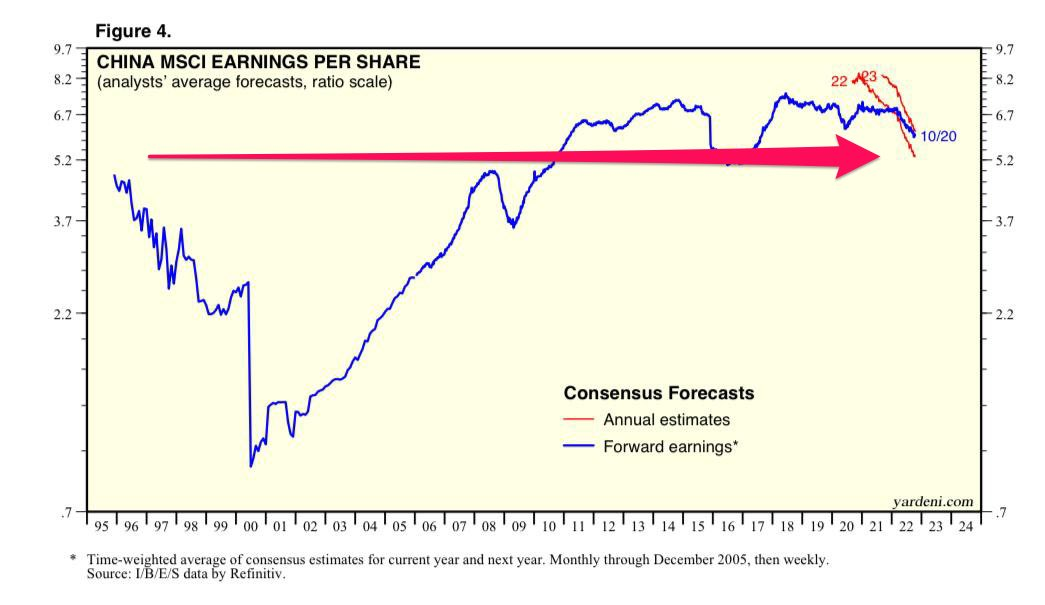
An Investing Paradox: Stability Is Destabilising

The epicenters of past periods of economic stress happened in sectors that were strong and robust. Why is that the case?

One of my favourite frameworks for thinking about investing and the economy is the simple but profound concept of stability being destabilising. This comes from the ideas of the late economist Hyman Minsky.

When he was alive, Minsky wasn’t well known. His views on why an economy goes through boom-bust cycles only gained prominence after the 2008-2009 financial crisis. In essence, Minsky theorised that for an economy, stability itself is destabilising. I first learnt about him – and how his ideas can be extended to investing – years ago after coming across a Motley Fool article written by Morgan Housel. Here’s how Housel describes Minsky’s framework:

“Whether it’s stocks not crashing or the economy going a long time without a recession, stability makes people feel safe. And when people feel safe, they take more risk, like going into debt or buying more stocks.

It pretty much has to be this way. If there was no volatility, and we knew stocks went up 8% every year [the long-run average annual return for the U.S. stock market], the only rational response would be to pay more for them, until they were expensive enough to return less than 8%. It would be crazy for this not to happen, because no rational person would hold cash in the bank if they were guaranteed a higher return in stocks. If we had a 100% guarantee that stocks would return 8% a year, people would bid prices up until they returned the same amount as FDIC-insured savings accounts, which is about 0%.

But there are no guarantees—only the perception of guarantees. Bad stuff happens, and when stocks are priced for perfection, a mere sniff of bad news will send them plunging.”

In other words, great fundamentals in business (stability) can cause investors to take risky actions, such as pushing valuations toward the sky or using plenty of leverage. This plants the seeds for a future downturn to come (the creation of instability).

I recently came across a wonderful July 2010 blog post, titled A Batesian Mimicry Explanation of Business Cycles, from economist Eric Falkenstein that shared historical real-life examples of how instability was created in the economy because of stability. Here are the relevant passages from Falkenstein’s blog post (emphases are mine):

“…the housing bubble of 2008 was based on the idea that the borrower’s credit was irrelevant because the underlying collateral, nationwide, had never fallen significantly in nominal terms. This was undoubtedly true. The economics profession, based on what got published in top-tier journals, suggested that uneconomical racial discrimination in mortgage lending was rampant, lending criteria was excessively prudent (underwriting criteria explicitly do not note borrowers race, so presumably lenders were picking up correlated signals). Well-known economists Joe Stiglitz and Peter Orzag wrote a paper for Fannie Mae arguing the expected loss on its $2 trillion in mortgage guarantees of only $2 million dollars, 0.0001%. Moody’s did not consider it important to analyze the collateral within mortgage CDOs, as if the borrower or collateral characteristics were irrelevant. In short, lots of smart people thought housing was an area with extremely low risk.

Each major bust has its peculiar excesses centered on previously prudent and successful sectors. After the Panic of 1837, many American states defaulted quite to the surprise of European investors, who were mistakenly comforted by their strong performance in the Panic of 1819 (perhaps the first world-wide recession). The Panic of 1893 centered on railroads, which had for a half century experienced solid growth, and seemed tested by their performance in the short-lived Panic of 1873.”

It turns out that it were the “prudent and successful sectors” – the stable ones – that were the epicenters of the panics of old. It was their stability that led to investor excesses, exemplifying Minsky’s idea of how stability is destabilising.

The world of investing is full of paradoxes. Minsky’s valuable contribution to the world of economic and investment thinking is one such example.


Disclaimer: The Good Investors is the personal investing blog of two simple guys who are passionate about educating Singaporeans about stock market investing. By using this Site, you specifically agree that none of the information provided constitutes financial, investment, or other professional advice. It is only intended to provide education. Speak with a professional before making important decisions about your money, your professional life, or even your personal life. I currently have no vested interest in any companies mentioned. Holdings are subject to change at any time.

What We’re Reading (Week Ending 11 June 2023)

The best articles we’ve read in recent times on a wide range of topics, including investing, business, and the world in general.

We’ve constantly been sharing a list of our recent reads in our weekly emails for The Good Investors.

Do subscribe for our weekly updates through the orange box in the blog (it’s on the side if you’re using a computer, and all the way at the bottom if you’re using mobile) – it’s free!

But since our readership-audience for The Good Investors is wider than our subscriber base, we think sharing the reading list regularly on the blog itself can benefit even more people. The articles we share touch on a wide range of topics, including investing, business, and the world in general.

Here are the articles for the week ending 11 June 2023:

1. Real estate is China’s economic Achilles heel – Noah Smith

Painting with a broad brush, you could say that China shifted from an export-led economy to a domestic-investment-led economy after 2008. And the biggest chunk of that domestic investment, by far, was real estate.

Real estate development and its related industries (such as real estate finance) don’t just create places for Chinese people to live; they also create vast amounts of employment in the Chinese economy. That’s a big problem right now, because in the wake of the real estate crash that began in 2021, China’s unemployment has risen a lot — officially, unemployment for the 16-24 age group is now at 20.4%, compared to 6.5% in the U.S. Having a vast number of unemployed young people is a threat to both social stability and the future quality of the workforce, and it’s definitely something that’s worrying the Chinese government right now.

That real estate bust, by the way, is still going on, and — as you might expect for a sector so large, it’s weighing heavily on the rest of China’s economy. The overall narrative about China’s recovery in early 2023 has been recovery from the Zero Covid policies of late 2022 — growth was forecast to bounce back to a rapid 5.2% this year. But the most recent monthly economic data shows that the troubles are far from over. Here’s Bloomberg:

China’s economic recovery weakened in May, raising fresh fears about the growth outlook…Manufacturing activity contracted at a worse pace than in April, while services expansion eased, official data showed Wednesday, suggesting the post-Covid rebound had lost momentum…

A stronger recovery in China will also depend on a turnaround in the property market, which makes up about a fifth of the economy when including related sectors. Home sales have slowed after an initial rebound, while real estate developers continue to face financial troubles. 

It’s highly likely that underneath the headline-grabbing drama of Zero Covid, the real force dragging down China’s short-term growth is the general crisis in the real estate sector that began a year and a half ago. That crisis is still ongoing, with more defaults coming periodically. As Adam Wolfe reports in a detailed thread, residential real estate investment is falling:

And that’s in spite of the Chinese government’s frantic efforts to revive the sector. In the past, China was able to use real estate as a form of fiscal stimulus that cost the central government very little — the government just called up the state-controlled big banks and told them to lend more, and the banks lent to property developers. That stimulus came at the expense of long-term productivity growth (since real estate tends to have lower productivity growth than other sectors), but it did prevent China from experiencing recessions for a long time. With the current crash, though, that policy looks to have reached the end of its rope.

The fact is, China just doesn’t need that many more places to live. Even as of 2017 — six years ago! — China had already basically reached developed-country levels of living space per person.

As China built more and more, vacancy rates rose steadily in all big cities except for the four “Tier 1” cities (Beijing, Shanghai, Shenzhen, and Guangzhou). Overall, vacancy rates were significantly higher in China than in most rich countries:…

…In any country, property will be an important component of wealth, alongside stocks and bonds. But in China, with its underdeveloped stock and bond markets, almost all financial wealth is real estate:

From looking at house prices compared to incomes, it’s clear that much of Chinese real estate is bought as an investment property rather than for its value as a place to actually live (and yes, this is speculative bubble behavior). In San Francisco — America’s famously least affordable big city — a typical house costs 10 times the typical resident’s annual income. In Chinese cities this ratio is often much higher:..

…The biggest losers from the real estate bust, however, will probably be China’s local governments.

China’s local governments famously rely on land sales rather than on property taxes for most of their revenue. The real estate market is thus what allows local governments to both provide essential public services and to conduct local industrial policy — which, until the mid-2010s, was China’s main type of industrial policy…

…Xiong explains that this system has a bunch of advantages and disadvantages. On the plus side, buying land in a city is basically like buying equity in that city — if the city government can produce local growth, your land price goes up. So businesspeople and homeowners all become shareholders in the city, which aligns everybody’s incentives toward growth. On the downside, the system creates a ton of different structural incentives for local governments to borrow too much, and for private investors to over-invest in un-economical and risky real estate projects, and for banks to finance these projects too cheaply. In other words, the combination of the local government sector and the property sector is a big reason why real estate looms so much larger in China’s economy than in other countries, and a big reason why the sector got so bloated.

Ultimately, relying on land sales to finance local governments is a strategy that just has a natural time limit. Eventually you run out of valuable land to sell. China’s local governments look like they’re hitting that point, which is why they’re increasingly asking the central government for money. And the central government is stepping in to replace the revenue from the lost land sales:

This means that many of the advantages that China got from federalism and local experimentation and initiative during its amazing growth boom in the 90s, 00s, and early 2010s will now be forfeit. Industrial policy will increasingly be conducted from the center; Xi Jinping and his clique will be making a lot more of the decisions regarding who builds what where, instead of partnerships of local governments and businesspeople. The virtuous cycle where the property sector aligns the interests of local governments and businesses toward growth will now be weakened if not broken altogether in many places.

2. Post-war Germany’s lessons on inflation – Michael Fritzell

Costantino Bresciani-Turroni was an Italian economist that lived between 1882 and 1963. He’s famous for being an anti-fascist intellectual and a proponent of free-market economics.

But more importantly, he wrote a book called The Economics of Inflation, which is widely regarded as the definitive book on Germany’s experience with hyperinflation between 1919 and 1923…

…The first World War broke out on 28 July 1914 when Austria-Hungary declared war on Serbia following the assassination of Archduke Franz Ferdinand. Germany joined the Austria-Hungary coalition. And on the side, Russia, France, the UK and the US formed the Allied forces of World War 1.

Just three days after the start of the war, the German central bank (“the Reichsbank”) suspended the conversion of its notes to gold. The German currency (“the mark”) became paper money without any value anchor. It, therefore, became known as the “paper mark”, as opposed to the previous, gold-backed “gold mark”.

The reason behind the suspension was that the government knew that it would be unable to finance the war through tax revenue. Instead, the Reichsbank took it upon itself to print money to cover any deficit. And in the following four years, the Reichsbank routinely bought government bonds used to finance the budget deficit…

…From July 1914 to the end of the war in December 1918, Germany’s total government debt rose from 300 million marks to 55 billion marks. The war cost roughly 147 billion marks in total, and so more than 1/3 of it was financed through government borrowing, much of it financed through central bank support…

…The war ended on 11 November 1918 with a German surrender, driven by a new German civilian government. From then onwards, the exchange rate started to depreciate rapidly – faster than domestic prices and the volume of circulation.

There had been hopes that a German victory would lead to spoils of war that could alleviate the country’s debt burden. But once the government declared defeat, those hopes were crushed.

In the eight months after the war ended, the budget deficit reached the 10 billion mark – an incredibly high number. when the Socialist Party took power in November 1918, it didn’t have the strength nor the ability to impose the taxes necessary to balance the budget.

The theory prevailing at the time in Germany was that the depreciation was caused by a deterioration in the balance of payments. But foreign voices and especially the British, believe that the depreciation of the currency was instead caused by an excessive budget deficit.

It’s possible that the holders of the mark feared heavy reparations payments and therefore sold the currency in anticipation of a coming crisis. The Treaty of Versailles was signed on 28 June 1919. The Treaty might have had a psychological influence on the German public, who feared that the government would resort to money printing to fund the deficit.

In reality, the budget deficits would have been high with or without the reparation payments. And the payments actually made under the Treaty of Versailles were not particularly onerous, representing only 1/3 of the total deficit between 1920 and 1922…

…Here is the exact process in which inflation pressures built up in the economy:

  1. The issuance of paper money caused the currency to depreciate as speculators use the newly issued money to buy foreign currency or buy cheaper foreign goods for import.
  2. After the currency depreciated, inflation picked up as imports – especially raw materials – became more expensive.
  3. Later on in the process, the newly printed money worked its way through the economy and eventually led to higher wages. But wages didn’t adjust immediately – instead, they adjusted with a long lag that caught the population off-guard.

There was a narrative early in the post-war era that a weaker currency would stimulate the economy. That was true, but only to a small extent. When the currency depreciated, companies saw their profit margins increase as selling prices adjusted quickly while wages took much longer to adjust. Companies then reinvested their profits and and “fake prosperity” ensued.

Exports did particularly well since they were sold at foreign, higher prices. Inbound tourism to Germany took off. Railway charges did not increase in proportion to the depreciation of the mark, so foreigners were able to enjoy cheap travel when they came to Germany. Pure labour arbitrage industries such as shipyards also did well as wages in Germany fell compared to foreign competitors.

Meanwhile, interest rates remained low. There was a kind of yield curve control in place, with the official discount rate fixed at 5% between 1915 and July 1922, even though inflation accelerated from 1919 onwards to incredible levels.

Instead of raising the interest rate when inflation picked up, the Reichsbank restricted credit instead, favouring certain borrowers over others. It continuously extended credits to private speculators, who proceeded to use these loans to buy foreign currency and profit from the depreciation of the mark. It’s unclear how these borrowers were selected. But they appear to have had a cosy relationship with the Reichsbank – to say the least…

…The hoarding of foreign exchange became more serious throughout 1922. German industrialists formed the habit of leaving the profits they made from exports overseas. Germans began to sell houses, land, securities – anything really – to get hold of foreign currency.

Eventually, Germans started using foreign exchange for their day-to-day transactions. Merchants began to set prices in the gold mark or foreign currency. While salaries were still paid in paper marks, wage earners would rush to buy goods as soon as they received the money. Or convert the money into foreign currency as soon as possible.

In February 1923, the Reichsbank tried to support the mark exchange rate artificially through foreign exchange operations. But continuous issuance of paper money caused inflation to continue, and by April, the dam finally broke with the mark being dumped at a record rate.

Workers came up with solutions to the inflation problem by adding surcharges for the depreciation of the currency added onto wage contracts. Wages became tied to cost-of-living indices.

Eventually, Germans started using foreign exchange for their day-to-day transactions. Merchants began to set prices in the gold mark or foreign currency. While salaries were still paid in paper marks, wage earners would rush to buy goods as soon as they received the money. Or convert the money into foreign currency as soon as possible.

It was only in 1923 that hyperinflation got out of control. Taxes were inflated away to almost zero since they were paid with a long lag and tax receipts ended up being only represented 0.8% of government expenses. The rest of the government’s tax revenues came from printing money. By the end of 1923, 75% of all government bonds were held by the Reichsbank…

…On 15 October 1923, a new bank called the “Rentenbank” was created. This bank issued liabilities that were meant to be used as a substitute for the paper mark. Later that year, the value of the paper mark was stabilised at a rate of 4,200 billion marks for a gold mark. And one Rentenmark became equivalent to one gold mark.

The new Rentenmark wasn’t convertible into gold. But just the simple fact that the new money had a different name from the old instilled confidence. As Bresciani-Turroni explained:

“Of the simple fact that the new paper money had a different name from the old, the public thought it was something different from the paper mark… the new money was accepted, despite the fact that it was an unconvertible paper currency.”

And so, when people stopped hoarding foreign currency, the velocity of circulation of paper marks declined. And the increased willingness to hold domestic currency reduced the inflation problem in and of itself. The Rentenmark ended up circulating together with the paper mark for almost a year.

The passing from hyperinflation to complete stability was sudden. The budget was re-established and expenses cut so that equilibrium was reached. The introduction of new taxes and reduced pressure in terms of reparation payments also helped. In 1924-25, the government finally achieved significant budget surpluses.

Counter-intuitively, a shortage of money emerged despite trillion dollar bills. The reason was that domestic prices had increased so much, and the depreciation was so severe that there was not enough money to satisfy the volume of transactions at current prices.

This shortage was best measured through the concept of “real money supply” (=money supply deflated by inflation), which started shrinking from late 1923 onwards. The circulation of money in mid-1922 was 15-20 times the pre-war days, while prices had risen 40-50 times.

The shortage of money in real terms led to the following outcomes

  • Trade was arrested as companies could not gain access to working capital. Factories closed, and unemployment rose.
  • Interest rates increased, and heavily indebted individuals went bankrupt. At the end of 1923, the “call money” interest rate reached 30% per day.

The real money supply shrunk so much that eventually, the entire money supply amounted to only 444 million gold marks, compared to a Reichsbank gold reserve of 1 billion gold marks. That enabled the Reichsbank on 30 August 1924, to fix the conversion rate of the new Reichsmark at a rate of 1 trillion paper marks per US Dollar. In other words, since the value of the money supply had dropped below the Reichsbank’s holdings of gold, it was easy to peg the currency to gold yet again.

After the new Rentenmark and Reichsmark were introduced, prices stopped rising, and the paper mark strengthened against gold. Factories re-opened, unemployment declined, and confidence revived.

3. Why AI Will Save the World – Marc Andreessen 

What AI offers us is the opportunity to profoundly augment human intelligence to make all of these outcomes of intelligence – and many others, from the creation of new medicines to ways to solve climate change to technologies to reach the stars – much, much better from here.

AI augmentation of human intelligence has already started – AI is already around us in the form of computer control systems of many kinds, is now rapidly escalating with AI Large Language Models like ChatGPT, and will accelerate very quickly from here – if we let it.

In our new era of AI:

  • Every child will have an AI tutor that is infinitely patient, infinitely compassionate, infinitely knowledgeable, infinitely helpful. The AI tutor will be by each child’s side every step of their development, helping them maximize their potential with the machine version of infinite love.
  • Every person will have an AI assistant/coach/mentor/trainer/advisor/therapist that is infinitely patient, infinitely compassionate, infinitely knowledgeable, and infinitely helpful. The AI assistant will be present through all of life’s opportunities and challenges, maximizing every person’s outcomes.
  • Every scientist will have an AI assistant/collaborator/partner that will greatly expand their scope of scientific research and achievement. Every artist, every engineer, every businessperson, every doctor, every caregiver will have the same in their worlds.
  • Every leader of people – CEO, government official, nonprofit president, athletic coach, teacher – will have the same. The magnification effects of better decisions by leaders across the people they lead are enormous, so this intelligence augmentation may be the most important of all.
  • Productivity growth throughout the economy will accelerate dramatically, driving economic growth, creation of new industries, creation of new jobs, and wage growth, and resulting in a new era of heightened material prosperity across the planet.
  • Scientific breakthroughs and new technologies and medicines will dramatically expand, as AI helps us further decode the laws of nature and harvest them for our benefit.
  • The creative arts will enter a golden age, as AI-augmented artists, musicians, writers, and filmmakers gain the ability to realize their visions far faster and at greater scale than ever before.
  • I even think AI is going to improve warfare, when it has to happen, by reducing wartime death rates dramatically. Every war is characterized by terrible decisions made under intense pressure and with sharply limited information by very limited human leaders. Now, military commanders and political leaders will have AI advisors that will help them make much better strategic and tactical decisions, minimizing risk, error, and unnecessary bloodshed.
  • In short, anything that people do with their natural intelligence today can be done much better with AI, and we will be able to take on new challenges that have been impossible to tackle without AI, from curing all diseases to achieving interstellar travel.
  • And this isn’t just about intelligence! Perhaps the most underestimated quality of AI is how humanizing it can be. AI art gives people who otherwise lack technical skills the freedom to create and share their artistic ideas. Talking to an empathetic AI friend really does improve their ability to handle adversity. And AI medical chatbots are already more empathetic than their human counterparts. Rather than making the world harsher and more mechanistic, infinitely patient and sympathetic AI will make the world warmer and nicer.

The stakes here are high. The opportunities are profound. AI is quite possibly the most important – and best – thing our civilization has ever created, certainly on par with electricity and microchips, and probably beyond those…

…My view is that the idea that AI will decide to literally kill humanity is a profound category error. AI is not a living being that has been primed by billions of years of evolution to participate in the battle for the survival of the fittest, as animals are, and as we are. It is math – code – computers, built by people, owned by people, used by people, controlled by people. The idea that it will at some point develop a mind of its own and decide that it has motivations that lead it to try to kill us is a superstitious handwave.

In short, AI doesn’t want, it doesn’t have goals, it doesn’t want to kill you, because it’s not alive. And AI is a machine – is not going to come alive any more than your toaster will.

Now, obviously, there are true believers in killer AI – Baptists – who are gaining a suddenly stratospheric amount of media coverage for their terrifying warnings, some of whom claim to have been studying the topic for decades and say they are now scared out of their minds by what they have learned. Some of these true believers are even actual innovators of the technology. These actors are arguing for a variety of bizarre and extreme restrictions on AI ranging from a ban on AI development, all the way up to military airstrikes on datacenters and nuclear war. They argue that because people like me cannot rule out future catastrophic consequences of AI, that we must assume a precautionary stance that may require large amounts of physical violence and death in order to prevent potential existential risk.

My response is that their position is non-scientific – What is the testable hypothesis? What would falsify the hypothesis? How do we know when we are getting into a danger zone? These questions go mainly unanswered apart from “You can’t prove it won’t happen!” In fact, these Baptists’ position is so non-scientific and so extreme – a conspiracy theory about math and code – and is already calling for physical violence, that I will do something I would normally not do and question their motives as well…

…This time, we finally have the technology that’s going to take all the jobs and render human workers superfluous – real AI. Surely this time history won’t repeat, and AI will cause mass unemployment – and not rapid economic, job, and wage growth – right?

No, that’s not going to happen – and in fact AI, if allowed to develop and proliferate throughout the economy, may cause the most dramatic and sustained economic boom of all time, with correspondingly record job and wage growth – the exact opposite of the fear. And here’s why.

The core mistake the automation-kills-jobs doomers keep making is called the Lump Of Labor Fallacy. This fallacy is the incorrect notion that there is a fixed amount of labor to be done in the economy at any given time, and either machines do it or people do it – and if machines do it, there will be no work for people to do.

The Lump Of Labor Fallacy flows naturally from naive intuition, but naive intuition here is wrong. When technology is applied to production, we get productivity growth – an increase in output generated by a reduction in inputs. The result is lower prices for goods and services. As prices for goods and services fall, we pay less for them, meaning that we now have extra spending power with which to buy other things. This increases demand in the economy, which drives the creation of new production – including new products and new industries – which then creates new jobs for the people who were replaced by machines in prior jobs. The result is a larger economy with higher material prosperity, more industries, more products, and more jobs.

But the good news doesn’t stop there. We also get higher wages. This is because, at the level of the individual worker, the marketplace sets compensation as a function of the marginal productivity of the worker. A worker in a technology-infused business will be more productive than a worker in a traditional business. The employer will either pay that worker more money as he is now more productive, or another employer will, purely out of self interest. The result is that technology introduced into an industry generally not only increases the number of jobs in the industry but also raises wages…

…Speaking of Karl Marx, the concern about AI taking jobs segues directly into the next claimed AI risk, which is, OK, Marc, suppose AI does take all the jobs, either for bad or for good. Won’t that result in massive and crippling wealth inequality, as the owners of AI reap all the economic rewards and regular people get nothing?

As it happens, this was a central claim of Marxism, that the owners of the means of production – the bourgeoisie – would inevitably steal all societal wealth from the people who do the actual  work – the proletariat. This is another fallacy that simply will not die no matter how often it’s disproved by reality. But let’s drive a stake through its heart anyway.

The flaw in this theory is that, as the owner of a piece of technology, it’s not in your own interest to keep it to yourself – in fact the opposite, it’s in your own interest to sell it to as many customers as possible. The largest market in the world for any product is the entire world, all 8 billion of us. And so in reality, every new technology – even ones that start by selling to the rarefied air of high-paying big companies or wealthy consumers – rapidly proliferates until it’s in the hands of the largest possible mass market, ultimately everyone on the planet…

…But you’ll notice what I slipped in there – I said we should focus first on preventing AI-assisted crimes before they happen – wouldn’t such prevention mean banning AI? Well, there’s another way to prevent such actions, and that’s by using AI as a defensive tool. The same capabilities that make AI dangerous in the hands of bad guys with bad goals make it powerful in the hands of good guys with good goals – specifically the good guys whose job it is to prevent bad things from happening.

For example, if you are worried about AI generating fake people and fake videos, the answer is to build new systems where people can verify themselves and real content via cryptographic signatures. Digital creation and alteration of both real and fake content was already here before AI; the answer is not to ban word processors and Photoshop – or AI – but to use technology to build a system that actually solves the problem.

And so, second, let’s mount major efforts to use AI for good, legitimate, defensive purposes. Let’s put AI to work in cyberdefense, in biological defense, in hunting terrorists, and in everything else that we do to keep ourselves, our communities, and our nation safe…

…China has a vastly different vision for AI than we do – they view it as a mechanism for authoritarian population control, full stop. They are not even being secretive about this, they are very clear about it, and they are already pursuing their agenda. And they do not intend to limit their AI strategy to China – they intend to proliferate it all across the world, everywhere they are powering 5G networks, everywhere they are loaning Belt And Road money, everywhere they are providing friendly consumer apps like Tiktok that serve as front ends to their centralized command and control AI.

The single greatest risk of AI is that China wins global AI dominance and we – the United States and the West – do not.

4. Apple Vision – Ben Thompson

This reality — pun intended — hits you the moment you finish setting up the device, which includes not only fitting the headset to your head and adding a prescription set of lenses, if necessary, but also setting up eye tracking (which I will get to in a moment). Once you have jumped through those hoops you are suddenly back where you started: looking at the room you are in with shockingly full fidelity.

What is happening is that Apple Vision is utilizing some number of its 12 cameras to capture the outside world, and displaying them to the postage-stamp sized screens in front of your eyes in a way that makes you feel like you are wearing safety goggles: you’re looking through something, that isn’t exactly like total clarity but is of sufficiently high resolution and speed that there is no reason to think it’s not real.

The speed is essential: Apple claims that the threshold for your brain to notice any sort of delay in what you see and what your body expects you to see (which is what causes known VR issues like motion sickness) is 12 milliseconds, and that the Vision visual pipeline displays what it sees to your eyes in 12 milliseconds or less. This is particularly remarkable given that the time for the image sensor to capture and process what it is seeing is along the lines of 7~8 milliseconds, which is to say that the Vision is taking that captured image, processing it, and displaying it in front of your eyes in around 4 milliseconds…

…The key part here is the “real-time execution engine”; “real time” isn’t just a descriptor of the experience of using Vision Pro: it’s a term-of-art for a different kind of computing. Here’s how Wikipedia defines a real-time operating system:

A real-time operating system (RTOS) is an operating system (OS) for real-time computing applications that processes data and events that have critically defined time constraints. An RTOS is distinct from a time-sharing operating system, such as Unix, which manages the sharing of system resources with a scheduler, data buffers, or fixed task prioritization in a multitasking or multiprogramming environment. Processing time requirements need to be fully understood and bound rather than just kept as a minimum. All processing must occur within the defined constraints. Real-time operating systems are event-driven and preemptive, meaning the OS can monitor the relevant priority of competing tasks, and make changes to the task priority. Event-driven systems switch between tasks based on their priorities, while time-sharing systems switch the task based on clock interrupts…

… Notably, your fingers don’t need to be extended into space: the entire time I used the Vision Pro my hands were simply resting in my lap, their movement tracked by the Vision Pro’s cameras.

It’s astounding how well this works, and how natural it feels. What is particularly surprising is how high-resolution this UI is; look at this crop of a still from Apple’s presentation:

The bar at the bottom of Photos is how you “grab” Photos to move it anywhere (literally); the small circle next to the bar is to close the app. On the left are various menu items unique to Photos. What is notable about these is how small they are: this isn’t a user interface like iOS or iPadOS that has to accommodate big blunt fingers; rather, visionOS’s eye tracking is so accurate that it can easily delineate the exact user interface element you are looking at, which again, you trigger by simply touching your fingers together. It’s extraordinary, and works extraordinarily well…

…At the risk of over-indexing on my own experience, I am a huge fan of multiple monitors: I have four at my desk, and it is frustrating to be on the road right now typing this on a laptop screen. I would absolutely pay for a device to have a huge workspace with me anywhere I go, and while I will reserve judgment until I actually use a Vision Pro, I could see it being better at my desk as well…

…The keynote highlighted the movie watching experience of the Vision Pro, and it is excellent and immersive. Of course it isn’t, in the end, that much different than having an excellent TV in a dark room.

What was much more compelling were a series of immersive video experiences that Apple did not show in the keynote. The most striking to me were, unsurprisingly, sports. There was one clip of an NBA basketball game that was incredibly realistic: the game clip was shot from the baseline, and as someone who has had the good fortune to sit courtside, it felt exactly the same, and, it must be said, much more immersive than similar experiences on the Quest.

It turns out that one reason for the immersion is that Apple actually created its own cameras to capture the game using its new Apple Immersive Video Format. The company was fairly mum about how it planned to make those cameras and its format more widely available, but I am completely serious when I say that I would pay the NBA thousands of dollars to get a season pass to watch games captured in this way. Yes, that’s a crazy statement to make, but courtside seats cost that much or more, and that 10-second clip was shockingly close to the real thing…

…What was far more striking, though, was how the consumption of this video was presented in the keynote:

Note the empty house: what happened to the kids? Indeed, Apple actually went back to this clip while summarizing the keynote, and the line “for reliving memories” struck me as incredibly sad:

I’ll be honest: what this looked like to me was a divorced dad, alone at home with his Vision Pro, perhaps because his wife was irritated at the extent to which he got lost in his own virtual experience. That certainly puts a different spin on Apple’s proud declaration that the Vision Pro is “The Most Advanced Personal Electronics Device Ever”.

Indeed, this, even more than the iPhone, is the true personal computer. Yes, there are affordances like mixed reality and EyeSight to interact with those around you, but at the end of the day the Vision Pro is a solitary experience.

That, though, is the trend: long-time readers know that I have long bemoaned that it was the desktop computer that was christened the “personal” computer, given that the iPhone is much more personal, but now even the iPhone has been eclipsed. The arc of technology, in large part led by Apple, is for ever more personal experiences, and I’m not sure it’s an accident that that trend is happening at the same time as a society-wide trend away from family formation and towards an increase in loneliness.

This, I would note, is where the most interesting comparisons to Meta’s Quest efforts lie. The unfortunate reality for Meta is that they seem completely out-classed on the hardware front. Yes, Apple is working with a 7x advantage in price, which certainly contributes to things like superior resolution, but that bit about the deep integration between Apple’s own silicon and its custom-made operating system are going to very difficult to replicate for a company that has (correctly) committed to an Android-based OS and a Qualcomm-designed chip.

What is more striking, though, is the extent to which Apple is leaning into a personal computing experience, whereas Meta, as you would expect, is focused on social. I do think that presence is a real thing, and incredibly compelling, but achieving presence depends on your network also having VR devices, which makes Meta’s goals that much more difficult to achieve. Apple, meanwhile, isn’t even bothering with presence: even its Facetime integration was with an avatar in a window, leaning into the fact you are apart, whereas Meta wants you to feel like you are together.

In other words, there is actually a reason to hope that Meta might win: it seems like we could all do with more connectedness, and less isolation with incredible immersive experiences to dull the pain of loneliness. One wonders, though, if Meta is in fact fighting Apple not just on hardware, but on the overall trend of society; to put it another way, bullishness about the Vision Pro may in fact be a function of being bearish about our capability to meaningfully connect.

5. SITALWeek #398 – Brad Slingerlend

Uber Eats will be rolling out up to 2,000 four-wheeled sidewalk robots for meal delivery. Serve, the Level 4 Autonomous delivery bot manufacturer, notes there are already 200 such robots delivering food in LA. Venture capital is pouring into the robotics market, especially for humanoid bipedal and quadrupedal forms. Serve has previously raised capital from Nvidia, Figure just raised $70M for their general-purpose bipedal robot, and, thanks to VC infusions, Sanctuary AI recently unveiled its Phoenix humanoid. General-purpose robots with embedded AI could far exceed the impact that AI has in the purely digital realm, but with a much larger array of potential outcomes…

…This Lex Fridman podcast interview with the director of the MIT Center for Bits and Atoms, Neil Gershenfeld, is packed with insight on computing, AI, and biology. I knew of Gershenfeld because he stumbled into inventing the airbag seat sensor while working on an apparatus for a magic trick in the 1990s. Given the density of knowledge Gershenfeld has, you have to sometimes pause in order to process what he’s saying, but if you can make it to the last quarter of the podcast, I think you’ll see the payoff. One of his more revelatory conclusions is that the advancements from the current wave of AI innovation are now essentially behind us, and its future impact is somewhat predictable. What he means by that conclusion is that we have reached the point where AI can simulate the human brain; therefore, these new systems will be able to do anything a human can do. Meanwhile, humans will also keep doing things humans can do despite AI subsuming a lot of human tasks. Gershenfeld also explains the far bigger disruption will be when AI is embodied in all sorts of objects down to the molecular level. The three minutes starting at this point are particularly insightful. Gershenfeld estimates that embodied human intelligence is eight orders of magnitude more powerful than a human brain on its own. I believe this means we will see far more emergent, unpredictable behaviors from embodied AI than AI running on servers. 


Disclaimer: The Good Investors is the personal investing blog of two simple guys who are passionate about educating Singaporeans about stock market investing. By using this Site, you specifically agree that none of the information provided constitutes financial, investment, or other professional advice. It is only intended to provide education. Speak with a professional before making important decisions about your money, your professional life, or even your personal life. We currently have a vested interest in Apple and Meta Platforms. Holdings are subject to change at any time.