All articles

What We’re Reading (Week Ending 04 August 2024)

The best articles we’ve read in recent times on a wide range of topics, including investing, business, and the world in general.

We’ve constantly been sharing a list of our recent reads in our weekly emails for The Good Investors.

Do subscribe for our weekly updates through the orange box in the blog (it’s on the side if you’re using a computer, and all the way at the bottom if you’re using mobile) – it’s free!

But since our readership-audience for The Good Investors is wider than our subscriber base, we think sharing the reading list regularly on the blog itself can benefit even more people. The articles we share touch on a wide range of topics, including investing, business, and the world in general. 

Here are the articles for the week ending 04 August 2024:

1. No More EU Fines for Big Tech – John Loeber

The EU takes an aggressive stance toward American Big Tech. Citing concerns about privacy and monopolization, it has enacted countless regulations, and fined Google and Meta for billions of dollars. In the last six months, EU regulators have kicked this motion into overdrive:

  • They adopted the Digital Markets Act (DMA), which they used to immediately open investigations into Apple, Google, and Meta.
  • They adopted the AI Act to constrain AI applications.
  • They slapped Apple with a $2B fine.
  • In July alone, they opened antitrust proceedings against Nvidia, antitrust investigations into Google, and threatened to fine Twitter over seemingly-trivial Blue Checks.

The posture is clear: the EU is not satisfied with the bloodletting-to-date and is raising its demands from Big Tech. The AI Act and DMA both may assess penalties as a percentage of global turnover, and are so broad in scope that European regulators are emboldened to pursue tech giants for practically limitless amounts of money…

…The EU’s framework goes so far as to assess fines on a percentage of global turnover:

  • GDPR: up to 4% of global turnover (top-line revenue);
  • AI Act: up to 7% of global turnover;
  • DMA: up to 20% of global turnover;

These just keep getting more expensive! The idea of issuing fines based on global revenue for local violations of law is a brazen stretch of legal convention:

  1. Penalties must be commensurate with damages;
  2. Courts may assert their authority only over subjects in their jurisdiction.

The legal convention would be for the EU to assess fines based on EU revenues, not global revenues. Permitting fines based on global revenue would set disastrous precedent: if the EU can set fines based on global revenue, why can’t any other country? Any other big market with a little bit of leverage could try to extract a slice of the pie. Why shouldn’t India, which has ~500M Meta users, start fining Meta for 10% of its global revenue? Why shouldn’t Brazil do the same? Or Nigeria? And why should they keep their fines to Big Tech? Why don’t they fine Exxon Mobil for a percentage of global revenue?

Permitting this scope would set terrible precedent, and it has no legal legitimacy. Not only must Big Tech refuse to comply, but the US must reject it as a matter of national interest and international order…

…The EU might account only for 7% of Apple’s global revenue. 7% is still a big market, but Apple is by no means dependent on it. Especially considering the exceptionally high level of operational headache in complying with European requirements, if it comes to be Apple’s view that the fines-as-percentage-of-global-revenue cannot be avoided, then it may be rational to pull out…

…The EU doesn’t have true local alternatives. If it pursues Nvidia on Antitrust grounds: does it really want Nvidia GPUs to be replaced by, say, Huawei GPUs? Does it want Facebook to be replaced by VK? If EU regulators are motivated by concerns over unaccountable, outside influences, I might suggest that American Big Tech is still their best option…

…Never forget: these Big Tech products are, for the most part, cloud services. They can simply be turned off remotely, from one minute to the next. Hypothetically, if Big Tech were to coordinate, play true hardball, and shut off EU-facing products, the EU economy would grind to a halt overnight. Imagine the fallout from hundreds of millions of people suddenly not having email anymore. Without AWS, GCP, Azure, etc. things simply wouldn’t work. We live in a digital world; the dependencies are everywhere. It’d be like when OPEC constrained oil supply in the 70s, except percolating much more deeply and instantaneously throughout economies.

Of course, it’s very unlikely for Big Tech to withdraw from the EU entirely. That would be drastic. The reality is subtler, and we’re seeing it play out right now: Meta is not making its multimodal Llama models available in the EU. Apple isn’t going to bring Apple Intelligence to the EU. These are important, state-of-the-art products. If you believe at all that AI is promising or important, then EU businesses and consumers will suffer from not having access to them…

…Maybe multimodal Llama AI is not important for EU consumers today. But what if the best radiology AI assistant gets built on Llama AI — and EU patients can’t have access? Or an EU business needs the best-in-class AI to remain globally competitive? What if Apple Intelligence can automatically call an ambulance for you if you have a heart attack — but not in the EU?…

…The EU must compete or cooperate. Either one is fine. But it would be ill-advised to continue the current regime of low-grade economic harassment of its nominal allies by syphoning off fines and imposing obnoxious requirements.

2. 4 Key Lessons Learnt in Legacy Planning – Christopher Tan

In the plans that clients want us to put in place for them, one of the common requests is to put in place structures to prevent their children from squandering their inheritance. This is not just limited to young beneficiaries but beneficiaries who can be as old as in their 50s!

The lack of trust is largely due to many of these children not needing to work for the good life that they have been enjoying from a young age…

…But it is not that parents do not know this. No sensible parent starts off their parenting journey with the intention of spoiling their children to such an extreme. It usually begins in a small way, unintentionally, incrementally, and by the time they realise what they might have done, it is too late.

When we give our children too many good things in life, especially when they are still young, we deny them the opportunity to learn the importance of delayed gratification and we do not allow them to foster resilience and independence, which can cause them to have a self-entitlement mentality…

…When I first started my firm in 2001, this new “baby” began to consume me and took time away from my wife and two young children.

Well-meaning friends warned me not to chase wealth at the expense of my family. “But I am not even trying to be richer. I am just trying to survive!” I retorted. Finally, it came to a point in my life where I did not have a relationship with my family.

Thankfully, I realised it early enough to turn around. Otherwise, I would have lost my family…

…In all my work with my clients, I have realised that behind every legacy and estate plan, there is a message of love. Unfortunately, this is lost in the legal documents and structures that are put in place.

I have always encouraged my clients to share their gifting plans with their beneficiaries. Share not just the “what and how” of the plan but also share the “why”.

But as Asians, some of us may not be so willing to communicate our emotions so openly, especially before our passing. In this case, one can consider using the Letter of Wishes (LOW).

The LOW is a non-legally binding document by the settlor to guide the protectors and trustees on how they wish their assets to be managed. But instead of writing it like an instruction manual, write it like a love letter to your loved ones.

3. Nike: An Epic Saga of Value Destruction – Massimo Giunco

A month ago. June 28th, 2024. Nike Q2 24 financial results. 25bn of market cap lost in a day (70 in 9 months). 130 million shares exchanged in the stock market (13 times the avg number of daily transactions). The lowest share price since 2018, – 32% since the beginning of 2024.

It wasn’t a Wall Street session. It was the judgement day for Nike.

The story started on January 13th, 2020, when John Donahue became CEO of Nike, replacing Mark Parker. Together with Heidi O’Neill, who became President of Consumer, Product and Brand, he began immediately to plan the transformation of the company.

A few months later, after hist first tour around the Nike world, the CEO announced – via email – his decisions (using the formula “dear Nike colleagues, this is what you asked for…”):

1)    Nike will eliminate categories from the organization (brand, product development and sales)

2)    Nike will become a DTC led company, ending the wholesale leadership.

3)    Nike will change its marketing model, centralizing it and making it data driven and digitally led…

Clearly, one important support came from the brand investments. The marketing org. dramatically changed its demand creation model and pumped – over the years – billions of dollars into performance marketing/programmatic adv to buy (and the word “buy” is the proper one, otherwise I would have used “earn”) a fast-growing traffic to the ecommerce platform (we will talk about that later).

After a few quarters of good results (as I said, inflated by the long tail of the pandemic and the slow resurrection of the B&M business), things started to take unexpected directions. Among them:

a) Nike – that had been a wholesale business company since ever, working on a well- established “futures” system – did not have a clear knowledge and discipline to manage the shift operationally. Magically (well, not so magically), inventory started to blow up, as all the data driven predictions (the “flywheel” …) were simply inconclusive and the supply chain broke up. As announced by the quarterly earnings releases, the inventory level on May 31st, 2021, was 6.5bn $. On May 31st, 2022, it was 8.5bn $. On November 30th, 2022, it reached 10bn $. Nike didn’t know anymore what to produce, when to produce, where to ship. Action plans to solve the over-inventory issues planted the seed of margin erosion, as Nike started to discount more and more on its own channels – especially Nike.com (we will talk later about it)…

…The CEO of Nike doesn’t come from the industry. So, probably he underestimated consumer behavior and the logic behind the marketplace mechanisms of the sport sneakers and apparel distribution. Or wasn’t aware of them. At the end, he is a poorly advised “data driven guy”, whatever it means. It is more difficult to understand why the President of the Consumer, Product and Brand, a veteran of the industry, one of the creators of the Women’s category in Nike, a professional with an immense knowledge of the company and the business, approved and endorsed all of this. Maybe, excess of confidence. Or pure and simple miscalculations… hard to know…

What happened in 2020? Well, the brand team shifted from brand marketing to digital marketing and from brand enhancing to sales activation. All in. Because of that, the CMO of that time made a few epic moves:

a) shift from CREATE DEMAND to SERVE AND RETAIN DEMAND, that meant that most of the investment were directed to those who were already Nike consumers (or “members”).

b) massive growth of programmatic adv investment (as of 2021, to drive traffic to Nike.com, Nike started investing in programmatic adv and performance marketing the double or more of the share of resources usually invested in the other brand activities). For sure, the former CMO was ignoring the growing academic literature around the inefficiencies of investment in performance marketing/programmatic advertising, due to frauds, rising costs of mediators and declining consumer response to those activities. Things that were suggesting other large B2C companies – like Unilever and P&G – to reduce those kind of DC investments in the same exact period… Because of that, Nike invested a material amount of dollars (billions) into something that was less effective but easier to be measured vs something that was more effective but less easy to be measured. In conclusion: an impressive waste of money.

c) elevation of Brand Design and demotion of Brand Communication. Basically, style over breakthrough creativity. To feed the digital marketing ecosystem, one of the historic functions of the marketing team (brand communications) was “de facto” absorbed and marginalized by the brand design team, which took the leadership in marketing content production (together with the mar-tech “scientists”). Nike didn’t need brand creativity anymore, just a polished and never stopping supply chain of branded stuff…

Obviously, the former CMO had decided to ignore “How Brands Grow” by Byron Sharp, Professor of Marketing Science, Director of the Ehrenberg-Bass Institute, University of South Australia. Otherwise, he would have known that: 1) if you focus on existing consumers, you won’t grow. Eventually, your business will shrink (as it is “surprisingly” happening right now). 2) Loyalty is not a growth driver. 3) Loyalty is a function of penetration. If you grow market penetration and market share, you grow loyalty (and usually revenues). 4) If you try to grow only loyalty (and LTV) of existing consumers (spending an enormous amount of money and time to get something that is very difficult and expensive to achieve), you don’t grow penetration and market share (and therefore revenues). As simple as that…

He made “Nike.com” the center of everything and diverted focus and dollars to it. Due to all of that, Nike hasn’t made a history making brand campaign since 2018, as the Brand organization had to become a huge sales activation machine. An example? The infamous “editorial strategy” – you can see the effects of it if you visit its archive, the Nike channel on YouTube or any Nike account on Instagram – generated a regurgitation of thousands of micro-useless-insignificant contents, costly and mostly ineffective, all produced to feed the bulimic digital ecosystem, aimed to drive traffic to a platform that converts a tiny (and when I say tiny, I mean really tiny…) fraction of consumers who arrive there and disappoints (or ignores) all the others.

4. Getting bubbly – Owen A. Lamont

Is the U.S. stock market currently in an AI-fueled bubble? That’s the question I asked back in March, and my answer was “No, not even close.” Since then, new data has come in, and my answer has changed. As of July 2024, I still think we’re not in a bubble, but now we are getting close.

Here are my previously discussed Four Horsemen:

  • First Horseman, Overvaluation: Are current prices at unreasonably high levels according to historical norms and expert opinion?
  • Second Horseman, Bubble beliefs: Do an unusually large number of market participants say that prices are too high, but likely to rise further?
  • Third Horseman, Issuance: Over the past year, have we seen an unusually high level of equity issuance by existing firms and new firms (IPOs), and unusually low levels of repurchases?
  • Fourth Horseman, Inflows: Do we see an unusually large number of new participants entering the market?

What I said before was, “As of March 2024, we may perhaps hear the distant hoofbeats of the First Horseman (overvaluation), who has not traveled far since he last visited us, but there is no sign yet of the other three.”

What’s changed is the Second Horseman, who is now trotting into view. But there’s still no sign of the other two horsemen; for the aggregate U.S. stock market, we see neither issuance nor inflows…

… The table shows that, as has been widely reported, CAPE is very high today and has only been higher around prior bubbles in 2021 and 1999. The market ain’t cheap.

The only point I want to make is that the 2021 bubble was different from 1999/2000 in one key respect: interest rates. In 1999, both nominal and real rates were high and the excess CAPE yield was negative, implying that there was an obvious alternative to investing in overpriced stocks. In 2021, in contrast, both nominal and real rates were very low and the excess CAPE yield was positive, so that one could argue that stocks were fairly priced relative to bonds.

Today looks closer to 1999 than to 2021: a stock market that looks high relative to bond markets. So in that sense, today’s market looks more bubbly than 2021, though less bubbly than 1999…

…Talking to academic economists in mid-July 2024, I got a 1998ish vibe. When I asked them if they thought the market is overvalued, they almost all said yes, sometimes adding “of course” or “definitely” and mentioning megacap tech stocks. I don’t think the overvaluation sentiment among finance professors is as strong and uniform as it was in 1999, but it is far stronger than it was in 2021.

I’m guessing the gap between public and private utterances mostly reflects the slow pace of academic research. There were many economists studying stock market overvaluation in 1999 because the market had been overvalued for years. In contrast, today we see mostly visceral reactions to high prices as opposed to formal analysis…

I previously showed a table with survey data from Yale’s U.S. Stock Market Confidence Indices,[5] and I said that in order for the Second Horseman to be present:

“I need 65% or more respondents agreeing that “Stock prices in the United States, when compared with measures of true fundamental value or sensible investment value, are too high.”

Below, I show an updated table where I have just added a new row for July 2024. We are not quite at my proposed threshold of 65%, but we‘ve reached 61%, mighty close. With 61% of individual investors saying the market is overvalued but 75% saying that the market is going up, it appears that bubble beliefs are emerging…

…Other evidence suggests bubble beliefs emerging within specific segments of the market. For example, a recent survey found that 84% of retail investors expected the tech sector to outperform in the second half of 2024, but 61% said AI-related stocks were overvalued.

5. Does the Stock Market Care Who the President Is? – Ben Carlson

I took a look back at every president since Herbert Hoover to see how bad stock market losses have been for each four-year term in office…

…Every president saw severe corrections or bear markets on their watch. The average loss over all four-year terms was 30 percent. The average loss under a Republican administration was 37 percent while the average loss under the Democrats was 24 percent. But these differences don’t really tell you much about the two parties. The stock market does not care about Republicans or Democrats.

For example, if you look at the stock market performance under both Republicans and Democrats going back to 1853, two full presidential terms before Lincoln took office, the performance is fairly similar. Total returns under Democrats were 1,340 percent, the total returns under Republicans were 1,270 percent.

Presidents have far less control over the markets than most people would have you believe. There are no magical levers they can pull to force stocks to rise or fall. Policy decisions often affect the economy with a lag. And the economy and stock market are rarely operating in lock-step. 


Disclaimer: The Good Investors is the personal investing blog of two simple guys who are passionate about educating Singaporeans about stock market investing. By using this Site, you specifically agree that none of the information provided constitutes financial, investment, or other professional advice. It is only intended to provide education. Speak with a professional before making important decisions about your money, your professional life, or even your personal life. We currently have a vested interest in Alphabet (parent of Google), Apple, and Meta Platforms. Holdings are subject to change at any time.

What The USA’s Largest Bank Thinks About The State Of The Country’s Economy In Q2 2024

Insights from JPMorgan Chase’s management on the health of American consumers and businesses in the second quarter of 2024.

JPMorgan Chase (NYSE: JPM) is currently the largest bank in the USA by total assets. Because of this status, JPMorgan is naturally able to feel the pulse of the country’s economy. The bank’s latest earnings conference call – for the second quarter of 2024 – was held three weeks ago and contained useful insights on the state of American consumers and businesses. The bottom-line is this: The US economy is stronger than what many would have thought a few years ago given the current monetary conditions, but there are signs of weakness such as slightly higher unemployment and slower GDP growth; at the same time,  inflation and interest rates may stay higher than the market expects, and the Fed’s quantitative tightening may have unpredictable consequences.

What’s shown between the two horizontal lines below are quotes from JPMorgan’s management team that I picked up from the call.


1. Broader financial market conditions suggest a benign economic outlook, but JPMorgan’s management continue to be vigilant about potential tail risks; management is concerned about inflation and interest rates staying higher than the market expects, and the effects of the Federal Reserve’s quantitative tightening

While market valuations and credit spreads seem to reflect a rather benign economic outlook, we continue to be vigilant about potential tail risks. These tail risks are the same ones that we have mentioned before. The geopolitical situation remains complex and potentially the most dangerous since World War II — though its outcome and effect on the global economy remain unknown. Next, there has been some progress bringing inflation down, but there are still multiple inflationary forces in front of us: large fiscal deficits, infrastructure needs, restructuring of trade and remilitarization of the world. Therefore, inflation and interest rates may stay higher than the market expects. And finally, we still do not know the full effects of quantitative tightening on this scale.

2. Net charge-offs (effectively bad loans that JPMorgan can’t recover) rose from US$1.4 billion a year ago, mostly because of card-related credit losses that are normalising to historical norms

Credit costs were $3.1 billion, reflecting net charge-offs of $2.2 billion and a net reserve build of $821 million. Net charge-offs were up $820 million year-on-year, predominantly driven by Card…

…I still feel like when it comes to Card charge-offs and delinquencies, there’s just not much to see there. It’s still — it’s normalization, not deterioration. It’s in line with expectations. 

3. JPMorgan’s credit card outstanding loans was up double-digits

Card outstandings were up 12% due to strong account acquisition and the continued normalization of revolve.

4. Auto originations are down

In auto, originations were $10.8 billion, down 10%, coming off strong originations from a year ago while continuing to maintain healthy margins. 

5. JPMorgan’s investment banking fees had strong growth in 2024 Q2, partly because of favourable market conditions; management is cautiously optimistic about the level of appetite that companies have for capital markets activity, but headwinds persist 

This quarter, IB fees were up 50% year-on-year, and we ranked #1, with year-to-date wallet share of 9.5%. In advisory, fees were up 45% primarily driven by the closing of a few large deals and a weak prior year quarter. Underwriting fees were up meaningfully, with equity up 56% and debt up 51%, benefiting from favorable market conditions. In terms of the outlook, we’re pleased with both the year-on-year and sequential improvement in the quarter. We remain cautiously optimistic about the pipeline, although many of the same headwinds are still in effect. It’s also worth noting that pull-forward refinancing activity was a meaningful contributor to the strong performance in the first half of the year…

…In terms of dialogue and engagement, it’s definitely elevated. So I would say the dialogue on ECM [Equity Capital Markets] s elevated and the dialogue on M&A is quite robust as well. So all of those are good things that encourage us and make us hopeful that we could be seeing sort of a better trend in this space. But there are some important caveats.

So on the DCM [Debt Capital Markets] side, yes, we made pull-forward comments in the first quarter, but we still feel that this second quarter still reflects a bunch of pull-forward, and therefore, we’re reasonably cautious about the second half of the year. Importantly, a lot of the activity is refinancing activity as opposed to, for example, acquisition finance. So the fact that M&A remains still relatively muted in terms of actual deals has knock-on effects on DCM as well. And when a higher percentage of the wallet is refi-ed, then the pull-forward risk becomes a little bit higher.

On ECM, if you look at it kind of [ at a removed ], you might ask the question, given the performance of the overall indices, you would think it would be a really booming environment for IPOs, for example. And while it’s improving, it’s not quite as good as you would otherwise expect. And that’s driven by a variety of factors, including the fact that, as has been widely discussed, that extent to which the performance of the large industries is driven by like a few stocks, the sort of mid-cap tech growth space and other spaces that would typically be driving IPOs have had much more muted performance. Also, a lot of the private capital that was raised a couple of years ago was raised at pretty high valuations. And so in some cases, people looking at IPOs could be looking at down rounds, that’s an issue. And while secondary market performance of IPOs has improved meaningfully, in some cases, people still have concerns about that. So those are a little bit of overhang on that space. I think we can hope that over time that fades away and the trend gets a bit more robust.

And yes, on the advisory side, the regulatory overhang is there, remains there. And so we’ll just have to see how that plays out.

6. Management is seeing muted demand for new loans from companies as current economic conditions make them cautious

Demand for new loans remains muted as middle market and large corporate clients remain somewhat cautious due to the economic environment and revolver utilization continues to be below pre-pandemic levels. 

7. Demand for loans in the commercial real estate (CRE) market is muted

In CRE, higher rates continue to suppress both loan origination and payoff activity.

8. Lower income cohorts are facing a little more pressure than higher income cohorts because even though the US economy is stronger than what many would have thought a few years ago given the current monetary conditions, there is currently slightly higher unemployment and slower GDP growth

As I say, we always look quite closely inside the cohort, inside the income cohorts. And when you look in there, specifically, for example, on spend patterns, you can see a little bit of evidence of behavior that’s consistent with a little bit of weakness in the lower-income segments, where you see a little bit of rotation of the spend out of discretionary into nondiscretionary. But the effects are really quite subtle, and in my mind, definitely entirely consistent with the type of economic environment that we’re seeing, which, while very strong and certainly a lot stronger than anyone would have thought given the tightness of monetary conditions, say, like they’ve been predicting it a couple of years ago or whatever, you are seeing slightly higher unemployment, you are seeing moderating GDP growth. And so it’s not entirely surprising that you’re seeing a tiny bit of weakness in some pockets of spend. 

9. The increase in nonaccrual loans in the Corporate & Investment Bank business is not a broader sign of cracks happening in the business

[Question] I know your numbers are still quite low, but in the Corporate & Investment Bank, you had about a $500 million pickup in nonaccrual loans. Can you share with us what are you seeing in C&I? Are there any early signs of cracks or anything?

[Answer] I think the short answer is no, we’re not really seeing early signs of cracks in C&I. I mean, yes, I agree with you like the C&I charge-off rate has been very, very low for a long time. I think we emphasized that at last year’s Investor Day. If I remember correctly, I think the C&I charge-off rate [ over the preceding ] 10 years was something like literally 0. So that is clearly very low by historical standards. And while we take a lot of pride in that number and I think it reflects the discipline in our underwriting process and the strength of our credit culture across bankers and the risk team, that’s not — we don’t actually run that franchise to like a 0 loss expectation. So you have to assume there will be some upward pressure on that. But in any given quarter, the C&I numbers tend to be quite lumpy and quite idiosyncratic. So I don’t think that anything in the current quarter’s results is indicative of anything broader and I haven’t heard anyone internally talk that way, I would say.

10. Management is unwilling to lower their standards for risk-taking just because it has excess capital because they think it makes sense to be patient now given their current assessment of economic risk

And of course, for the rest of the loan space, the last thing that we’re going to do is have the excess capital mean that we lean in to lending that is not inside our risk appetite or inside our credit box, especially in a world where spreads are quite compressed and terms are under pressure. So there’s always a balance between capital deployment and assessing economic risk rationally. And frankly, that is, in some sense, a microcosm of the larger challenge that we have right now. When I talked about if there was ever a moment where the opportunity cost of not deploying the capital relative to how attractive the opportunities outside the walls of the company are, now would be it in terms of being patient. That’s a little bit one example of what I was referring to.


Disclaimer: The Good Investors is the personal investing blog of two simple guys who are passionate about educating Singaporeans about stock market investing. By using this Site, you specifically agree that none of the information provided constitutes financial, investment, or other professional advice. It is only intended to provide education. Speak with a professional before making important decisions about your money, your professional life, or even your personal life. I don’t have a vested interest in any company mentioned. Holdings are subject to change at any time.

What We’re Reading (Week Ending 28 July 2024)

The best articles we’ve read in recent times on a wide range of topics, including investing, business, and the world in general.

We’ve constantly been sharing a list of our recent reads in our weekly emails for The Good Investors.

Do subscribe for our weekly updates through the orange box in the blog (it’s on the side if you’re using a computer, and all the way at the bottom if you’re using mobile) – it’s free!

But since our readership-audience for The Good Investors is wider than our subscriber base, we think sharing the reading list regularly on the blog itself can benefit even more people. The articles we share touch on a wide range of topics, including investing, business, and the world in general. 

Here are the articles for the week ending 28 July 2024:

1. Open Source AI Is the Path Forward – Mark Zuckerberg

In the early days of high-performance computing, the major tech companies of the day each invested heavily in developing their own closed source versions of Unix. It was hard to imagine at the time that any other approach could develop such advanced software. Eventually though, open source Linux gained popularity – initially because it allowed developers to modify its code however they wanted and was more affordable, and over time because it became more advanced, more secure, and had a broader ecosystem supporting more capabilities than any closed Unix. Today, Linux is the industry standard foundation for both cloud computing and the operating systems that run most mobile devices – and we all benefit from superior products because of it.

I believe that AI will develop in a similar way. Today, several tech companies are developing leading closed models. But open source is quickly closing the gap. Last year, Llama 2 was only comparable to an older generation of models behind the frontier. This year, Llama 3 is competitive with the most advanced models and leading in some areas. Starting next year, we expect future Llama models to become the most advanced in the industry. But even before that, Llama is already leading on openness, modifiability, and cost efficiency.

Today we’re taking the next steps towards open source AI becoming the industry standard. We’re releasing Llama 3.1 405B, the first frontier-level open source AI model, as well as new and improved Llama 3.1 70B and 8B models. In addition to having significantly better cost/performance relative to closed models, the fact that the 405B model is open will make it the best choice for fine-tuning and distilling smaller models…

…Many organizations don’t want to depend on models they cannot run and control themselves. They don’t want closed model providers to be able to change their model, alter their terms of use, or even stop serving them entirely. They also don’t want to get locked into a single cloud that has exclusive rights to a model. Open source enables a broad ecosystem of companies with compatible toolchains that you can move between easily…

…Developers can run inference on Llama 3.1 405B on their own infra at roughly 50% the cost of using closed models like GPT-4o, for both user-facing and offline inference tasks…

…One of my formative experiences has been building our services constrained by what Apple will let us build on their platforms. Between the way they tax developers, the arbitrary rules they apply, and all the product innovations they block from shipping, it’s clear that Meta and many other companies would be freed up to build much better services for people if we could build the best versions of our products and competitors were not able to constrain what we could build. On a philosophical level, this is a major reason why I believe so strongly in building open ecosystems in AI and AR/VR for the next generation of computing…

… I expect AI development will continue to be very competitive, which means that open sourcing any given model isn’t giving away a massive advantage over the next best models at that point in time…

…The next question is how the US and democratic nations should handle the threat of states with massive resources like China. The United States’ advantage is decentralized and open innovation. Some people argue that we must close our models to prevent China from gaining access to them, but my view is that this will not work and will only disadvantage the US and its allies. Our adversaries are great at espionage, stealing models that fit on a thumb drive is relatively easy, and most tech companies are far from operating in a way that would make this more difficult. It seems most likely that a world of only closed models results in a small number of big companies plus our geopolitical adversaries having access to leading models, while startups, universities, and small businesses miss out on opportunities. Plus, constraining American innovation to closed development increases the chance that we don’t lead at all. Instead, I think our best strategy is to build a robust open ecosystem and have our leading companies work closely with our government and allies to ensure they can best take advantage of the latest advances and achieve a sustainable first-mover advantage over the long term.

2. How a long-term approach to stock investments pays off in spades – Chin Hui Leong

Let’s look at the S&P 500’s performance between May 2004 and May 2024, a 20-year period which produced an average annual return of 10.2 per cent per year.

Here’s the shocker: If you missed the market’s 10 best days, your double-digit gains would shrink to only 6 per cent per year. If you missed the top 20 days, your returns would plummet to a mere 3.3 per cent, barely keeping up with inflation.

But don’t bet on timing your entry either. During this period, seven of the 10 best days occurred within 15 days of the 10 worst days. In other words, unless you can day trade with precision multiple times in a row, you are better off just holding your stocks through the volatility…

…Here’s another thing. History has shown that the longer you hold, the better your chances of reaping a positive return. From 1980 to 2023, the S&P 500 delivered positive returns in 33 out of the 43 years.

For the math geeks, that’s a win rate of over 76 per cent, far better than a coin flip. To top it off, there hasn’t been a single 20-year period since 1950 where the stock market has seen negative returns…

…While compounding is powerful, blindly buying any stock isn’t the answer. Many are not worthy to be held over long periods. Quality is the key. For a stock to compound, you need its underlying business to be built to last…

…What if you are wrong in your assessment of a business?…

..I submit to you that the lessons you learn holding a stock for the long term will far outweigh any other lessons you pick up from the stock market. Each stock, whether it turns out to be a winner or loser, will provide invaluable lessons you can apply in the future.

As you learn more over time, you’ll get better at picking the right stocks to hold. After all, as the late Nelson Mandela once said: “I never lose, I either win or I learn.”

3. What We Can Learn From The Oil Market – 1980 – Gene Hoots

Autumn 1980, the energy sector was 33% of the S&P 500 Index. Two personal incidents illustrate the mindset about energy, that we now know was unjustified mania…

…One investment advisor visited me in the fall of 1980. He had recently been an Assistant Secretary in the Department of Energy in Washington, Clearly, he was better informed than most about the world oil market. His company was overweight in oil stocks, and he laid out their case.

Oil had hit a new high, $39 a barrel in June. A few weeks before, he had met with the Saudi Oil Minister, Sheik Zaki Yamani. Everyone in the world was listening to Yamani who was setting Saudi oil prices; Yamani seemed to be the most powerful man in the world. My advisor said that in his meeting, Yamani “had personally assured that by April 1981 oil would hit $100 a barrel” – 2 ½ times the current price – a frightening thought…

… I gave my annual pension fund report to the RJR board finance committee. This year, taking my cue from the very conservative Capital Guardian Trust advisors, I (cautiously) stated my concern that oil stocks were becoming too big a part of the market. I did NOT say that oil stocks would decline, rather, that they might not be a bargain relative to other stocks. No sooner had I made the comment than one of the directors interrupted and asked, “Did you say oil stocks are going down?” His tone made it clear that he strongly disagreed with what I had said. I clarified and moved on with my talk, but the board clearly thought that I was completely wrong about oil…

…Spring 1981, the price of crude was far below $100 a barrel, even a bit below $39. Oil would not reach $100 until February 2008, 27 years later. When it comes to major economic and market inflection points, there are no experts!…

…Over the next two years, oil stocks dropped on average 35-50% and many of the smaller companies went bankrupt. 43 years later, the Energy Sector is 3.6% of the S&P 500. $100 invested in the energy stocks at the end of 1980 would have returned $493 and $100 in everything else would have returned $5,787 – 3.5% vs. 9.8% annually (without dividends).

4. Sometimes a cut is just a cut – Josh Brown

When is a rate cut not an emergency rate cut? When it’s a “celebratory rate cut” – a term coined by Callie Cox, whom you should be subscribed to immediately by the way.

Callie’s making the point that sometimes the Federal Reserve cuts because they can and they should – policy is overly restrictive relative to current conditions. And sometimes they cut because they have to – an emergency cut with even more emergency cuts to come later…

…The rate cutting cycles that stand out in our memories are the emergency ones. So there is a reflex in market psychology where we automatically equate cutting cycles with oncoming recessions. We need to stop that nonsense…

…Interest rate cuts have not historically meant a “slam dunk” recession call. Sometimes a cut is just a cut. The Y axis is S&P 500 performance rebased to 100 on the left scale and on the right scale it’s the date of the first interest rate cut of the cycle. The X axis is days after the first cut. You can plainly see that in many cases after the first cut we did not have a recession (the blue lines). There are even some instances where we did have a recession (red lines) but stock market performance did not go negative from the time of the first cut.

Which means the range of outcomes after the initial cut are all over the place. Crafting a narrative for what will happen to either the stock market or the economy (or both) as a result of the initial interest rate cut is an exercise in telling fairy tales.

5. AFC on the Road – Turkmenistan – Asia Frontier Capital

We decided to visit Turkmenistan in May 2024 after the third AFC Uzbekistan Fund Tour. Turkmenistan borders Uzbekistan to the west and happens to be one of the least visited countries in the world with what’s purported as being one of the ten hardest visas in the world to obtain…

…Upon receiving the invitation letter for our visa from the tour agency we used in Turkmenistan, we went to the Turkmen embassy in Tashkent. Warned of how chaotic the embassy is and how long it could take, along with a customary light interrogation, we were prepared to be patient. However, our interaction at the embassy was the polar opposite.

We provided our invitation letter and visa form along with our passports and the gentleman on the other side of the glass said to wait five minutes. Not being our first time dealing with a government agency in this part of the world, “5 minutes” often means 30 minutes or one hour. However, after approximately 5 minutes we were called and given our passports with our shiny green Turkmen visas pasted inside…

…The day after our May 2024 AFC Uzbekistan Fund Tour, we took the evening Afrosiyob (fast train) which takes four hours from Tashkent to Bukhara, arriving around 23:00. We took in the sights of the ancient city around midnight. For anyone going to Uzbekistan, Bukhara is a must see, much more so than Samarkand, especially as the old city is lit up at night.

The following morning at 06:30 we were picked up by a taxi for the two-hour drive to the Uzbek-Turkmen border where we exited the taxi and continued on foot. The border was easy to cross on the Uzbek side, taking five minutes as there was only us and a group of four Chinese tourists. We crossed no-man’s land in a minivan to the Turkmen side where we took a Covid-19 PCR test (just a money-making opportunity) which costs USD 33 each. Then we proceeded to the Turkmen immigration building via another, this time Soviet, minivan (nicknamed a “bukhanka” as it is shaped like a Soviet loaf of bread called bukhanka) where we met our Turkmen tour guide for the next 4 days (foreigners cannot freely travel in Turkmenistan, save for a 72-hour transit visa), completed our customs declaration forms (which were not in English), then they took our fingerprints and checked each luggage item thoroughly and finally proceeded onto another bukhanka to the border exit. There, after a final confirmation from a border guard that we had our visas stamped, we entered the parking lot, surrounded by the sprawling Karakum desert (which covers 80% of Turkmenistan).

We then took a twenty-minute drive to the nearby city of Türkmenabat, formerly Novy Chardzhou, the second largest city in the country, hosting a population of ~250,000, for a quick lunch before a back-breaking four-hour drive with our modern Japanese 4-wheel drive SUV to the ancient city of Merv on one of several roads to be that resembled the moon (and probably was a similar experience to what riding in the back of a dump truck full of rocks must feel like). On the drive, we passed a handful of wandering camels, some large petrochemical facilities (Turkmenistan hosts the world’s fourth largest natural gas reserves behind Russia, Iran, and Qatar), and hundreds of trucks with either Iranian, Turkish, or local number plates. We suspected that all the Iranian and Turkish trucks were in transit to Uzbekistan.

After about 2 hours into the journey, a brand new nicely paved 4 lane highway (resembling a German Autobahn) appeared parallel to our “tank track” road with a few trucks from time to time on it. After a short while, we innocently asked our tour guide why we can’t use it too and his answer was “it costs money”. To our surprise after a few minutes our driver drove off the “tank tracks” and followed another SUV which led us to the Autobahn. For about 30 minutes we were able to drive at about 120 km/h (instead of the maximum 50 km/h on the “tank tracks”) and realized that this road was actually still closed as from time-to-time construction works were taking place. Finally, we had to exit the Autobahn since a bridge was still under construction and a dirt track led us back to the normal road. However, before entering the normal road we had to pass by a guard (he was obviously a construction worker) and our driver handed him the equivalent of 50 USD cents for the “informal toll”…

…The former President of Turkmenistan, Gurbanguly Berdimuhamedov, is famous for his obsession with Guinness World Records. So it is only natural that at Ashgabat International Airport we encountered our first such world record, that of the world’s largest bird-shaped (seagull) building (according to Guinness World Records) with a wingspan of 364 meters.

The passenger terminal is also host to the world’s largest carpet, at 705 square meters. Opened in 2016, the airport is as modern as anything you see in Istanbul or Hong Kong. As we departed the airport, we passed by the world’s biggest fountain complex and thereafter we stopped to take a photo; our first glimpse of the ostentatious capital. We then drove to the Sports Hotel which is part of a massive complex built for the “2017 Asian Indoor and Martial Arts Games”, where the stadium, clearly visible from our hotel rooms, showcased the world’s largest statue of a horse…

…Only a few days before travelling to Turkmenistan, our broker in Uzbekistan casually told us during a dinner that the country “seems to have had” a stock exchange but its website (https://www.agb.com.tm/en/) did not work for the last 2 years and emails he sent to them were never answered so he was not sure if the stock exchange was still operating. Of course we were very surprised after we found the exchange’s website on Google and that it was operating again and updated (even in English) with new information and price quotations. The next day we wrote an official email to the CEO of the Ashgabat Stock Exchange but as of the day of publishing this travel report we never received a reply – what do you expect? Naturally, we asked our tour guide if we could visit the stock exchange and try to arrange a meeting, which of course we were denied since “you are travelling on a tourist visa and not with a business visa” we were told…

…One of the most fascinating things about it and Turkmenistan is the country’s exchange rate.

The official exchange rate is 3.5 manats to 1 USD. However, the black-market rate is 19.5 manats to the USD. If you order something in your hotel and charge it to your room, say a coffee for 40 manats, you will be billed at the official rate leading it to cost USD 11.42. However, if you pay cash, that coffee’s price collapses all the way down to a more normal USD 2.05…

…What is typical in many countries is a difference in pricing for hotels between locals and foreigners. Our hotel, the Sports Hotel costs approximately USD 85 per person per night. However, for a local, a suite costs 170 manats, or USD 8.71 at the black market rate. And, no that is not a typo!

Before returning to the hotel, we visited the modern shopping mall opposite our hotel in order to stock up on food and alcohol in an upscale supermarket. The shopping mall was full of local shops – and no international brands with the exception of LC Waikiki.

In the supermarket most of the goods were from either local, Iranian or Turkish companies. There were only a few international brands, but the big U.S. brands and European brands were almost all missing – just a few infamous German brands (no Ricola or Lindt chocolate for Thomas)…

…As we drove out of the ghost town that is Ashgabat, we crossed a bridge into a neighborhood with traditional homes that look similar to what you see in the rest of Central Asia, where it appeared the majority of Ashgabat’s population (about 1 million) actually lives. There was traffic, bus stops and buses were full, and some of the houses were very beautiful, while none of the construction was white marble!

As we drove further on the highway it became increasingly obvious, we were moving further afar from the stage the President set, for the infrastructure grew worse and worse until we were again driving on roads that resembled the moon (little did we know how much worse the road would get).


Disclaimer: The Good Investors is the personal investing blog of two simple guys who are passionate about educating Singaporeans about stock market investing. By using this Site, you specifically agree that none of the information provided constitutes financial, investment, or other professional advice. It is only intended to provide education. Speak with a professional before making important decisions about your money, your professional life, or even your personal life. We currently have a vested interest in Meta Platforms and Microsoft. Holdings are subject to change at any time.

Dispelling This One Misconception About Stock Market Peaks

Last week, on 16 July 2024, I was invited for a short interview on Money FM 89.3, Singapore’s first business and personal finance radio station. My friend Willie Keng, the founder of investor education website Dividend Titan, was hosting a segment for the radio show and we talked about a few topics:

  • The drivers behind the stock price performance of US banks (Hints: In the short term, banks are facing pressure in a few areas, namely, a lower net interest margin, weak demand for commercial loans, and a continued deterioration in the US office properties market; in the long run, it’s the healthy of the US economy that will be the key driver and the economy still looks to be on solid footing even though there are some signs of a slow down)
  • My views on Goldman Sachs’ latest results (Hints: Goldman produced strong growth in the second quarter of 2024 and as an investment bank, this may be a sign of activity in the financial markets warming up) 
  • US stocks from the financial sector that are on my radar (Hint: I have been interested in thrift conversions, which is a niche corner of the US banking industry; thrifts, which are small community banks in the USA, tend to carry low valuations and get acquired at relatively high valuations)
  • Salesforce’s latest round of layoffs (Hint: It’s likely to be part of the normal day-to-day decisions that management has to make to keep costs in check; Salesforce has been on a quest to improve its margins since late 2022 and has been successful in doing so)
  • The impact of artificial intelligence, or AI, on software-as-a-service businesses (Hint: There are multiple possible outcomes, although my current stance is that AI will be a net positive for SaaS businesses)
  • Why it’s so difficult to tell when the stock market will peak (Hint: When looking at important financial data – such as valuations, interest rates, and inflation – at the cusp of past bear markets in US stocks, no clear signal can be found)
  • How valuations impact long-term returns (Hint: In general, when valuations are high, long-term returns tend to be low; conversely, when valuations are low, long-term returns tend to be high)
  • What can investors do to help themselves ride through market cycles (Hint: It’s critical to constantly remind ourselves of what is important – the underlying long-term business performance of a stock)
  • The concept of the “destination” (Hint: The concept of the destination is the idea of focusing on the eventual returns we can earn from a business over a multi-year, perhaps even multi-decade, holding period, and ignoring what happens in between)

You can check out the recording of our conversation below!


Disclaimer: The Good Investors is the personal investing blog of two simple guys who are passionate about educating Singaporeans about stock market investing. By using this Site, you specifically agree that none of the information provided constitutes financial, investment, or other professional advice. It is only intended to provide education. Speak with a professional before making important decisions about your money, your professional life, or even your personal life. I have a vested interest in Adobe, Microsoft, and Salesforce. Holdings are subject to change at any time.

What We’re Reading (Week Ending 21 July 2024)

The best articles we’ve read in recent times on a wide range of topics, including investing, business, and the world in general.

We’ve constantly been sharing a list of our recent reads in our weekly emails for The Good Investors.

Do subscribe for our weekly updates through the orange box in the blog (it’s on the side if you’re using a computer, and all the way at the bottom if you’re using mobile) – it’s free!

But since our readership-audience for The Good Investors is wider than our subscriber base, we think sharing the reading list regularly on the blog itself can benefit even more people. The articles we share touch on a wide range of topics, including investing, business, and the world in general. 

Here are the articles for the week ending 21 July 2024:

1. How a brush with death shaped my long game – Eric Markowitz

Last February, I opened my laptop and began writing a goodbye letter to my 18-month-old daughter.

“Dear Bea,” I began. “I want you to know how much I loved you…” I then carefully organized passwords to my computer, e-mail, and online brokerage accounts. My wife and I sat across from each other on the couch in stunned silence.

Hours earlier, I was told by ER doctors that I’d need emergency brain surgery to remove what they called a “rapidly enhancing lesion” in the center of my cerebellum, the part of my brain just above the brainstem. The lesion was about the size of a walnut.

At that point, doctors were unsure what it was. They explained it could either be a Stage 4 glioblastoma — terminal brain cancer — or an abscess that could pop at any point. If it was an abscess, the infection would likely prove fatal as well, given its proximity to my brainstem…

…That night, hours before the brain surgery, I laid in bed unable to sleep. I remember thinking about the crushing irony of my particular situation. For the last several years, I had built my professional identity around the idea of long-termism. I wrote a weekly newsletter about long-term investing; about compounding over many decades…

…And yet, here I was: 35 years old, and out of time. No more compounding. No more long-termism…

…At that precise moment, the idea of long-termism or “playing the long game” began to feel almost embarrassing — or ridiculous. The idea was like an act of hubris. The future isn’t earned; we’re lucky to experience it…

…Before this episode, I never had a significant health problem. But the truth is that I wasn’t living an entirely healthy, long-term-oriented lifestyle. I was constantly stressed at work. I had stopped exercising. I was glued to my phone — and to the market. In the months leading up to my condition, we were having a rough year, and it was all I could think about. I’d dream about stock prices. I’d wake up in a panic.

Despite the ideals of long-termism I professionally and publicly promoted, I was, in fact, living a lifestyle that was just the opposite. I was myopically focused on the short-term —on success, on the day-to-day. I avoided seeing friends; my marriage was becoming strained. Things were unraveling…

…The craniotomy was a tough procedure. They removed a large chunk of skull in the back of my head, spread open my brain with forceps, and removed the lesion… 

…Finally — and it’s easy in hindsight to breeze over the days it took — the report came back conclusive: an infection. Not cancer.

Later, I’d find out that typical abscesses rupture after 10 days or so. Mine had been in my head for at least 4 weeks. No doctor could explain it. I had a ticking time bomb in my brain that simply didn’t explode. Maybe the detonator malfunctioned…

…When people ask about how the experience has changed me, I simply say I’m re-committed to playing the long game.

Playing the long game isn’t just about structure and process and systems that are designed to withstand the long-term: it’s about the joy and gratitude of getting to play the game in the first place. For me, up until that point in my life, I had been making short-term decisions that led to stress and burnout. And, in retrospect, my “always on” lifestyle likely led to my near-fatal brush with death. Stress and playing short-term games quite literally nearly killed me.

My focus was all on the wrong things.

Coming out of this experience, I proactively shifted my focus. I decided to make both personal and business decisions that would create an environment where the most important things in my life could flourish long after I was gone. I read more. I talked to new people. I made more effort in my relationships — I no longer think about getting through the day, but what I’m building over the long-run. I put down my phone. I made new connections. I asked, “how can I set up my life today to ensure my kids — and their kids — will be set up?” In business, I asked, “how can I set up my business today to ensure it exists in 50 years — or even 100 years?” 

2. A borrower’s struggles highlight risk lurking in a surging corner of finance – Eric Platt and Amelia Pollard

Wall Street’s new titans have differed significantly in valuing the $1.7bn of debts they provided to workforce technology company Pluralsight, highlighting the risk that some private credit marks are untethered from reality…

…Private loans by their very nature rarely trade. That means fund managers do not have market data to rely on for objective valuations.

Instead they must draw on their own understanding of the value of the business, as well as from third-party valuation providers such as Houlihan Lokey and Kroll. They also can see how rivals are marking the debt in securities filings.

The funds share details of each individual business’s financial performance with its valuation provider, which then marks the debt. The fund’s board and audit committee ultimately sign off on those valuations…

…The loans to Pluralsight were extended in 2021, as part of Vista Equity Partners’ $3.5bn buyout of the company. It was a novel loan, based not on Pluralsight’s cash flows or earnings, but how fast its revenue was growing. Regulated banks are unable to provide this type of credit, which is deemed too risky. A who’s who of private credit lenders — including Blue Owl, Ares Management and Golub Capital — stepped in to fill the void.

The seven lenders to Pluralsight who report their marks publicly disclosed a broad range of valuations for the debt, with a Financial Times analysis showing the gulf widened as the company ran into trouble over the past year. The firms disclose the marks to US securities regulators within their publicly traded funds, known as BDCs, which offers a window into how their private funds may be valuing the debt.

Ares and Blue Owl marked the debt down to 84.9 cents and 83.5 cents on the dollar, respectively, as of the end of March. Golub had valued the loan just below par, at 97 cents on the dollar. The other four lenders, Benefit Street Partners, BlackRock, Goldman Sachs and Oaktree, marked within that range…

…The most conservative mark implies a loss across the lenders of nearly $280mn on the $1.7bn debt package. But Golub’s mark would imply a loss of just $50mn for the private lenders.

Some lenders have marked the loan down further since May, people familiar with the matter said.

Vista, for its part, started marking down its valuation of Pluralsight in 2022, cutting it to zero this year. Vista is expected to hand the keys to the business to the lenders in the coming weeks, with one person noting the two sides had made progress in recent talks…

…A publicly traded loan that changes hands below 80 cents on the dollar typically implies meaningful stress, a cue to investors of trouble. But as Pluralsight illustrated, that kind of mark never materialised until it became clear Vista might lose the business.

3. Private Equity’s Creative Wizardry Is Obscuring Danger Signs – Kat Hidalgo, Allison McNeely, Neil Callanan, and Eyk Henning

Even though buyout firms say they see green shoots in the M&A market, they’re deep into a third year of higher rates and scant opportunity to sell assets at decent prices, and they’ve been forced into a host of wheezes to keep things going: “Payment in kind” (PIK) lets PE-owned companies defer crippling interest payments in exchange for taking on even more costly debt; “net asset value” loans allow cash-strapped buyout firms to borrow against their holdings…

…The amount of distressed debt owed by portfolio businesses of the 50 biggest PE firms has climbed 18% since mid-March to $42.7 billion, according to data compiled by Bloomberg News using rankings from Private Equity International. “We expect defaults to go up,” Daniel Garant, executive vice president and global head of public markets at British Columbia Investment Management Corp., another Canadian pensions giant, told Bloomberg recently.

A key challenge for regulators is that much of PE’s borrowing was arranged with loose legal terms at a time when lenders were fighting for deals, making it easier today to use financial wizardry to keep sickly businesses alive.

“You don’t know if there are defaults because there are no covenants, right?” says Zia Uddin of US private credit firm Monroe Capital. “So you see a lot of amend and extend that may be delaying decisions for lenders.”

All this additional debt makes it tougher, too, for PE owners hoping for exits.

Take Advent International and Cinven. They took on heavy debts when buying TK Elevator including a roughly €2 billion ($2.1 billion) PIK note they loaded onto the lift maker that’s swelled to about €3 billion, according to people with knowledge of the situation. The tranches carry an interest rate of 11%-12%…

…In Europe, most private credit borrowers have been turning to PIK when reworking debt obligations, according to data from Lincoln International. In the US, Bloomberg Intelligence reckoned in a February note that 17% of loans at the 10 largest business development companies — essentially vehicles for private credit funds — involved PIK…

…One way firms try to keep investors sweet is by borrowing against a portfolio of their own assets, known as a NAV loan, and using the cash to help fund payouts. NAV lenders sometimes charge interest in the mid to high teens, and some borrowers have used holiday homes, art and cars as collateral…

…The proliferation of NAV, PIK and similar has also deepened connections between PE firms and their credit cousins, a possible contagion risk if things go wrong. In the US almost 80% of private credit deal volume goes to private equity-sponsored firms, according to the Bank for International Settlements…

…CVC Capital Partners came up with a novel use of extra leverage during its March IPO of Douglas AG. It borrowed €300 million from banks, injecting it as equity in the German beauty retailer to strengthen its balance sheet, and pledging Douglas shares as collateral in a so-called margin loan, according to the offering’s prospectus.

A fall of 30% to 50% from the IPO price would trigger a margin call, according to people with knowledge of the matter who declined to be identified as the information is private. The stock is down about a quarter since the listing…

…A new BIS report warns that “a correction in private equity and credit could spark broader financial stress,” citing potential knock-on effects on the insurers that heavily invest in these funds and on banks as the “ultimate providers of liquidity.”

“Some features in the financial markets have probably postponed the impact of the rise on interest rates, for example fixed rates, longer maturities and so on,” Agustin Carstens, BIS’s general manager, told Bloomberg TV last week. “These can change, and will be changing in the near future.”

4. China’s subsidies create, not destroy, value – Han Feizi

A common narrative bandied about by the Western business press is that China’s subsidized industries destroy value because they are not profitable – from residential property to high-speed rail to electric vehicles to solar panels (the subject of the most recent The Economist meltdown).

If The Economist actually knows better and is just doing its usual anti-China sneer, then it is par for the course and we give it a pass. But if this opinion is actually held – and all indications are that it is – then we are dealing with something far more pernicious. 248 years after the publication of Adam Smith’s “The Wealth of Nations” and the West has lost the economic plot…

…To be unable to comprehend this crucial point is to never have properly understood Adam Smith. “The Wealth of Nations” was never about the pursuit of profits.

They are led by an invisible hand to make nearly the same distribution of the necessaries of life, which would have been made, had the earth been divided into equal portions among all its inhabitants, and thus without intending it, without knowing it, advance the interest of the society, and afford means to the multiplication of the species.

The entire point of enlightened self-interest was supposed to be the secondary/tertiary effects that improve outcomes for all.

It is not from the benevolence of the butcher, the brewer, or the baker that we expect our dinner, but from their regard to their own self-interest.

What we want from the butcher, the brewer and the baker are beef, beer and bread, not for them to be fabulously wealthy shop owners. What China wants from BYD and Jinko Solar (and the US from Tesla and First Solar) should be affordable EVs and solar panels, not trillion-dollar market-cap stocks. In fact, mega-cap valuations indicate that something has gone seriously awry. Do we really want tech billionaires or do we really want tech?…

…The much-heralded multi-trillion dollar valuations of a handful of American companies (Microsoft, Apple, Nvidia, Alphabet, Amazon and Meta) – all of which will swear up and down and all day long that they are not monopolies – are symptoms of serious economic distortion. How much of their valuation is a result of innovation and how much is due to regulatory capture and anti-trust impotence?

It’s hard to say. China stomped on its tech monopolies and now manages to deliver similar if not superior products and services – able to make inroads into international markets (e.g. TikTok, Shein, Temu, Huawei, Xiaomi) – at always much lower prices.

The Western business press, confusing incentives with outcomes, lazily relies on stock markets to determine value creation. The market capitalization of a company is an important but entirely inadequate measure of economic value…

…What China has done in industry after industry is to flatten the supply curve by subsidizing hordes of producers. This spurs innovation, increases output and crushes margins. Value is not being destroyed; it’s accruing to consumers as lower prices, higher quality and/or more innovative products and services.

If you are looking for returns in the financial statements of China’s subsidized companies, you are doing it wrong. If China’s subsidized industries are generating massive profits, policymakers should be investigated for corruption.

A recent CSIS report estimated that China spent $231 billion on EV subsidies. While that is certainly a gross overestimation (the think tank’s assumption for EV sales tax exemption is much too high), we’ll go with it. That comes out at $578 per car when spread over all ~400 million cars (both EV and ICE) on China’s roads.

The result has been a Cambrian explosion of market entrants flooding China’s market with over 250 EV models. Unbridled competition, blistering innovation and price wars have blinged out China’s EVs with performance/features and lowered prices on all cars (both EV and ICE) by $10,000 to $40,000. Assuming average savings of $20,000 per car, Chinese consumers will pocket ~$500 billion of additional consumer surplus in 2024.

What multiple should we put on that? 10x? 15x? 20x? Yes, China’s EV industry is barely scraping a profit. So what? For a measly $231 billion in subsidies, China has created $5 to $10 trillion in value for its consumers. The combined market cap of the world’s 20 largest car companies is less than $2 trillion…

…The more significant outcomes of industrial policy are externalities. And it is all about the externalities.

To name just a few, switching to EVs weens China from oil imports, lowers particulates and CO2 emissions, provides jobs for swarms of new STEM graduates and creates ultra-competitive companies to compete in international markets.

Externalities from the stunning collapse of solar panel prices may be even more transformative. Previously uneconomic engineering solutions may become possible from mass desalinization to synthetic fertilizer, plastics and jet fuel to indoor urban agriculture. China could significantly lower the cost of energy for the Global South with massive geopolitical implications.

The city of Hefei in backwater Anhui province has achieved spectacular growth in recent years through shrewd investments in high-tech industries (e.g. EVs, LCD, quantum computing, AI, robotics, memory chips)…

…While returns for traditional venture capital investments are dictated by company profits, the Hefei model is more flexible. Returns can be collected through multiple channels from taxing employment to upgrading workforces to increasing consumer surplus. The internal hurdle rate can be set lower if positive externalities are part of the incentive structure.

5. Dear AWS, please let me be a cloud engineer again – Luc van Donkersgoed

I’m an AWS Serverless Hero, principal engineer at an AWS centric logistics company, and I build and maintain https://aws-news.com. It’s fair to say that I am very interested in everything AWS does. But I fear AWS is no longer interested in what I do.

This post is about AWS’ obsession with Generative AI (GenAI) and how it pushes away everything that makes AWS, well, AWS…

…Then 2024 came around, and somehow AWS’ focus on GenAI took on hysterical proportions. It started with the global AWS summits, where at least 80% of the talks was about GenAI. Then there was AWS re:Inforce – the annual security conference – which was themed “Security in the era of generative AI”…

…And this is the crux: AWS is now focused so strongly on GenAI that they seem not to care about anything else anymore – including everything that made developers love them and made them the leading cloud provider on almost every metric…

…I like GenAI. I use it extensively at work and for the AWS News Feed. I use ChatGPT to shape new ideas, Copilot to speed up development, and Claude to generate summaries. The point is that all these features add to an existing business. This business has customers, data, business rules, revenue, products, marketing, and all the other things that make a business tick. And most businesses had these things before 2022. GenAI allows us to add new features, and often faster than before. But GenAI has no value without an existing product to apply it to….

…But AWS and I are growing apart. I feel the things I value are no longer the things they value. By only talking about GenAI, they implicitly tell me databases are not important. Scalable infrastructure is not important. Maintainable applications are not important. Only GenAI is…

…In summary, AWS’ implicit messaging tells developers they should no longer focus on core infrastructure, and spend their time on GenAI instead. I believe this is wrong. Because GenAI can only exist if there is a business to serve. Many, if not almost all of us developers got into AWS because we want to build and support these businesses. We’re not here to be gaslighted into the “GenAI will solve every problem” future. We know it won’t.


Disclaimer: The Good Investors is the personal investing blog of two simple guys who are passionate about educating Singaporeans about stock market investing. By using this Site, you specifically agree that none of the information provided constitutes financial, investment, or other professional advice. It is only intended to provide education. Speak with a professional before making important decisions about your money, your professional life, or even your personal life. We currently have a vested interest in Apple, Alphabet (parent of Google), Amazon, Meta Platforms, Microsoft, and Tesla. Holdings are subject to change at any time.

Why It’s So Difficult To Tell When The Stock Market Will Peak (Revised)

Many investors think that it’s easy to figure out when stocks will hit a peak. But it’s actually really tough to tell when a bear market would happen.

Note: This article is a copy of Why It’s So Difficult To Tell When The Stock Market Will Peak that I published more than four years ago on 21 February 2020. With the US stock market at new all-time highs, I thought it would be great to revisit this piece. The content in the paragraphs and table near the end of the article have been revised to include the latest valuation and returns data. 

Here’s a common misconception I’ve noticed that investors have about the stock market: They think that it’s easy to figure out when stocks will hit a peak. Unfortunately, that’s not an easy task at all.

In a 2017 Bloomberg article, investor Ben Carlson showed the level of various financial data that were found at the start of each of the 15 bear markets that US stocks have experienced since World War II:

Source: Ben Carlson

The financial data that Carlson presented include valuations for US stocks (the trailing P/E ratio,  the cyclically adjusted P/E ratio, and the dividend yield), interest rates (the 10 year treasury yield), and the inflation rate. These are major things that the financial media and many investors pay attention to. (The cyclically-adjusted P/E ratio is calculated by dividing a stock’s price with the 10-year average of its inflation-adjusted earnings.)

But these numbers are not useful in helping us determine when stocks will peak. Bear markets have started when valuations, interest rates, and inflation were high as well as low. This is why it’s so tough to tell when stocks will fall. 

None of the above is meant to say that we should ignore valuations or other important financial data. For instance, the starting valuation for stocks does have a heavy say on their eventual long-term return. This is shown in the chart below. It uses data from economist Robert Shiller on the S&P 500 from 1871 to June 2024 and shows the returns of the index against its starting valuation for 10-year holding periods. It’s clear that the S&P 500 has historically produced higher returns when it was cheap compared to when it was expensive.

Source: Robert Shiller data; my calculations

But even then, the dispersion in 10-year returns for the S&P 500 can be huge for a given valuation level. Right now, the S&P 500 has a cyclically-adjusted P/E ratio of around 35. The table below shows the 10-year annual returns that the index has historically produced whenever it had a CAPE ratio of more than 30.

Source: Robert Shiller data; my calculations

If it’s so hard for us to tell when bear markets will occur, what can we do as investors? It’s simple: We can stay invested. Despite the occurrence of numerous bear markets since World War II, the US stock market has still increased by 532,413% (after dividends) from 1945 to June 2024. That’s a solid return of 11.4% per year. Yes, bear markets will hurt psychologically. But we can lessen the pain significantly if we think of them as an admission fee for worthwhile long-term returns instead of a fine by the market-gods. 


Disclaimer: The Good Investors is the personal investing blog of two simple guys who are passionate about educating Singaporeans about stock market investing. By using this Site, you specifically agree that none of the information provided constitutes financial, investment, or other professional advice. It is only intended to provide education. Speak with a professional before making important decisions about your money, your professional life, or even your personal life. I currently have no vested interest in any company mentioned. Holdings are subject to change at any time.

What We’re Reading (Week Ending 14 July 2024)

The best articles we’ve read in recent times on a wide range of topics, including investing, business, and the world in general.

We’ve constantly been sharing a list of our recent reads in our weekly emails for The Good Investors.

Do subscribe for our weekly updates through the orange box in the blog (it’s on the side if you’re using a computer, and all the way at the bottom if you’re using mobile) – it’s free!

But since our readership-audience for The Good Investors is wider than our subscriber base, we think sharing the reading list regularly on the blog itself can benefit even more people. The articles we share touch on a wide range of topics, including investing, business, and the world in general. 

Here are the articles for the week ending 14 July 2024:

1. Idea Brunch with “Made in Japan” – Edwin Dorsey and Made in Japan

For me, Japan is an interesting opportunity set because there’s a strong case to be made for several inflection points that are not all related. A few that come to mind:

  • Governance improvements: Japan always had a lot of companies with loads of cash on the balance sheet making them look ‘cheap’. The issue has always been that this cash was never for the shareholders so the market discounted this appropriately. In the last 1.5 years, however, the Tokyo Stock Exchange has cracked down on companies with weak governance/capital allocation policies and low valuation. They name and shame the companies that don’t try to improve their corporate value and are implementing a host of other measures to incentivize responsible capital allocation. I think this sends a signal to the global investor community that Japan is trying to become less of a value trap.
  • Interest rates/Inflation: Post 2008 Financial Crisis, Japan’s interest rates have been close to zero for over a decade. This is in a country that has been deflationary for so long and we’ve been gradually moving away from that. Inflation seems to be returning and interest rates are ‘normalizing.’ This could be the moment to wake up the animal spirits of Japan again, to take on more risk and for businesses to command pricing power. If inflation sustains itself at some level, it will no longer make rational sense for businesses and individuals to hold on to cash like they did in a deflationary economy where that was rewarded as their purchasing power increased. Now the opposite will happen which means they are incentivized to put the cash to work. This won’t just be businesses investing but also for individuals too. The government just made it way more attractive to do that through its new NISA scheme.
  • NISA: Japan has set up its new tax-free investment scheme for households called the Nippon Individual Savings Account (NISA). The first iteration was garbage but this one is promising. It was set up by the government to incentivize households to allocate their excess cash savings into the stock market. Household savings allocated to equities has been notoriously small, less than 20% or so. By providing more liquidity in the markets it could help the financial markets function better and make it also easier for institutions to participate in areas which were previously too illiquid.
  • Consolidation: I think we’re entering a phase of consolidation amongst Japanese SMEs which has been the backbone of Japanese society. We have an issue where many aging owners are not able to find successors for their businesses. There’s been a stigma around M&A in the past but this is starting to melt away and becoming a viable option. We’re also starting to see more young talent flowing into the M&A space. Moreover, with low interest rates, we’re seeing increased interest from foreign PE firms as well – which all tells me that we’re at an interesting juncture for industry consolidation.
  • Digitalization: One thing that you’re starting to see after Covid is the need for a more digital Japan has come to the forefront. We’ve been embarrassingly late to digital/software adoption but this was the turning point where we realized it was necessary. The government set up a Digital Agency to help adoption and provide various subsidy schemes to encourage the use of more software. We even have the term ‘DX’ short for Digital Transformation now added to the lexicon. There’s also the ‘digital cliff’ as it is called here. A lot of IT systems being used by corporate Japan today are super old something like more than 60% will be 20 years or older by 2025. So a lot of IT spending currently is going to maintaining these systems rather than building out new ones. Many people imagine Japan as this futuristic place, but you’ll be amazed how much paper we still use!…

…One of the contradictions I’ve felt about Japan is that large-cap growth in Japan gets priced at ridiculously high multiples. It’s not uncommon to see these things trade at 40 times P/E or higher. This is presumably because the cost of capital in Japan is low and in a deflationary economy where the population is declining, growth is rare. However, when you look at these small companies in great competitive positions that are growing double digits with lots of room to grow, you can find them trading for single-digit earnings multiples! The delta is so big that I call this the ‘chasm’. If you look at some of the large-cap growth companies, these also traded at very low multiples early on but as they continued to grow earnings per share at some point brokers start to cover it, institutions start to pile in and the stock re-rates quite significantly and that contradiction gets resolved. Some of these large caps are expensive and can de-rate as interest rates rise, but the gap is large enough that I still think it’s more likely that these small companies will re-rate than the large caps de-rating down to where these small caps are valued.

2. The Last 72 Hours of Archegos – Ava Benny-Morrison and Sridhar Natarajan

An Archegos staffer re-lived the craziness of being in an airport security line while on a call with panicked banks, trying to head off catastrophe. A Credit Suisse trader described nabbing a Citi Bike on his day off to reach the office and untangle billions tied to Bill Hwang’s family office. And in the midst of it all, a junior Goldman Sachs manager recounted a call from the dying firm as it pleaded for the return of almost half a billion dollars it accidentally sent the lender.

Wall Street’s trial of the decade has offered vivid glimpses of the 72 hours that obliterated Hwang’s $36 billion fortune. One after another, Wall Streeters told a New York jury their version of how his secretive family office — and its pileup of wild wagers on jerry-rigged spreadsheets — ultimately crumbled and saddled banks with more than $10 billion in losses.

But it’s not mere scenes. Weeks of testimony have exposed cringeworthy misjudgments and costly blunders in various camps throughout the crisis — hardly Wall Street’s preferred image of calculated risk-taking. Bankers, for example, painfully acknowledged how they relied on sometimes-vague or evasive trust-me’s from Archegos while doling out billions in firepower for Hwang’s bets. That confidence melted into confusion that’s been replayed in the courtroom of a 90-year-old judge. Prosecutors are trying to make the case that Hwang manipulated the market and defrauded lenders…

…Jefferies calls CEO Rich Handler, who is on holiday in Turks and Caicos with a spicy margarita on the way. They tell him Archegos isn’t answering their calls. Handler says he’s going to get his cocktail and he wants Archegos positions gone and a tally of losses by the time he comes back. It was one of the few banks that escaped with minimal losses…

…As ViacomCBS and Discovery slump, Archegos capital plummets too. The family office is wiped out by the end of the day — just one week after Hwang gathered staff at his corporate apartment and talked about ways to grow the fund to $100 billion…

…Three years after the Archegos flameout exposed the audacity of Hwang’s investing, weeks of testimony have also served as an indictment of sorts of the system that enabled him.

Bank insiders on the witness stand have described extending billions of dollars in financing while relying on the equivalent of pinky promises to understand the size and shape of his portfolio, an approach that culminated with more than $10 billion in losses at a handful of lenders. Courtroom testimony and exhibits also revealed a lack of skepticism among those gatekeepers until it was far too late.

3. An Interview with Daniel Gross and Nat Friedman About Apple and AI – Ben Thompson, Daniel Gross, and Nat Friedman

Let’s start with the current belle of the ball, Apple. Apparently we have a new obvious winner from AI. In case you’re keeping track, I think Google was the obvious winner, then OpenAI was the obvious winner, then Microsoft, then Google again, then everyone just decided screw it, just buy Nvidia — I think that one still holds actually — and now we are to Apple, which by the way does not seem to be using Nvidia. Here’s a meta question: has anything changed in the broader environment where we can say with any sort of confidence, who is best placed and why, or is this just sort of the general meta, particularly in media and analysts like myself, running around like chickens with their heads cut off?

NF: I think one thing that really plays to Apple’s favor is that there seems to be multiple players reaching the same level of capabilities. If OpenAI had clearly broken away, such that they were 10 times better or even 2 times better than everyone else in terms of model quality, that would put Apple in a more difficult position. Apple benefits from the idea that either they can catch up or they have their choice of multiple players that they can work with, and it looks like we have somewhere between three and five companies that are all in it to win it and most of whom are planning to offer their models via APIs.

You have Google, OpenAI, Anthropic, you have X, you have Meta and so if you’re on the side of application building, generally this is great news because prices are going to keep dropping 90% per year, capabilities are going to keep improving. None of those players will have pricing power and you get to pick, or in Apple’s case, you can pick for now and have time to catch up in your own first party capabilities. The fact that no one’s broken away or shown a dominant lead, at least in this moment, between major model releases. We haven’t seen ChatGPT-5 yet, we haven’t seen Q* yet. Yeah, on current evidence, I think that’s good for people who are great at products, focus on products and applications and have massive distribution…

Yeah, I mean I was writing today, I wrote about Apple three times this week, but the latest one was I perceive there being two risk factors for Apple. One is what you just said, which is one of these models actually figures it out to such a great extent that Apple becomes the commodity hardware provider providing access to this model. They’ll have a business there, but not nearly as a profitable one as they’re setting up right now where the models are the commodity, that’s risk factor number one.

Risk factor number two is, can they actually execute on what they showed? Can this on-device inference work as well as they claim? Will using their own silicon, and I think it’s probably going to be relatively inefficient, but given their scale and the way that they can architect it, they can probably pull it off having this one-to-one connection to the cloud. If they can do it, that’s great, but maybe they can’t do it. They’re doing a lot of new interesting stuff in that regard. Of those two risk factors, which do you think is the more important one?

DG: I don’t fully understand and I never fully have understood why local models can’t get really, really good, and I think that the reason often people don’t like hearing that is there’s not enough epistemic humility around how simple most of what we do is, from a caloric energy perspective, and why you couldn’t have a local model that does a lot of that. A human, I think, at rest is consuming like 100 watts maybe and an iPhone is using, I don’t know, 10 watts, but your MacBook is probably using 80 watts. Anyway, it’s within achievable confines to create something that has whatever the human level ability is, it’s synthesizing information on a local model.

What I don’t really know how to think about is what that means for the broader AI market, because at least as of now we obviously don’t fully believe that. We’re building all of this complicated data center capacity and we’re doing a lot of things in the cloud which is in cognitive dissonance with this idea that local models can get really good. The economy is built around the intelligence of the mean, not the median. Most of the labor is being done that is fairly simple tasks, and I’ve yet to see any kind of mathematical refutation that local models can’t get really good. You still may want cloud models for a bunch of other reasons, and there’s still a lot of very high-end, high-complexity work that you’re going to want a cloud model for, chemistry, physics, biology, maybe even doing your tax return, but for basic stuff like knowing how to use your iPhone and summarizing web results, I basically don’t understand why local models can’t get really good.

The other thing I’d add in by the way that’s going to happen for free is there’s going to be a ton of work both on the node density side from TSMC, but also on the efficiency side from every single major AI lab, because even though they run their models in the cloud, or because they run their models in the cloud, they really care about their COGS. You have this process that’s happened pretty durably year-over-year, where a new frontier model is launched, it’s super expensive to run and then it’s distilled, quantized or compressed so that the COGS of that company are more efficient. Now if you continue to do that, yeah, you do sort of wonder, wait a minute, “Why can’t the consumer run this model?”. There’s a ton of economic pressure to make these models not just very smart, but very cheap to run. At the limit, I don’t know if it’s going to be like your Apple TV, sort of computer at home is doing the work, or literally it’s happening in your hands, but it feels like local models can become pretty powerful…

And where’s OpenAI in this? I analogized them to FedEx and UPS relative to Amazon, where Amazon just dumps the worst tasks on them that Amazon doesn’t want to do and they take all the easy stuff. But at the same time, one of my long-running theses is is that OpenAI has the opportunity to be a consumer tech company and they just got the biggest distribution deal of all time. Where do you perceive their position today as opposed to last week?

DG: I don’t fully understand the value of the distribution from the Apple deal. Maybe it makes sense, maybe it’s the Yahoo-Google deal. I think the question in AI is, if you’re working on enterprise, that’s one thing. If you’re working on consumer, the old rules of capitalism apply and you need a disruptive user interface such that people remember to use your product versus the incumbents and maybe that was chat.openai.com.

Which is now chatgpt.com, by the way.

DG: Chatgpt.com, or maybe that’s not enough. I think you saw a hint, not necessarily of just how OpenAI, but all of these labs sort of see themselves going in their product announcement where they created a thing that you just talk to, and it’s quite possible that maybe that is sufficient to be a revolutionary new user interface to the point where they can create their own hardware, they can basically command the attention of customers.

But I sort of think the general rule in the handbook is, if you’re going to be in consumer, you want to be at the top of the value chain. I mean, certainly it’s a mighty and impressive company, but the deal with Apple doesn’t really signal top of value chain. So the question is, really the ancient question we’ve been asking ourselves on this podcast for years now, which is, “What is the new revolutionary user interface that actually causes a change in user behavior?”.

Does that mean that Google is the most well-placed? They have all the smartphone attributes that Apple does, they should have better technology as far as models go. Does it matter that they’re worse at product or trust, like they don’t have the flexible organization that you were detailing before? We spent a lot of time on Google the last time we talked, has anything shifted your view of their potential?

DG: I think it really all depends on whether you can make an experience, and it always has depended on whether you can make an experience that’s good enough to justify a change in user behavior.

I’d argue for example, that there was a period in time where even though the actual interface was pretty simple, generating high-quality images was enough to cause a dramatic shift in user behavior. Midjourney is Midjourney not because it has some beautiful angled bar to pinch-and-zoom thing. It’s just like that was the remarkable miracle that it had. It made really good images, and it gave it some sticking power. So it’s this tension between defaults and inferior product and new revolutionary experiences, and whether they have enough to break the calcification of the incumbent.

It’s quite possible that if no one has any new brilliant ideas that Google, even though the models don’t seem to be as excellent, at least to the consumer’s eye, that they survive just because they have some Android user base, they certainly have Google.com. I will say the thing that has been surprising to me is while the technical capabilities of Google’s model seem impressive, the consumer implementation is actually I think worse than, “Just okay”. I thought their integration of language models into search was abysmal, sorry, to be totally frank. It was referencing Reddit comments that weren’t real facts, it’s not that hard to fix this sort of thing. So they need to be doing the bare minimum I think to maintain their status in the hierarchy. It’s possible they don’t do that, it’s possible that a new revolutionary user interface is also created, it’s also possible that they catch up and they bumble their way through it and they’re just fine.

But this is, I think the main question to the challenger labs, if they’re going in the direction of a consumer product is, “How do you make something that is so great that people actually leave the defaults?”, and I think we always underestimate how excellent you need to be. Enterprise things are a little bit different, by the way, and OpenAI is a very good lemonade stand just on enterprise dynamics, but consumer is in a way easier to reason about. You just have to have a miracle product and if that doesn’t happen, then yeah, maybe you should be long Google and Apple and the existing incumbents…

…NF: We’re in a bubble, in my opinion, no question. Like the early Internet bubble in some ways, not like it in other ways. But yeah, just look at the funding rounds and the capital intensity of all this, it’s crazy.

But bubbles are not bad for consumers, they’re bad for the investors who lose money in them, but they’re great for consumers, because you perform this big distributed search over what works and find out what does and even the failed companies leave behind some little sedimentary layer of progress for everyone else.

The example I love to give his Webvan, which was a grocery delivery service in the Internet bubble, and because they didn’t have mobile, they had to build their own warehouses because they couldn’t dispatch pickers to grocery stores, and they tried to automate those warehouses, and then because the Internet was so small, they didn’t have that much demand. There were not that many people ordering groceries on the web and so they failed and they incinerated a ton of capital and you could regard that as a total failure, except that some of the people at Webvan who worked on those warehouses, went off to found Kiva Systems, which did warehouse automation robots, which Amazon bought, and then built tens of thousands of them, and so Webvan’s robot heritage is powering Amazon warehouses and some of those executives ended up running Amazon Fresh and they eventually bought Whole Foods and so all that led to a lot of progress for other people.

The other thing, of course, is that a lot of money gets incinerated and a lot of companies fail, the technology moves forward, the user — putting URLs at the end of movie trailers, people learned about URLs, but some great companies are built in the process and it’s always a minority. It’s always a small minority, but it does happen. So yeah, I think we’re clearly in some kind of bubble, but I don’t think it’s unjustified. AI is a huge revolution and incredible progress will be made, and we should be grateful to venture capital for philanthropically funding a lot of the progress that we’ll all enjoy for decades…

It is interesting to think about in the context of human intelligence, like to what extent you look at a baby, you look at a kid and how they acquire knowledge. I’m most inspired to do more research on babies that are blind or babies that are deaf, how do they handle that decrease in incoming information in building their view of the world and model of the world? Is there a bit where we started out with the less capable models, but when we do add images, when we do add videos, is there just an unlock there that we’re underestimating because we’ve overestimated text all along? I’m repeating what you said, Nat.

NF: Yeah, Daniel was way ahead on this. I think Daniel said that in our first conversation together, and this is a really active area of research now, is how can we synthesize the chain of the internal monologue, the thinking and the dead ends and the chain of thought that leads to the answer that’s encoded in the text on the Internet.

There was the Quiet-STaR paper and the STaR paper from [Eric] Zelikman who’s now at xAI. I don’t know what relation if any of that bears to Q*, but that’s basically what he did is to use current models to synthesize chains of reasoning that lead to the right answers where you already know the answer and then take the best ones and fine-tune those and you get a lot more intelligence out of the models when you do that. By the way, that’s one of the things the labs are spending money on generating is, “Can I get a lawyer to sit down and generate their reasoning traces for the conclusions that they write and can that be fed into the training data for a model and then make the models better at legal reasoning because it sees the whole process and not just the final answer?” — so chain of thought was an important discovery and yet it’s not reflected in our training data as widely as it could be.

4. Mining for Money – Michael Fritzell

I read Trevor Sykes book The Money Miners recently. It’s a book about Australia’s 1968-70 speculative mining bubble. Consider it a historical reference book about a bygone era…

…The free market price of nickel started rising from early 1969 onwards, from £1,500 per ton in January to £2,000 by March.

After a nickel miner strike in Canada, the free market price skyrocketed to £4,250 per tonne and eventually £7,000. The nickel rally was on…

…The company that came to be associated with the nickel boom the most was a small Kambalda miner called Poseidon…

…Poseidon’s fortunes changed when it hired full-time prospector Ken Shirley - an old friend of Norm Shierlaw. Ken lived in a caravan, living a lifestyle of moving around the bush to make new discoveries. His travels took him to Mount Windarra north of Kalgoorlie. He discovered minerals and pegged 41 claims along an iron formation stretching 11 kilometers.

In April 1969, Shirley sent in samples from Mount Windarra for assay and found 0.5% copper and 0.7% nickel together with associated platinum. The consulting geologists who analyzed the sample called it “very encouraging” and “intensely interesting”…

…On 29 September, Poseidon’s directors made their first public announcement about the discovery at Windarra. It said that the second drill hole had encountered nickel and copper but didn’t mention anything about the grade.

Just a few days after, on 1 October, they issued a more comprehensive statement showing 3.6% nickel at depths of 145-185 feet. This meant that Poseidon had struck nickel - the biggest nickel discovery in the history of Australia.

The announcement sparked a massive rally in the price of Poseidon. On 2 October, speculators flooded the Sydney Stock Exchange building after hearing about Poseidon in the press. Many of them were unable to reach the trading floor. On that day, on of the boards collapsed but prices continued to be updated on it will the staff refastened the ropes. Speculators didn’t want to miss an opportunity to buy…

…On 19 November 1969, Poseidon made an announcement confirming the strike length and width of the discovery. But strangely enough, it didn’t give any details about the assays from the drill holes. Despite the lack of information, the market took the report positively, causing Poseidon’s share price to rise further to AU$55.

Broker research departments issued reports, dreaming and imagining what Poseidon could be worth. These valuation exercises went along these lines:

  • If the strike length was 1,500 feet, the width was 65 feet, and the depth was 500, that meant a total orebody of 48 million cubic feet, assuming the orebody is a neat rectangular block
  • The orebody contained 13 cubic feet to the ton, which meant about three million tons of ore
  • With an average grade of 2.0-2.5% nickel, the orebody could contain about 70,000 tons of nickel
  • At an average price of AU$5,000 per ton, the orebody could be worth AU$350 milllion
  • There will also be costs involved, including for labor, equipment, finance, infrastructure, etc. Say around AU$200 million.
  • Over a mine life of 15 years, you could then calculate an income stream over time of the remaining AU$150 million worth and figure out that you could get earnings of AU$10 million per year
  • Capitalize that number, and you could have justified a share price of AU$60 for Poseidon. Others, like Panmure Gordon in London, ended up with a value of AU$380/share.

Using a forward P/E multiple against expected earnings from Mount Windarra, the price didn’t seem so high. And speculators therefore felt comfortable bidding up the price to even higher levels…

…At Poseidon’s annual meeting in December 1969, long queues also formed outside the event. When the doors opened, 500 people rushed into the building. But due to a lack of seats, about 200 of them had to stand at the back while the meeting went on.

At the AGM, a discussion started about a potential rights issue to fund future capital expenditures. Instead, a share placement was proposed to a select number of individuals at AU$5 per share - a massive discount to the then-prevailing share price of AU$100 - suggesting severe dilution without raising much capital.

This was a huge problem because Poseidon had struck nickel but not enough capital to actually develop the mine.

A geologist speaking at the AGM mentioned that the zone in which the drilling had taken place indicated four million tons of ore. Participants flooded out of the meeting trying to calculate what 2.4% times 4 million tonnes might imply in terms of nickel resources. Enthusiasm boiled over.

Investors rushed out of the AGM to public telephone booths to call their brokers. At the start of the AGM to the end, the share price ran from AU$112 to AU$130. Once the press caught wind of the story, the price rallied further to AU$185.

No one rang a bell at the top of the market, but some lone voices expressed concern about how far the market had run:

  • A London stock broker called R. Davie said that “A lot of Australian stocks, to put it mildly, are highly suspect”.
  • Melbourne firm A Holst & Co predicted that in a few years’ time, the majority of present “gambling stocks” would be bitter memories to those who continued to hold them.

In February 1970, Poseidon reached a market capitalization of AU$700 million, or about AU$10 billion in today’s money. This represented about 3x the market cap of the Bank of New South Wales. And one-third the value of BHP, even though Poseidon hadn’t even begun developing any mine…

…Poseidon’s stock price peaked at around AU$280 per share. The market was waiting for Poseidon to announce how it would fund the development of its mine in Windarra. Yet nothing was announced. Meanwhile, the share price started declining.

By the end of February, almost all other speculative stocks on the board had also fallen significantly, with some losing half their value.

What led to this sudden change in sentiment?

  • A major contributing factor was that nickel prices peaked and started declining from late 1960s onwards. The higher prices would eventually provide an incentive to search for new orebodies. Mines started coming online in a number of new number of new countries. World production of nickel skyrocketed.
  • At the tend of 1969, there were 145 mining stocks listed in Sydney, compared with just 86 at the start of the year. And there were another 100 more mining companies queuing up to float and eventually list on the exchange. Supply eventually met the demand for scrip.
  • Another factor was higher capital costs as Australian interest rates rose sharply
  • Yet another factor was rising inflation as the operating costs of a mine shot up

It didn’t help that Poseidon’s eventual grade was almost half what was originally reported, with the grade falling from 3.6% to 2.4%. Combine that with much lower nickel prices and sharply higher development costs, and you have all the ingredients of a boom turning to bust…

…Looking back at the 1969-70 mining boom, not a single major deposit was discovered. Though it is true that the AU$850 million raised during the boom did help fund the development of new mines.

In the subsequent five years, Poseidon turned out to be a massive disappointment to investors. It soon realized that it would need AU$50 million to develop its Windarra mine, yet it only had AU$2 million left in cash and liquid assets. The solution was to team up with Western Mining Corporation, which took a 50% stake in the project.

But Poseidon incurred debt in the process. It tried to deal with its debt problems by its stake in the mine. But nobody wanted to buy it. And so in 1976, Poseidon defaulted on its debt and was delisted from the Australian exchanges.

During the bankruptcy, Poseidon’s 50% interest in Windarra was sold to Shell Australia for AU$30 million. But by that time, nickel prices had declined so much that Windarra had become only marginally economic. With these lower nickel prices, Shell saw no way of making the mine financially viable and it therefore shut down Windarra in 1978. The Poseidon dream was gone.

Perhaps the biggest lesson from the bust was that most exploration companies fail. The book quoted one study from Ontario Canada on mining claims between 1907 and 1953. About 6,600 mining companies had been formed during those 46 years, but only 348 reached production stage. Out of those, 294 failed to show a taxable profit. And only 54 companies ended up paying a dividend. In other words, the success rate was less than 1%.

5. Falkland Islands – The Next Big Thing? – Swen Lorenz

The 3,600 residents of the remote Falkland Islands could soon experience an “economic boom” that has the potential to “transform the islands’ entire economy”.

So reported by the Daily Telegraph on 30 June 2024…

…The islands have since seen an initial oil exploration boom, and exploitable oil reserves were found in 2010. Sadly, the oil price fell off a cliff in 2014, which killed the prospect of actually producing oil in the Falklands. The share prices of the fledgling Falkland oil companies all fell over 90%, many went under altogether and disappeared from public markets…

…As the Daily Telegraph just reported:

“The Falkland Islands has opened the door to oil exploration in its waters for the first time in history, in a move that could trigger an economic boom for locals.

The territory’s ruling council has asked islanders if they will back the scheme to extract up to 500m barrels of oil from the Sea Lion field, 150 miles to the north.

Details of the scheme were released without fanfare in the Falkland Islands Gazette, an official government publication, signed off by Dr Andrea Clausen, director of natural resources for the Falkland Islands government.

‘A statutory period of consultation will run from June 24, 2024 to August 5, 2024… regarding Navitas’ proposals for the drilling of oil wells and offshore production from the Sea Lion field,’ it said.

The territory’s ruling council has asked islanders if they will back the scheme to extract up to 500m barrels of oil from the Sea Lion field, 150 miles to the north. …. The field is thought to contain 1.7bn barrels of oil, making it several times bigger than Rosebank, the largest development planned for the UK’s own North Sea, estimated to hold 300m barrels.”

Are we about to see the Falkland Islands hype 2.0?…

…Now that Keir Starmer has wiped the floor with Rishi Sunak, will anything change?

It’s unlikely.

As the Daily Telegraph put it:

“Labour … has made accelerating the net zero transition a key part of its pitch to the electorate. Sir Keir Starmer’s party has promised to ban all new oil and gas exploration in British waters. This ban would not affect the Falklands, as it is the local administration there who have a say over drilling rights to surrounding waters.

Many within the Falklands government have wanted to make the islands a centre for oil production. John Birmingham, deputy portfolio holder for natural resources, MLA (Member of the Legislative Assembly), said: ‘Offshore hydrocarbons have the potential to be a significant part of our economy over the coming decades.

In a statement, the Falklands Islands government said: ‘We have the right to utilise our own natural resources. The Falkland Islands operates its own national system of petroleum licensing, including exploration, appraisal and production activities related to its offshore hydrocarbon resources.”

It’s all taken a long time, but the investment thesis behind the Falkland Islands oil discoveries could finally play out.


Disclaimer: The Good Investors is the personal investing blog of two simple guys who are passionate about educating Singaporeans about stock market investing. By using this Site, you specifically agree that none of the information provided constitutes financial, investment, or other professional advice. It is only intended to provide education. Speak with a professional before making important decisions about your money, your professional life, or even your personal life. e currently have a vested interest in Apple, Alphabet (parent of Google), Amazon, Meta Platforms, and Microsoft. Holdings are subject to change at any time.
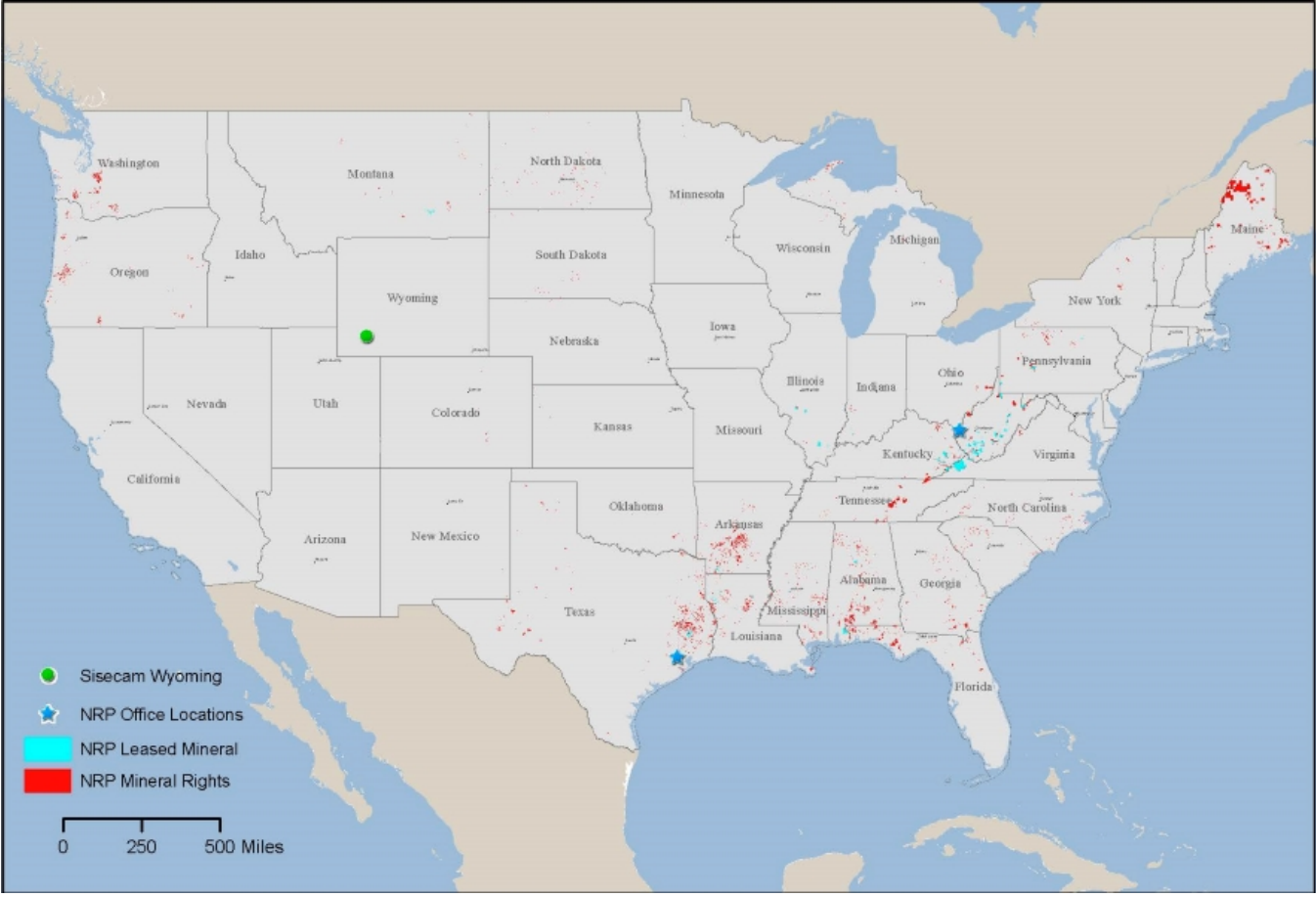
Company Notes Series: Natural Resource Partners

Editor’s note: We’re testing out a new series for the blog, the “Company Notes Series”, where we periodically share our notes on companies we’ve studied in the recent past but currently have no vested interest in (we may invest in or sell shares in the companies mentioned at any time). The notes are raw and not updated, and the “as of” date for the data is given at the start of the notes. Please give us your thoughts on the new series through the “Contact Us” page; your feedback will determine if we continue with it. Thanks in advance!


Start of notes for Natural Resource Partners

Data as of 9 January 2024

Background on company

  • Company name: Natural Resource Partners LP
  • Ticker: NYSE: NRP
  • Structure: Publicly traded Delaware limited partnership formed in 2002
  • Natural Resource Partners LP’s operations are conducted through Opco and its operating assets are owned by its subsidiaries, where Opco refers to NRP (Operating) LLC, a wholly owned subsidiary of Natural Resource Partners LP.  NRP (GP) LP is the general partner and has sole responsibility for conducting Natural Resource Partners LP’s business and for managing its operations. Because NRP (GP) LP is a limited partnership, its general partner, GP Natural Resource Partners LLC, conducts its business and operations; the Board of Directors and officers of GP Natural Resource Partners LLC also makes the decisions for Natural Resource Partners LP. Robertson Coal Management LLC, a company wholly owned by Corbin Robertson, Jr., owns all of the membership interests in GP Natural Resource Partners LLC. 
  • The senior executives who manage Natural Resource Partners LP are employees of Western Pocahontas Properties Limited Partnership or Quintana Minerals Corporation, which are both controlled by Corbin Robertson Jr.
  • Neither GP Natural Resource Partners LLC nor any of its affiliates receive any management fee or other compensation in connection with the management of Natural Resource Partners LP apart from reimbursement for all direct and indirect expenses incurred on the behalf of Natural Resource Partners LP. 

Business

  • Natural Resource Partners LP has two segments: Mineral Rights, and Soda Ash
  • In 9M 2023, Natural Resource Partners LP’s total revenue was US$275.9 million and 79% was from Mineral Rights (US$217.3 million) and 22% was from Soda Ash (US$58.6 million). In 2022, Natural Resource Partners LP’s total revenue was US$389.0 million and 85% was from Mineral Rights (US$329.2 million) and 15% was from Soda Ash (US$59.8 million)

Business – Mineral Rights segment

  • The Mineral Rights segment consists of 13 million acres of mineral interests and other subsurface rights – including coal and other natural resources – across the US; if combined in a single tract, the ownership would cover roughly 20,000 square miles. The ownership provides critical inputs for the manufacturing of steel, electricity, and basic building materials, as well as opportunities for carbon sequestration and renewable energy. Natural Resource Partners is working to strategically redefine its business as a key player in the transitional energy economy in the years to come. Figure 1 below shows Natural Resource Partners LP’s geographic distribution of its ownership. 
Figure 1
  • Under the Mineral Rights segment, Natural Resource Partners LP does not mine, drill, or produce minerals. Instead, the limited partnership leases its acreage to companies engaged in the extraction of minerals in exchange for royalties and various other fees. The royalties are generally a percentage of the gross revenue received by lessees (the companies that extract the minerals), and are typically supported by a floor price and minimum payment obligation that protects Natural Resource Partners LP during significant price or demand declines. The majority of revenue from the Mineral Rights segment revenues come from royalties related to the sale of coal. Of the Mineral Rights segment’s US$217.3 million in revenue in 9M 2023, US$170.8 million came from Coal Royalty revenue, so Coal Royalty Revenue was 62% of Natural Resource Partners LP’s total revenue in 9M 2023; of the Mineral Rights segment’s US$329.2 million in revenue, in 2022, US$227.0 million came from Coal Royalty revenue, so Coal Royalty Revenue was 58% of Natural Resource Partners LP’s total revenue in 2022.  Natural Resource Partners LP’s coal is primarily located in the Appalachia Basin, the Illinois Basin, and the Northern Powder River Basin. Natural Resource Partners LP’s coal-related leases are typically long-term in nature – at end-2022, two-thirds of royalty-based leases have initial terms of 5 to 40 years, with substantially all lessees having the option to extend the lease for additional terms. Leases include the right to renegotiate royalties and minimum payments for the additional terms. 
  • Figure 2 below shows all the other revenue sources for the Mineral Rights segment in 9M 2023 and 9M 2022:
Figure 2
  • There are two kinds of coal, and Natural Resource Partners LP participates in both in its Mineral Rights segment:
    • Metallurgical coal, or met coal, is used to fuel blast furnaces that forge steel and is the primary driver of Natural Resource Partners LP’s long-term cash flows. Met coal is a high-quality, cleaner coal that generates exceptionally high temperatures when burned and is an essential element in the steel manufacturing process. Natural Resource Partners LP’s met coal is located in the Northern, Central and Southern Appalachian regions of the United States.
    • Thermal coal, sometimes referred to as steam coal, is used in the production of electricity. The amount of thermal coal produced in the US has been falling over the last decade as energy providers shift to natural gas and to a lesser extent, alternative energy sources such as geothermal, wind, and solar. Management believes thermal coal’s long-term secular decline will continue. This, together with the long-term strength of the met coal business and Natural Resource Partners LP’s carbon neutral initiatives mean that thermal coal will be a diminishing contributor to Natural Resource Partners LP’s business in the future. The vast majority of the limited partnership’s thermal coal sales are located in Illinois and its operations are some of the most cost-efficient mines east of the Mississippi River. The remainder of Natural Resource Partners LP’s thermal coal is located in Montana, the Gulf Coast and Appalachia.
    • Met coal tends to be priced higher than thermal coal.
    • In 2022, 70% of Natural Resource Partners LP’s Coal Royalty revenues and approximately 45% of coal royalty sales volumes were derived from metallurgical coal.
    • Figure 3 shows the types of coal production of Natural Resource Partners LP from various properties in 2022, and Figure 4 shows the limited partnership’s significant coal royalty properties in 2022.
Figure 3

Figure 4

  • Under the Mineral Rights segment, Natural Resource Partners LP also participates in the sequestration of carbon dioxide underground. Similar to its Coal Royalty business, Natural Resource Partners LP only plans to lease acreage to companies that will conduct carbon dioxide sequestration. Natural Resource Partners LP owns approximately 3.5 million acres of specifically reserved subsurface rights in the southern US with the potential for permanent sequestration of greenhouse gases. The carbon capture utilization and storage industry is in its infancy but a few facts are clear. A sequestration project requires acreage possessing unique geologic characteristics, close proximity to sources of industrial-scale greenhouse gas emissions, and the appropriate form of legal title that grants the acreage owner the right to sequester emissions in the subsurface. Although carbon sequestration rights and ownership continue to evolve, management believes that Natural Resource Partners LP owns one of the largest acreages in the USA with potential for carbon sequestration activities. In 2022 Q1, Natural Resource Partners LP leased its first acreages (75,000 acres) for subsurface carbon dioxide sequestration in underground pore space in southwest Alabama, with the potential to store over 300 million metric tons of carbon dioxide; in October of 2022, the second subsurface carbon dioxide sequestration lease was signed, this time for 65,000 acres of pore space near southeast Texas, with an estimated storage capacity of at least 500 million metric tons of carbon dioxide. At end-2022, Natural Resource Partners LP had 140,000 acres of pore space under lease for carbon dioxide sequestration, with estimated carbon dioxide storage capacity of 800 million metric tons.

Business – Soda Ash segment

  • The Soda Ash segment consists of 49% non-controlling equity interest in Sisecam Wyoming, a trona ore mining and soda ash production business located in the Green River Basin of Wyoming. Sisecam Wyoming mines trona and processes it into soda ash that is sold both in the USA and internationally into the glass and chemicals industries.
  • Sisecam Resources LP runs Sisecam Wyoming and owns the other 51%. Natural Resource Partners LP is not involved in the day-to-day operation of Sisecam Wyoming, although Natural Resource Partners LP is able to appoint – and has appointed – 3 of the 7 members of Sisecam Wyoming’s Board of Managers.
    • In December 2021, Sisecam Resources LP changed majority-owners. Before this, Sisecam Wyoming was named Ciner Wyoming, and Sisecam Resources LP was named Ciner Resources LP. Under the terms of the transaction, Ciner Enterprises Inc, which controls 74% of Ciner Resources LP, effectively sold 60% of its interests in Ciner Resources LP to Sisecam Chemicals USA Inc, an indirect subsidiary of Turkish conglomerate Türkiye Şişe ve Cam Fabrikalari A.Ş. Ciner Resources LP subsequently changed its name to Sisecam Resources LP. 
    • In February 2023, Sisecam Resources LP announced that it would be fully acquired by Sisecam Chemicals Resources LLC. Sisecam Chemicals Resources LLC is in turn, 60% owned by Sisecam Chemicals USA Inc. The acquisition price of Sisecam Resources LP is US$25 per unit for all the units of Sisecam Resources LP that were not controlled by Sisecam Chemicals USA Inc (from the above, Sisecam Chemicals USA Inc already controlled 60% of Sisecam Resources LP – see Appendix for more). Sisecam Resources LP’s total unit count as of 31 March 2023 was 19.8 million, so Sisecam Resources LP was valued by Sisecam Chemicals USA Inc at US$495 million. Sisecam Resources LP’s only business interest is its 51% stake in Sisecam Wyoming; so if Sisecam Resources LP was valued at US$495 million, the entire Sisecam Wyoming is worth US$971 million, and Natural Resources LP’s 49% stake in Sisecam Wyoming is worth US$476 million.
  • Sisecam Wyoming is one of the largest and lowest cost producers of soda ash in the world, serving a global market from its facility located in the Green River Basin of Wyoming. The Green River Basin geological formation holds the largest, and one of the highest purity, known deposits of trona ore in the world, in fact the vast majority of the world’s accessible trona is located in the Green River Basin. Trona is a naturally occurring soft mineral and is also known as sodium sesquicarbonate. Trona consists primarily of sodium carbonate (or soda ash), sodium bicarbonate, and water. Sisecam Wyoming processes trona ore into soda ash, which is an essential raw material in flat glass, container glass, detergents, chemicals, paper and other consumer and industrial products.
  • Around 30% of global soda ash is produced by processing trona, with the remainder being produced synthetically through chemical processes. Synthetic production of soda ash is more expensive than the costs for mining trona for trona-based production. In addition, trona-based production consumes less energy and produces fewer undesirable by-products than synthetic production.
  • Sisecam Wyoming’s Green River Basin surface operations are situated on approximately 2,360 acres in Wyoming (of which, 880 acres are owned by Sisecam Wyoming), and its mining operations consist of approximately 24,000 acres of leased and licensed subsurface mining area. 

Business – Customers

  • There is customer concentration for the whole of Natural Resource Partners LP, and also for the Soda Ash segment.
  • Natural Resource Partners LP’s revenue from (1) Alpha Metallurgical Resources was US$102.4 million in 2022, which accounted for 37% of the year’s total revenue and (2) Foresight Energy Resources was US$65.6 million, which accounted for 24% of the year’s total revenue.
  • For the Soda Ash segment, the two largest customers of Sisecam Wyoming are distributors in its export network that collectively made up 26% of its total gross revenue.

Business – Commodity prices

  • Even though Natural Resource Partners LP’s royalty fees are typically supported by a floor price and minimum payment obligation that protects Natural Resource Partners LP during significant price or demand declines, the limited partnership is still affected by price swings in commodity prices.
  • In 2022, met coal and thermal coal prices both reached record highs in 2022; met coal prices was the primary driver of Natural Resource Partners LP’s strong Mineral Rights segment performance in 2022. See Table 1 below for Mineral Rights segment performance in 2022.
  • In 9M 2023, met coal and thermal coal prices were both below record highs seen in 2022 – the Mineral Rights segment saw a dip in performance in 9M 2023, as shown in Table 1.
Table 1

Management

  • Corbin Robertson, Jr, 75, has served as CEO and Chairman of the Board of Directors of GP Natural Resource Partners LLC since 2002; GP Natural Resources LLC has managed Natural Resource Partners LP since its formation and listing in 2002.
  • 2015 was a tough year for Natural Resource Partners LP as commodity prices crashed and it had too much debt. Since then, Natural Resource Partners LP has dramatically improved its financial health. See Figures 5, 6, and 7.
Figure 5
Figure 6
Figure 7

Valuation

  • Unit price of Natural Resource Partners LP: US$96.93
  • Market cap of Natural Resource Partners LP: US$1.225 billion
  • Enterprise value of Natural Resource Partners LP: US$1.41 billion
  • Value of Natural Resource Partners LP’s stake in Sisecam Wyoming is US$476 million, so the market is assigning a value of US$938 million for the Mineral Rights segment
  • Trailing free cash flow as of 30 Sep 2023 is US$304 million (lion’s share comes from the Mineral Rights segment since most of net income is from the segment), so the Mineral Rights segment is valued at just 3x FCF. Worth noting that Natural Resource Partners LP’s FCF has been relatively stable since 2015 – see Figure 8
  • In Figure 6 above, it is worth noting that Natural Resource Partners LP’s aim is to “retire all permanent debt, redeem all the 12% preferred equity, and eliminate all outstanding warrants, all of which will require approximately US$325 million.” 
  • On the 12% preferred equity, Natural Resource Partners LP issued US$250 million of the preferred equity units in March 2017 at a price of US$1,000 per preferred equity unit. The preferred equity is convertible to common units, but Natural Resource Partners LP can choose to redeem the preferred equity for cash. The outstanding balance of the preferred equity as of 30 September 2023 is US$72 million. Once all the preferred equity is cleared, Natural Resource Partners LP can save US$30 million in annual coupon payments (based on US$250 million issue), and this adds directly to free cash flow; if the US$72 million outstanding balance is fully cleared, Natural Resource Partners LP can save US$8.6 million in annual coupon payments.
Figure 8


Appendix

Chart showing Sisecam Wyoming and Sisecam Resources LP’s ownership structure before and after the February 2023 announcement of the acquisition by Sisecam Chemicals USA


Disclaimer: The Good Investors is the personal investing blog of two simple guys who are passionate about educating Singaporeans about stock market investing. By using this Site, you specifically agree that none of the information provided constitutes financial, investment, or other professional advice. It is only intended to provide education. Speak with a professional before making important decisions about your money, your professional life, or even your personal life. We currently have no vested interest in any company mentioned. Holdings are subject to change at any time.
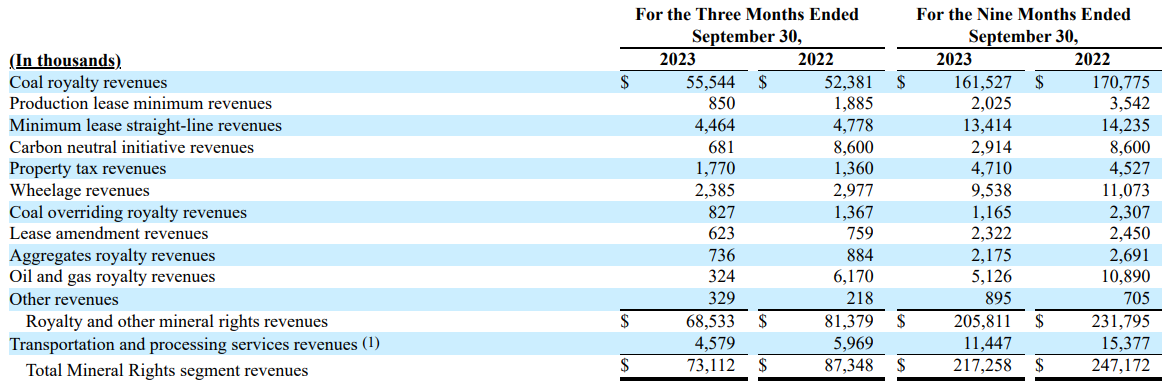
What We’re Reading (Week Ending 07 July 2024)

The best articles we’ve read in recent times on a wide range of topics, including investing, business, and the world in general.

We’ve constantly been sharing a list of our recent reads in our weekly emails for The Good Investors.

Do subscribe for our weekly updates through the orange box in the blog (it’s on the side if you’re using a computer, and all the way at the bottom if you’re using mobile) – it’s free!

But since our readership-audience for The Good Investors is wider than our subscriber base, we think sharing the reading list regularly on the blog itself can benefit even more people. The articles we share touch on a wide range of topics, including investing, business, and the world in general. 

Here are the articles for the week ending 07 July 2024:

1. Etched is Making the Biggest Bet in AI – Etched

In 2022, we made a bet that transformers would take over the world.

We’ve spent the past two years building Sohu, the world’s first specialized chip (ASIC) for transformers (the “T” in ChatGPT).

By burning the transformer architecture into our chip, we can’t run most traditional AI models: the DLRMs powering Instagram ads, protein-folding models like AlphaFold 2, or older image models like Stable Diffusion 2. We can’t run CNNs, RNNs, or LSTMs either.

But for transformers, Sohu is the fastest chip of all time. It’s not even close.

With over 500,000 tokens per second in Llama 70B throughput, Sohu lets you build products impossible on GPUs. Sohu is an order of magnitude faster and cheaper than even NVIDIA’s next-generation Blackwell (B200) GPUs…

…By feeding AI models more compute and better data, they get smarter. Scale is the only trick that’s continued to work for decades, and every large AI company (Google, OpenAI / Microsoft, Anthropic / Amazon, etc.) is spending more than $100 billion over the next few years to keep scaling. We are living in the largest infrastructure buildout of all time.

Scaling the next 1,000x will be very expensive. The next-generation data centers will cost more than the GDP of a small nation. At the current pace, our hardware, our power grids, and pocketbooks can’t keep up…

…Santa Clara’s dirty little secret is that GPUs haven’t gotten better, they’ve gotten bigger. The compute (TFLOPS) per area of the chip has been nearly flat for four years…

…No one has ever built an algorithm-specific AI chip (ASIC). Chip projects cost $50-100M and take years to bring to production. When we started, there was no market.

Suddenly, that’s changed:

  • Unprecedented Demand: Before ChatGPT, the market for transformer inference was ~$50M, and now it’s billions. All big tech companies use transformer models (OpenAI, Google, Amazon, Microsoft, Facebook, etc.).
  • Convergence on Architecture: AI models used to change a lot. But since GPT-2, state-of-the-art model architectures have remained nearly identical! OpenAI’s GPT-family, Google’s PaLM, Facebook’s LLaMa, and even Tesla FSD are all transformers…

…We believe in the hardware lottery: the models that win are the ones that can run the fastest and cheapest on hardware. Transformers are powerful, useful, and profitable enough to dominate every major AI compute market before alternatives are ready…

  • …As models scale from $1B to $10B to $100B training runs in the next few years, the risk of testing new architectures skyrockets. Instead of re-testing scaling laws and performance, time is better spent building features on top of transformers, such as multi-token prediction.
  • Today’s software stack is optimized for transformers. Every popular library (TensorRT-LLM, vLLM, Huggingface TGI, etc.) has special kernels for running transformer models on GPUs. Many features built on top of transformers aren’t easily supported in alternatives (ex. speculative decoding, tree search).
  • Tomorrow’s hardware stack will be optimized for transformers. NVIDIA’s GB200s have special support for transformers (TransformerEngine). ASICs like Sohu entering the market mark the point of no return. Transformer killers will need to run on GPUs faster than transformers run on Sohu. If that happens, we’ll build an ASIC for that too!…

…On GPUs and TPUs, software is a nightmare. Handling arbitrary CUDA and PyTorch code requires an incredibly complicated compiler. Third-party AI chips (AMD, Intel, AWS, etc.) have together spent billions on software to little avail.

But since Sohu only runs transformers, we only need to write software for transformers!

Most companies running open-source or internal models use a transformer-specific inference library like TensorRT-LLM, vLLM, or HuggingFace’s TGI. These frameworks are very rigid – while you can tweak model hyperparameters, changing the underlying model code is not really supported. But this is fine – since all transformer models are so similar (even text/image/video ones), tweaking the hyperparameters is all you really need.

2. Evolution of Databases in the World of AI Apps – Chips Ahoy Capital

Transactional Database vendors like MDB focus on storing and managing large volumes of transactional data. MDB also offers Keyword Search & rolled out Vector Search (albeit late vs competitors). Historically MDB Keyword Search has not been as performant as ESTC in use case utilizing large data sets or complex search queries & has less comprehensive Search features to ESTC…

…A vector database stores data as high-dimensional vectors rather than traditional rows and columns. These vectors represent items in a way that captures their semantic meaning, making it possible to find similar items based on proximity in vector space.

Real-World Example:

Imagine you have an online store with thousands of products. Each product can be converted into a vector that captures its attributes, like color, size, and category. When a customer views a product, the vector database can quickly find and recommend similar products by calculating the nearest vectors. This enables highly accurate and personalized recommendations.

In essence, a vector database helps in efficiently retrieving similar items, which is particularly useful in applications like recommendation systems & image recognition…

…RAG combines the strengths of Vector Search and generative AI models to provide more accurate and contextually relevant responses. Here’s how it works: 1) A user submits a query 2) the system converts the query into a vector and retrieves relevant documents or data from the vector database based on similarity 3) the retrieved documents are fed into a generative AI model (LLM), which generates a coherent and contextually enriched response using the provided data.

Multimodal models integrate multiple data types (text, images, audio) for comprehensive understanding and generation. It is crucial for vector databases to support multimodal data to enable more complex and nuanced AI applications. PostGres is a dominant open source vendor in the database market (scored #1 as most used Vector DB in recent Retool AI survey) but on it’s own it does NOT seem to include native support for multi-modality in it’s Vector Search. This limits the use cases it can be applied or used to without using an extension or integration to other solutions…

…Simple AI Use Cases:

Similarity Search has been one of the first and most prominent use cases of using GenAI. When a query is made, the database quickly retrieves items that are close in vector space to the query vector. This is especially useful in applications like recommendation engines &  image recognition where finding similar items is crucial. These use cases have been in POC since last year, and are starting to move into production later this year.

Complex AI Use Cases:

Enter Generative Feedback Loop! In a Generative Feedback Loop, the database is not only used for Retrieval of data (main use case in Similarity Search). But it also provides Storage of Generated Data. The database in this case stores new data generated by the AI model if deemed valuable for future queries. This in my view changes the relationship that the AI Application has with a database as it then has to store data back in. A key example for Generative Feedback Loop is an Autonomous Agent…

…An AI autonomous agent and a database work together to perform complex tasks efficiently. The relationship between a database and an AI Agent at first seems similar to other use cases, where the database holds all necessary data and the AI Agent queries the database to retrieve relevant information needed to perform its tasks.

The key difference here is the Learning and Improvement aspect of AI Agents. Instead of just containing historical data, the database has been updated with new data from user interactions and agent activities. The AI Agent then uses this new data to refine its algorithms, improving its performance over time…

…A real life example could be an E-commerce Chatbot. The customer buys a product and leaves a review for that product. The database then updates the new purchase and feedback data, and the AI Agent learns from this feedback to improve future recommendations. In this scenario, the database is not just being queried for data, but it is storing data back from the interaction, the AI Agent is learning from this, creating what is referred to as a Generative Feedback Loop.

3. The Big Bad BREIT Post – Phil Bak

So here it is, our analysis of Blackstone’s Real Estate Income Trust. The data presented is as-of the original publication of June 2023. It should be noted that over the past year everything has played out as we warned, including the gating of Starwood’s SREIT. Last thing I’ll say: I’d have much preferred to be wrong…

…Given the vital role that “NAV” plays in fundraising and performance reporting, it’s surprising that a greater amount of transparency is not provided by sponsors into their valuation methodology. Remind me again why they don’t provide a comprehensive explanation for each input in the DCF model?  Contrary to popular assumption, NAV is not based on appraisals that utilize sales comparisons. Instead, it’s based on an opaque discounted cash flow (DCF) methodology that is based on assumptions that are at the discretion of the sponsor who realizes fee streams pegged to the asset values they assign.

BREIT’s self-reported performance is – by their own admission – “not reliable.” Why we didn’t take a closer look at it before is as much a mystery as how they compute it. Management can’t just pull numbers out of thin air, and they’ve done nothing illegal, but they have a lot of discretion on where they estimate share values to be.

According to their prospectus, Blackstone values the fund itself once a month; then once a year it brings in an outsider who prepares a valuation based on their direction. But in its March 28, 2023 prospectus amendment, BREIT removed the steps in bold.  (1) a third-party appraisal firm conducts appraisals and renders appraisal reports annually; (2) an independent valuation advisor reviews the appraisal reports for reasonableness; (3) the advisor (Blackstone) receives the appraisal reports and based in part on the most recent appraisals, renders an internal valuation to calculate NAV monthly; (4) the independent valuation advisor reviews and confirms the internal valuations prepared by the advisor. (5) BREIT will promptly disclose any changes to the identity or role of the independent valuation advisor in its reports publicly filed with the SEC.

The verbiage in their disclosures doesn’t suggest that their calculation will be better than relying on market prices. The highlighted portions seem to be saying that Blackstone uses baseless returns in their SEC filings. They are not using a methodology prescribed by the SEC or any regulatory body. They do not adhere to any accounting rules or standards. Nor is their monthly NAV calculation audited by an independent public accounting firm. Blackstone uses it solely to determine the price at which the fund will redeem and sell shares. The NAV also happens to dictate the fees they can earn…

…One of BREIT’s big selling points was the ability to get a dividend of around 4% when interest rates were near zero, but the fund cannot – and has never been able to – cover the dividend payment. The current Class S distribution of 3.74% and Class I yield of 4.6% aren’t fully earned based on a key REIT cash-flow measure: Available Funds from Operations (AFFO). AFFO is used to approximate the recurring free cash flow from an income producing real estate vehicle and calculate the dividend coverage.

Blackstone reports AFFO, but their reported number is janky. It omits the management fees they charge.  Their rationale is that they have not taken their fees in cash but instead converted their $4.6 billion in fees into I-Shares, which is a class of BREIT shares that has no sales cost load.  But their election to accept shares is optional, the shares they receive are fully earned and they can redeem their shares at stated NAV.  What’s more, they have redemption priority over other BREIT investors; there is no monthly or quarterly redemption limitation.  Blackstone has already redeemed $658 million in shares.

BREIT’s AFFO also omits recurring real estate maintenance capital expenditures and stockholder servicing fees which are part of the sales load. Computing an AFFO more consistent with public company peers would result in a payout ratio for the first half of 2023 of more than 250%.

BREIT, unlike most big public REITs, has only covered about 13% of their promised dividend distribution. There’s not a single year in which they could cover their payment if everybody elected to receive it. Since inception, the company has delivered $950 million in AFFO and declared $7.3 billion in distributions.  That’s a stunning 768% dividend payout ratio…

…BREIT is levered approximately 49% against NAV and closer to 60% as measured against cost – the average cost of BREIT’s secured borrowings stands at approximately 5.5 % before hedges so the cost of their debt exceeds the yield. There are few ways you can turn these numbers into a double digit return.  Rents would have to go to the moon. The only way there can be positive leverage over a holding period (IRR) is if there is a shedload of positive income growth. And that’s exactly what BREIT has baked in the valuation cake. Interest rates went up so the NPV should be way down but – in a fabulous coincidence – future cash flow expectations went up by just enough to offset it. The numerator where revenue growth shows up made up for the rise in rates in the denominator…

…Here’s the BREIT Story in a nutshell: They’ve reported an annual return since inception for its Class S investors north of 10% with real estate investments that have a gross current rate of return of less than 5% on their cost.  They’ve been buying assets at a 4% cap rate, paying a 4.5% dividend and reporting 10+% returns. And nobody has called bullshit…

…By taking BREIT’s current NOI and dividing it by the NAV, investors can compute the implied cap rate on BREIT’s portfolio as they are valuing it – and compare it with public REITs. Interest rates have moved 200-300 basis points in recent months, and in public markets elevated cap rates have driven a 25% decline in values. A recent analysis of two vehicles in the non-traded REIT space concluded that both funds are being valued at implied cap rates of approximately 4.0% when publicly traded REITs with a similar property sector and geographic are trading at an implied cap rate closer to 5.75% . Applying that 5.75% cap rate to BREIT would result in a reduction in shareholder NAV of more than 50%. The current valuation of roughly $14.68/ share should be closer to $7-8/share.

4. Grant Mitchell — The Potential of AI Drug Repurposing – Jim O’Shaughnessy and Grant Mitchell

[Grant:] I was leading teams that were really pioneering the use of large medical record databases to identify subpopulations where a drug might perform better, might be higher in efficacy or better in safety. And we realized that that’s really, in a way, it’s kind of drug repurposing. It’s taking a drug and finding a population where it works a little bit better in a drug that already exists.

And as David was working in the lab and I was working in the data, we kind of came together and we say, “Can we automate what we’ve done? Can we scale what we’ve done in just one disease?” And given the explosion and the amount of data that exists out there and the improvements in the way that we can harmonize and integrate the data into one place, and then the models that have been built to analyze that data, we thought that maybe it would be possible. And we would check in every few years. 2016, 2017, it wasn’t really possible. We had this dream for a long time. 2018, 2019 is probably when I was talking to you and I was thinking about can we do this?

And really, lately it’s become possible, especially with, like I said before, more data, structured better. You have models like these large language models that are able to digest all of medical literature, output it in a structured fashion, compile it into a biomedical knowledge graph, these really interesting ways to display and analyze this kind of data. And ultimately, that’s how Every Cure was formed, was the concept that the drugs that we have are not fully utilized to treat every disease that they possibly can, and we can utilize artificial intelligence to unlock their life-saving potential.

Jim: Just so incredibly impressive. And a million questions spring to mind. As you know, my oldest sister, Lail, died of lupus. And when you said the cytokine storm, she had a kind of similar thing where she would go into remission, and then there’d be a massive attack, and it wasn’t like clockwork like your colleague’s, but when she died in 1971, it was like nobody knew very much at all about the disease. And in this case, did you find that the cure that worked for your colleague, was that transferable to other people with this similar disease?

Grant: Yeah, so the cure that worked for him, we studied his blood, we sampled his lymph nodes, we did immunohistochemistry and flow cytometry and basically found that their cytokines were elevated, another molecule called VEGF was elevated, there’s T cell activation. This all pointed towards something called the mTOR pathway. And started looking at different drugs that would hit that pathway, settled on a drug called Sirolimus. Sirolimus has been around for decades. It’s actually isolated from a fungus found in the soil on Easter Island. It’s amazing, right? And it shuts down the overactivation of this pathway that leads to this cascade that causes this whole cytokine storm.

For David it works perfectly, and it also works for about a third of the other patients that have a disease like David. And so that’s resulted in the benefit to countless thousands and thousands of patients’ lives. It’s a pretty thrilling and satisfying and motivating thing to be able to figure something like that out and to be able to do it, they have the opportunity to do it more and at scale and have the opportunity to save potentially millions of lives is a huge motivation for my team…

…[Grant:] So we couldn’t quite piece it together, and it was really an aha moment that this should be designed as a nonprofit, and it should be an AI company, because if you want to build the world’s best AI platform for drug repurposing, you’re going to need the world’s best dataset to train it, and you’re not going to get your hands on all the data that you want to get your hands on if you’re a competitor to all these people that are trying to use this data.

So we’re collaborative. We’re non-competitive. We are not profit-seeking. Our primary goal is to relieve patient suffering and save patient lives. So I’ll get to your question about how we’re utilizing that kind of resiliency data that I mentioned before. But first I’m going to help you understand how we use it. I’m going to describe the kind of data set that we’re constructing, and it’s something called a biomedical knowledge graph. It’s well known in the areas and the fields that we’re in, but maybe not a commonly known term to the layman, but it’s effectively a representation in 3D vector space of all of the biomedical knowledge we have as humanity, every drug, every target, every protein, every gene, every pathway, cell type, organ system, et cetera, and how they relate to different phenotypes, symptoms, and diseases.

And so every one of those biomedical concepts that I just described would be represented as a node, and then every relationship that that concept has with another relationship, like a drug treats a disease, there would be an edge. They call it a semantic triple. Drug, treats, disease. So you’ve got a node, an edge, and a node. And imagine a graph of every known signaling molecule and protein and a concept you can imagine, tens of millions of nodes, even more edges, representing all of human knowledge in biology. And that’s what multiple people have constructed. Actually, NIH funded a program called the NCATS Translator Program where a number of these knowledge graphs have been constructed. Other groups are doing it. A lot of private companies have their own. We are compiling them and integrating it with an integration layer that kind of takes the best from the top public ones, and then layers in additional proprietary data that we get from other organizations or data that we generate on our own.

And the example that you just mentioned, a company that is working on tracking genetic diseases and groups of people with the same genetic disease and looking at subpopulations within that group where there might be some resilience to the mutation, and then studying their genome to say, “Okay, what other proteins are being transcribed that might be protective against this mutation?”, and then going out and designing drugs that might mimic that protection. Well, how’s that data going to fit into my knowledge graph? Well, you can imagine that now if I have the data set that they’re working with, I know that there’s a mutation that results in a disease. So a gene associated with disease, that’s a node, an edge, and a node. And I also know that this other protein is protective of that disease.

So that just information that goes into the graph. And the more truth that I put into that graph, the more I can train that graph to identify patterns of successful examples of a drug working for a disease, and then it can try and find that pattern elsewhere where it either identifies nodes and edges that should already be connected or are connected in our knowledge base but no one has actually acted on, or it can maybe even generate a hypothesis on a totally new edge that is novel and has never been considered by experts before. So to answer your question, again, is we’re not doing that work ourselves, but we integrate the knowledge from that work so it can train our models and so we can pursue drug repurposing ideas…

…[Grant:] We’re not designing novel compounds. We think that there’s so much low-hanging fruit with the 3000 drugs that already exist that we are going to spend years and years unlocking the life-saving potential of those. And the reason why we’re focused there is because that is the fastest way to save human lives. If you develop a novel compound, you have to go all the way through the entire clinical development of an approval process. IND, phase one, phase two, phase three trials. This takes years and years and hundreds of millions of dollars, whereas in certain scenarios in drug repurposing, just like with my co-founder David, within weeks of us coming up with the hypothesis that this drug might work for him, as long as we could find a physician that would prescribe it to him, it went directly into his human body just weeks later.

So that brings me to this issue that I think we’re going to see, and you as an investor might make yourself aware of, is that there’s going to be lots and lots of failures in the world of AI-driven drug discovery. And that’s because not only are you an AI company that’s generating hypotheses, you’re also a biotech company that has to validate a novel compound and bring it all the way through the clinic through clinical trials and through regulatory approvals and into patients. So here you are an AI company, you’ve hired up your team of 50 data scientists and experts, and you come up with your hypothesis and you say, “Okay, great.”

You’re not Amazon that gets to A/B test where they’re going to put a button on the user interface and then they get feedback by the end of the day and okay, move the button here instead of here. When you come up with your hypothesis after your AI team says, “Okay, this is what the drug we’re going to move forward with,” you now have to go through potentially 10 years and hundreds of millions of dollars of additional development. So you don’t know if your AI team built anything of value. You don’t have that validation feedback loop that you do in other AI consumer-based organizations. So now you’re juggling sustaining an AI corporation that doesn’t have a feedback loop while you have to also pay for the clinical development of a drug. And so it’s a tension that’s hard, hard to manage.

And drug repurposing solves that tension. It allows us to go from hypothesis to validation in a much tighter feedback loop. So what we’re doing is something that both helps patients in the fastest and cheapest way possible, but also, the happy accident is that we push forward the field of data-driven drug discovery because we can inform our models in a faster feedback loop…

…[Grant:] One thing I learned when I was at Quantum Black and at McKinsey is, and we would go up against other machine learning organizations. I remember one time they put us head to head with another group and they said, “Okay, whoever comes with the best insights in the next three months, we’re going to pick to go with a longer contract going forward. And two seemingly similar teams working on the same dataset. We came up with a totally different recommendations than the other team did, and what was actual differentiator between the teams was that we had five medical degrees on our team, not just a bunch of data scientists, but data scientists plus medical experts. And in every step of the way that you’re building these knowledge graphs and designing these algorithms, you’re interfacing with medical expertise to make sure you imbue it with clinical understanding, with biological rationale of how this is actually going to work and how to interpret the typically really messy medical data.

And so if you think about the matrix that we’re producing, this heat map of 3000 drugs cross-referenced with 22,000 diseases creates 66 million possibilities, and we then score those possibilities from zero to one, and normalize them across the whole landscape. So that’s a tricky thing to do is drug A for disease X compared to drug B for disease Y, how do you compare the possibilities of each of those in zero to one? So we create that normalized score, and then we start looking at the highest scores and then filter down from there to say, “Okay, of all the highest probability of success opportunities here, which ones are going to impact patients the most, and which ones can we prove out quickly and efficiently in a lowcost trial with a few metapatients and high signal, so we can do this in three to six to 12 months births and suppose of five-year trial times?”

And the thing to think about, back to the comment about we need medical expertise highly integrated with what we’re doing is that even if you take the top thousand scores there, you’re still in the 0.001% of the highest ranking of scores, and now you got to pick amongst your thousand to get down to the top five. To get down to the top one, what is my first shot on goal going to be? That better be successful for all the things that I’m working on here, and it better help patients and really better work. So the AI can’t do that. You need a really smart head of translational science to make that last sort of decision of what’s going to go into patients and how it’s all going to work…

… [Grant:] we’re a nonprofit because we want to build the world’s best AI platform and we need the best data set to do it to save as many lives as we possibly can with drugs that already exist. So since the drugs already exist, it’s kind of a funny thing. I say we’re the smallest and the biggest pharma company in the world. We’re the biggest because every single drug that already exists is in our pipeline. We’re the smallest because we don’t own any of them. And then we take those drugs and we go after diseases that are totally neglected by the pharmaceutical industry. So it’s by design has to be a nonprofit.

5. How Bull Markets Work – Ben Carlson

Halfway through the year, the S&P 500 was up 15.3%, including dividends.

Despite these impressive gains the bull market has been relatively boring this year.

There have been just 14 trading days with gains of 1% or more. There has been just a single 2% up day in 2024. And there have only been 7 days of down 1% or worse.

Small moves in both directions.

Bull markets are typically boring like this. Uptrends tend to be these slow, methodical moves higher. Bull markets don’t make for good headlines because they’re made up of gradual improvements.

Bear markets, on the other hand, are where the excitement happens. Downtrends are full of both big down days and big up days…

..The best and worst days happen at the same time because volatility clusters. Volatility clusters because investors overreact to the upside and the downside when emotions are high…

…It’s also interesting to note that even though the S&P 500 is having a boring year, it doesn’t mean every stock in the index is having a similar experience.

While the S&P is up more than 15% there are 134 stocks down 5% or worse while 85 stocks are down 10% or more so far this year.

Stock market returns are concentrated in the big names this year, but it’s normal for many stocks to go down in a given year.


Disclaimer: The Good Investors is the personal investing blog of two simple guys who are passionate about educating Singaporeans about stock market investing. By using this Site, you specifically agree that none of the information provided constitutes financial, investment, or other professional advice. It is only intended to provide education. Speak with a professional before making important decisions about your money, your professional life, or even your personal life. We currently have a vested interest in Alphabet, Amazon, Meta Platforms, Microsoft, MongoDB, and Tesla. Holdings are subject to change at any time.
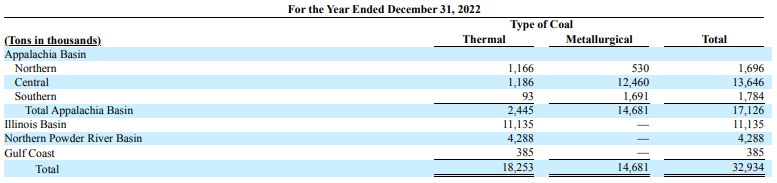
No, Dividends Are Great

Dividends are the fruits of our investments and are what makes investing in companies so profitable.

In recent times, large American technology companies such as Meta Platforms, Salesforce, and Alphabet have initiated a dividend.

It’s easy to imagine that their shareholders would be pleased about it, but this isn’t always the case. Some shareholders are actually disappointed about the dividend announcements. They think that the companies have nowhere else to invest their capital and are thus returning it to their shareholders. In other words, they think that the companies’ growth potential have stalled.

But I see things differently. Dividends are ultimately what we, as shareholders, invest in a company for. Long-term shareholders are here to earn a cash stream from investing in companies. This is akin to building your own business which generates profits which you can cash out and enjoy. As such, dividends are the fruits of our investment.

And just because a company has started paying a dividend does not mean it can’t grow its earnings. Just look at some of the dividend aristocrats that have grown their earnings over a long span of time. There are many companies that can generate high returns on invested capital. This means that they can pay out a high proportion of their earnings as dividends and still continue to grow.

Dividends can compound too

For investors who don’t want to spend the dividend a company is paying, they can put that dividend to use by reinvesting it.

When a company is not paying a dividend, its shareholders have to rely on management to invest the company’s profits. When there’s a dividend, shareholders can invest the dividend in a way that they believe give them the highest risk-adjusted return available. Moreover, a company’s management team may not be the best capital allocators around – in such a case, when the company generates excess cash, management may invest it in a way that does not generate good returns. When a company pays a dividend, shareholders can make their own decisions and do not have to rely on management’s capital allocation skills.

And if you think the company was better off buying back shares, you can simply buy shares of that company with your dividends. This will have a similar effect to share buybacks as it will increase your stake in the company.

What’s the catch?

Dividends have some downsides though. 

Compared to buybacks, reinvesting dividends to buy more shares may be slightly less effective as shareholders may have to pay tax on those dividends. For example, Singapore-based investors who buy US stocks have to pay a 30% withholding tax on all US-company dividends.

The other downside is there’s more work for shareholders. If management was reinvesting prudently and not paying dividends, shareholders wouldn’t need to make a decision. But with dividends, shareholders have to decide where and when to reinvest that dividend. This said, it does give shareholders more options and opens up possibilities of where the dividend can be invested, instead of just relying on management. To me, I would happily take this tradeoff.

Don’t fret

Dividends are good. It’s funny that I even need to say this.

Dividends are the fruits of our investments and are what makes investing in companies so profitable. Without it, we will just be traders of companies, and not investors.


Disclaimer: The Good Investors is the personal investing blog of two simple guys who are passionate about educating Singaporeans about stock market investing. By using this Site, you specifically agree that none of the information provided constitutes financial, investment, or other professional advice. It is only intended to provide education. Speak with a professional before making important decisions about your money, your professional life, or even your personal life. I currently have a vested interest in Alphabet, Meta Platforms, and Salesforce. Holdings are subject to change at any time.